Decarbonization Pathways and Impacts models deep decarbonization and net-zero emissions pathways for the United States and other regions and quantifies the costs and system impacts of the required transitions. The work covers carbon management technologies, voluntary carbon markets, and the robustness of investment decisions under net-zero uncertainty, and contributes to model intercomparison studies such as EMF-37 and LCRI.
Publications and Presentations
Found 37 of 37
- 2026 Article
A Multi-Model Assessment of the Air Quality and Health Impacts of U.S. Energy Decarbonization
Jinyu Shiwang et al. (including Aranya Venkatesh)
- 2026 Article
System effects of carbon-free electricity procurement on regional technology, costs, and emissions
John Bistline et al. The Electricity Journal, 39(2), 107535.
- 2026 Article
Weighting for net zero
John Bistline Nature Climate Change.
- 2025 Article
Emissions Reductions of Rooftop Solar Are Overstated by Approaches That Inadequately Capture Substitution Effects
John Bistline, Asa Watten Nature Climate Change.
- 2025 Article
Marginal abatement costs for greenhouse gas emissions in the United States using an energy systems approach
Blackhurst, M., Aranya Venkatesh Environmental Research: Energy 2, 015012.
- 2025 Article
Robust pathway analysis of electricity investments under net-zero uncertainties
Erin Baker, John Bistline, Nexus Attiogbe Energy and Climate Change.
- 2025 Article
Transportation in Net-Zero Emissions Futures: Insights from the EMF-37 Model Intercomparison Study
Hoehne et al. (including John Bistline, Geoffrey J. Blanford) Energy and Climate Change.
- 2025 Article
Value of Voluntary Carbon Markets in Energy Systems Decarbonization
John Bistline et al. (including Anahi Molar Cruz, Geoffrey J. Blanford), Adam Diamant npj Climate Action.
- 2024 Article
Carbon Management Technology Pathways for Reaching a U.S. Economy-Wide Net-Zero Emissions Goal
Binsted et al. (including John Bistline) Energy and Climate Change.
- 2024 Article
Diverse decarbonization pathways under near cost-optimal futures
Sinha, A. et al. (including Aranya Venkatesh) Nature Communications.
- 2024 Article
Drivers and implications of alternative routes to fuels decarbonization in net-zero energy systems
Mignone, B. et al. (including Steven Rose, Aranya Venkatesh) Nature Communications.
- 2024 Article
Health and air pollutant emission impacts of net zero CO2 by 2050 scenarios from the Energy Modeling Forum 37 study
Loughlin, D.H. et al. (including John Bistline) Energy and Climate Change, Volume 5.
- 2024 Article
- 2023 Article
Analyzing Air Quality Impacts of Economywide Deep Decarbonization: Challenges and Approaches
Qianru Zhu et al. (including John Bistline, David Young) The Magazine for Environmental Managers, August 2023.
- 2023 Article
Expanded modelling scenarios to understand the role of offshore wind in decarbonizing the United States
Beiter, P., Mai, T., Mowers, M. et al. (including John Bistline) Nat Energy (2023).
- 2023 Article
Modeling Nuclear Energy's Future Role in Decarbonized Energy Systems
John Bistline et al. iScience, vol. 26, no. 2, Feb. 2023, p. 105952.
- 2023 Article
Net-zero CO2 by 2050 scenarios for the United States in the Energy Modeling Forum 37 study
Browning, M. et al. (including John Bistline) Energy and Climate Change 4, 100104.
- 2022 Article
Actions for Reducing U.S. Emissions at Least 50% by 2030
John Bistline, N. Abhyankar, L. Clarke, R. Fakhry, H. McJeon, J. Reilly, Geoffrey J. Blanford, Chris DeLyser Roney, Thomas F. Wilson, M. Yuan, and A. Zhao Science 376,922-924
- 2022 Article
Global biomass supply modeling for long-run management of the climate system
Steven Rose, Popp, A., Fujimori, S. et al. Climatic Change 172, 3 (2022).
- 2022 Article
Short-Run Marginal Emission Rates Omit Important Impacts of Electric-Sector Interventions
Gagnon, Pieter J., John Bistline, et al. Proceedings of the National Academy of Sciences, vol. 119, no. 49, 28 Nov. 2022.
- 2022 Article
The contribution of bioenergy to the decarbonization of transport: a multi-model assessment
Leblanc, F., Bibas, R., Mima, S. et al. (including Steven Rose) Climatic Change 170, 21 (2022).
- 2022 Article
The Role of Natural Gas in Reaching Net-Zero Emissions in the Electric Sector
John Bistline, David Young Nature Communications
- 2021 Article
Deep Decarbonization Impacts on Electric Load Shapes and Peak Demand
John Bistline, Chris DeLyser Roney, David McCollum, Geoffrey J. Blanford Environmental Research Letters
- 2021 Article
Insights for Canadian electricity generation planning from an integrated assessment model: Should we be more cautious about hydropower cost overruns?
Evan J. Arbuckle, Matthew Binsted, Evan G.R. Davies, Diego V. Chiappori, Candelaria Bergero, Muhammad-Shahid Siddiqui, Chris DeLyser Roney, Haewon C. McJeon, Yuyu Zhou, Nick Macaluso Energy Policy
- 2021 Article
Modeling variable renewable energy and storage in the power sector
John Bistline, Geoffrey J. Blanford, Trieu Mai (NREL), James Merrick (Geal Research) Energy Policy
- 2021 Article
- 2021 Article
The role of the power sector in Net-Zero energy systems
John Bistline, Geoffrey J. Blanford Energy and Climate Change
- 2021 Article
Variability in Deeply Decarbonized Electricity Systems
John Bistline Environmental Science & Technology
- 2020 Article
Emissions Impacts of Future Battery Storage Deployment on Regional Power Systems
John Bistline, David Young Applied Energy
- 2020 Article
Energy storage in long-term system models: a review of considerations, best practices, and research needs
John Bistline, Wesley Cole (NREL), Giovanni Damato, Joseph DeCarolis (NC State University), Will Frazier (NREL), Vikram Linga (EIA), Cara Marcy (EPA), Chris Namovicz (EIA), Kara Podkaminer (DOE), Ryan Sims, Manussawee Sukunta (EIA), David Young Progress in Energy
- 2020 Article
- 2019 Article
Economic drivers of wind and solar penetration in the US
John Bistline, David Young Environmental Research Letters
- 2018 Article
Simulating Annual Variation in Load, Wind, and Solar by Representative Hour Selection
Geoffrey J. Blanford, James Merrick, John Bistline, David Young The Energy Journal
- 2018 Article
The role of input assumptions and model structures in projections of variable renewable energy: A multi-model perspective of the U.S. electricity system
Trieu Mai (NREL), John Bistline, Yinong Sun (NREL), Wesley Cole (NREL), Cara Marcy (EIA), Chris Namovicz (EIA), David Young Energy Economics
- Article
Deep mitigation of CO2 and non-CO2 greenhouse gases toward 1.5°C and 2°C futures
Ou, Y., Chris DeLyser Roney, Alsalam, J. et al. Nature Communications
- Report
Key findings from the core North American scenarios in the EMF34 intermodel comparison
Huntington, A. Bhargava, D. Daniels, J. Weyant, John Bistline, et al. Energy Policy
EPRI Reports
Found 19 of 19
| Details | Title | Authors | Date | Type |
|---|---|---|---|---|
Taichung Energy Hub: Sector Coupling to Achieve Net Zero for Power and Industry | TECHNICAL BRIEF | |||
Taiwan has established an ambitious Net Zero by 2050 strategy to reduce greenhouse gas emission across all sectors. Realizing this vision will require carefully balancing decarbonization objectives with energy affordability, reliability, and economic competitiveness. Success will depend on coordinated action among stakeholders—including utilities, industry, infrastructure providers, and policymakers—to develop the low-carbon energy systems, fuels, and infrastructure needed to support the transition. To help address this challenge, Taiwan Power Company (TPC) and EPRI collaborated to develop data-driven analyses and strategic insights for the Taichung Energy Hub—a three-county region in Central Taiwan anchored by the Taichung Power Plant and a dense industrial base. By aligning energy demand, infrastructure development, and deployment pathways across sectors, the Energy Hub concept can enhance asset utilization, support technology scale-up, and create opportunities for lower-cost pathways to Net Zero. This report summarizes the assessments conducted to evaluate net-zero pathways for Taiwan's power sector and hard-to-abate industrial subsectors within the Taichung Energy Hub and represents four strategic workstreams within the comprehensive Taichung Energy Hub project. The analyses Inform strategic planning and investment decisions for TPC, demonstrates the power sector transition to Net Zero, and enable development of regional strategies that optimize energy and infrastructure investments for power generation and industry within Taichung Energy Hub and reduce the carbon intensity of products produced there. | ||||
Impacts of Persian Gulf Supply Disruptions | TECHNICAL BRIEF | |||
In recent months, conflict in the Persian Gulf region has severely impacted global trade flows of energy and related products, highlighting the vulnerability of these supply chains to geographic and geopolitical factors. Exports from Middle East countries with significant oil and gas reserves, including Saudi Arabia, United Arab Emirates, Kuwait, Qatar, Iraq, and Iran, currently account for around 40% of global crude oil trade, 29% of trade in refined petroleum products, and 14% of natural gas trade, along with 20–30% of global trade in fertilizer and related inputs. Nearly all of these exports are transported by ship through the Strait of Hormuz, a narrow passage subject to strategic control by Iran and other parties. | ||||
Examining Scenarios of e-Gas Exports from the United States: Evaluating Energy System Impacts with US-REGEN | PRESENTATION | |||
This study explores the energy system impacts of large-scale synthetic methane (e-gas) exports from the United States to Asia, using the US-REGEN energy-economy model. The analysis evaluates how varying levels of export demand—centered on Japan and Southeast Asia—could interact with U.S. decarbonization pathways, infrastructure constraints, and technology deployment. Scenarios span a range of demand levels and policy environments, including a Reference case and a Net-Zero-by-2050 target. Results show that e-gas production is concentrated in regions with strong wind resources (e.g., SPP and MISO-North). Inter-regional pipeline congestion and renewable resource limits can shift production to other regions like Texas in the highest export-demand scenarios. High-export scenarios significantly increase electrolytic hydrogen production needs and drive expansion in wind, solar, and gas-fired generation, with nuclear also playing a key role in the highest-demand scenarios. In the absence of stringent national emissions targets, e-gas exports can lead to a modest increase in domestic CO2 emissions. Net-Zero targets can exert greater influence on e-gas prices than demand growth. | ||||
Impacts of Technology Delays, Restrictions, and Constraints on Power Sector Decarbonization Pathways | TECHNICAL UPDATE | |||
Robust growth in electric sector capacity in recent years has likely been slowed by technical, policy, and economic barriers, including but not limited to interconnection queues, permitting, availability, cost of emerging technologies, inflation, and supply chain delays. Incorporating these barriers into models is often challenging, resulting in a divergence between model results and realized deployment rates. This analysis attempts to address this challenge by developing scenarios that constrain deployment rates of power system assets, reflecting possible realizations of uncertain barriers. | ||||
Net-Zero Climate Targets are not for Everyone | TECHNICAL BRIEF | |||
Net-zero climate targets are being discussed and even requested; however, there is very little scientific discussion of net-zero strategies for local decision-makers such as regions, cities, and corporations. With stakeholders calling for net-zero targets, there is need for scientific guidance. This brief addresses this issue and, using available resources and illustrative analysis, generates foundational insights for more informed dialogue and development of local strategies and policies, which are critical for realistic, actionable solutions. Across analyses, the article finds evidence that net-zero is not for everyone. It is essential to consider differences in decarbonization opportunities and enabling conditions that will help balance the challenges of decarbonization and facilitate greater ambition. Companies, policy-makers, stakeholders, and researchers will find this brief to be of value given its insights regarding potential local low-carbon strategies and transitions and opportunities for progress managing the climate. | ||||
Deploying 24/7 Carbon-Free Energy: Power Generation Technologies, Tariff Design, and Data Tracking | TECHNICAL UPDATE | |||
The material included in this report originally was developed as a set of technical briefing papers to accompany a series of webcasts conducted as part of EPRI’s 24/7 Carbon-Free Energy Buyers Forum collaborative supplemental project. These webcasts explored key issues associated with the procurement of hourly-matched carbon-free energy (CFE) by the federal government and large commercial and industrial (C&I) companies. This technical update summarizes information developed for this project on three key topics related to the potential deployment of CFE on a 24-hour, seven day per week basis (24/7 CFE): 1) A review of existing and advanced future carbon-free power generation technologies and their expected cost and performance; 2) Energy supply agreements and electric utility tariff designs that may facilitate deployment of 24/7 CFE; and 3) Data tracking and reporting associated with the purchase and use of 24/7 CFE products. | ||||
LCRI Net-Zero 2050: Sensitivity Analysis and Updated Scenarios v2.0 | TECHNICAL REPORT | |||
This is an update to the Net-Zero 2050: U.S. Economy-Wide Deep Decarbonization Scenario Analysis, originally published in 2022. The 2024 update includes revised technology assumptions, representation of current policies, emerging trends in data center loads, and a broader perspective on uncertainty with a range of technology and sensitivity cases. To access LCRI Net-Zero 2050: Sensitivity Analysis and Updated Scenarios v2.0, click here: https://lcri-netzero.epri.com Platform Requirements Modern web browsers for desktop or mobile operating systems, including recent versions of:
| ||||
Powering Data Centers: U.S. Energy System and Emissions Impacts of Growing Loads | WHITE PAPER | |||
Data center (DC) activity and electricity use have increased rapidly in recent years and are expected to grow significantly in the years ahead, especially with emerging applications of artificial intelligence (AI) for commercial and consumer use as well as growing demand from small-scale data centers, large-scale commercial data centers, and cryptocurrency mining. The need for power has become a critical consideration for DC and AI growth with multi-year connection lead times, demand for reliable electricity, and company emissions targets all creating the potential for regional electricity supply challenges. However, projections of electricity consumption from these fast-moving technologies remain uncertain. Responses to anticipated load growth include both new investments by electric companies and direct power acquisition by DC developers. Both can reflect corporate procurement preferences for clean energy, as seen for example with recently announced dedicated nuclear and geothermal projects. An earlier EPRI white paper discusses key considerations for DC impacts on the power sector and highlights key steps to support rapid DC expansion. This paper builds on that effort, providing updated projections for future regional load growth from data centers; estimates of load growth from other sources including domestic manufacturing, end-use electrification, and electrolytic hydrogen; and analyses of how these loads could alter electric sector investment decisions and carbon dioxide (CO2) emissions under a range of future policy (including current policy and economy-wide net-zero by 2050 cases) and corporate strategy scenarios. | ||||
Powering Intelligence: Analyzing Artificial Intelligence and Data Center Energy Consumption | BROCHURE | |||
Data center operation is one of the fastest growing industries worldwide. The International Energy Agency recently projected that global data center electricity demand will more than double by 2026. In the United States, the national outlook could resemble the global outlook, but is highly uncertain. One key uncertainty that could change the trajectory of data center load growth is the use of generative AI models. Both public and corporate imaginations were triggered by the release of OpenAI’s ChatGPT on November 30, 2022. Evidence about how widely these tools will be used and how much they will change computational needs is just starting to emerge. These early applications were estimated to require about ten times the electricity—from 0.3 watt-hours for a traditional Google search to 2.9 watt-hours for a Chat- GPT query—to respond to user queries. Creation of original music, photos, and videos based upon user prompts and other emerging AI applications could require much more power. With 5.3 billion global internet users, widespread adoption of these tools could potentially lead to a step change in power requirements. On the other hand, history has shown that demand for increased processing has largely been offset by data center efficiency gains. EPRI highlights three essential strategies to support rapid data center expansion:
| ||||
Key Drivers and Challenges of the Energy Transition | TECHNICAL UPDATE | |||
Momentum for decarbonization is building in the United States, driven by company targets, state and federal policy, and stakeholder advocacy for greater ambition and transparency. Planning and decision-making for decarbonization will consider the interactions between technology, economics, energy demand and policy in the U.S. power sector, and the entire energy economy. This report draws insights and sensitivities from several EPRI decarbonization pathway studies and summarizes a set of key decarbonization drivers to offer a framing of the energy industry’s ongoing transformation. However, beyond the question of “what technology mix aligns with a pathway to decarbonization?” there are several core challenges that impact the feasibility, and speed at which decarbonization can occur. These challenges include the supply chain, development of advanced technologies, reliability, electrification, demand-side participation, load forecasting, and climate resiliency. This report offers a summary of each, and highlights EPRI research and initiatives to address each challenge. The broader energy transition is comprised of these challenges, in addition to decarbonization. Furthermore, these energy transition challenges influence and interact with one another, and a broad understanding of these interactions may improve company strategy and long-term planning. | ||||
1-10 of 19
Back Pocket Insights
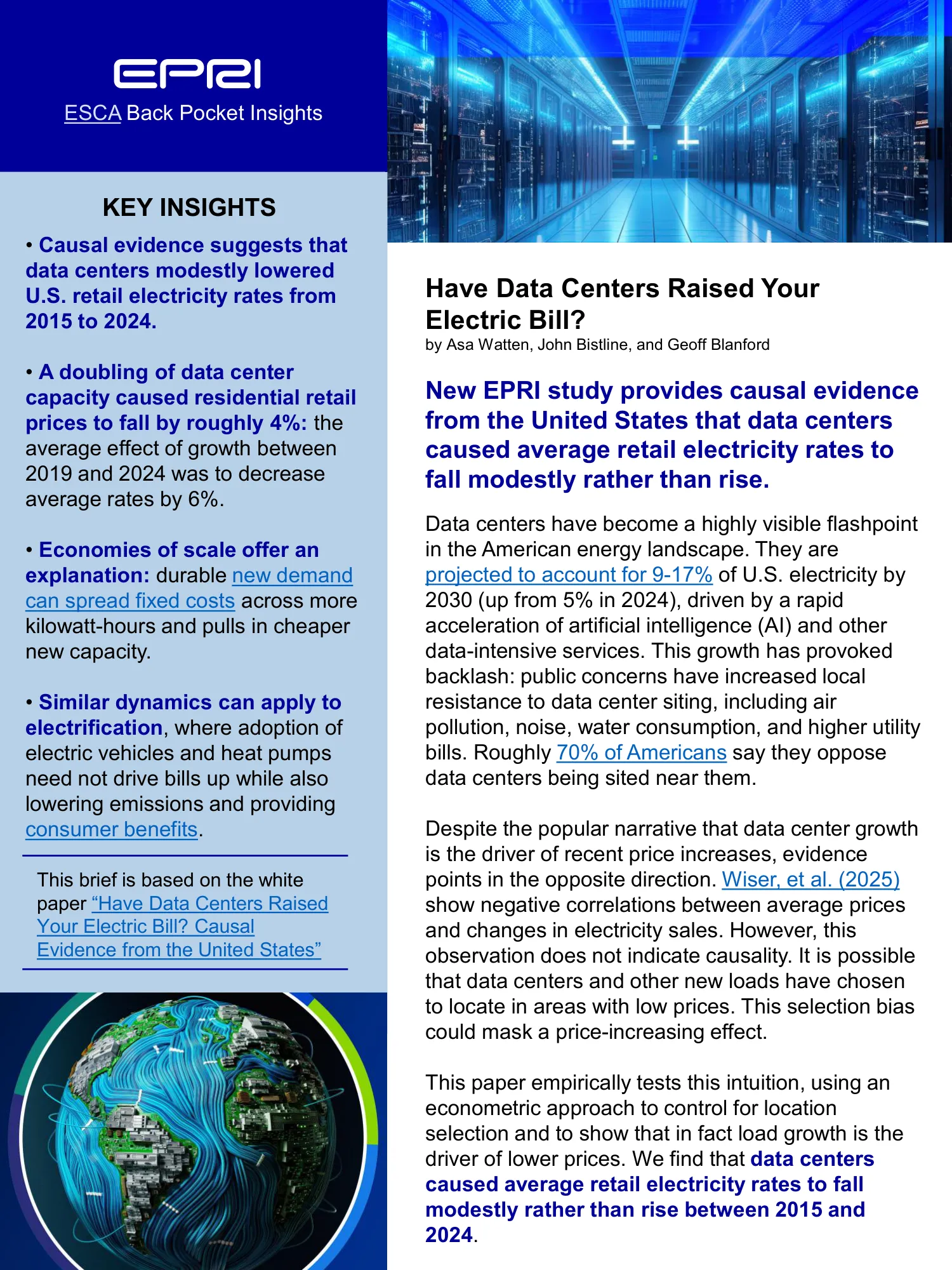
Have Data Centers Raised Your Electric Bill?
June 2026
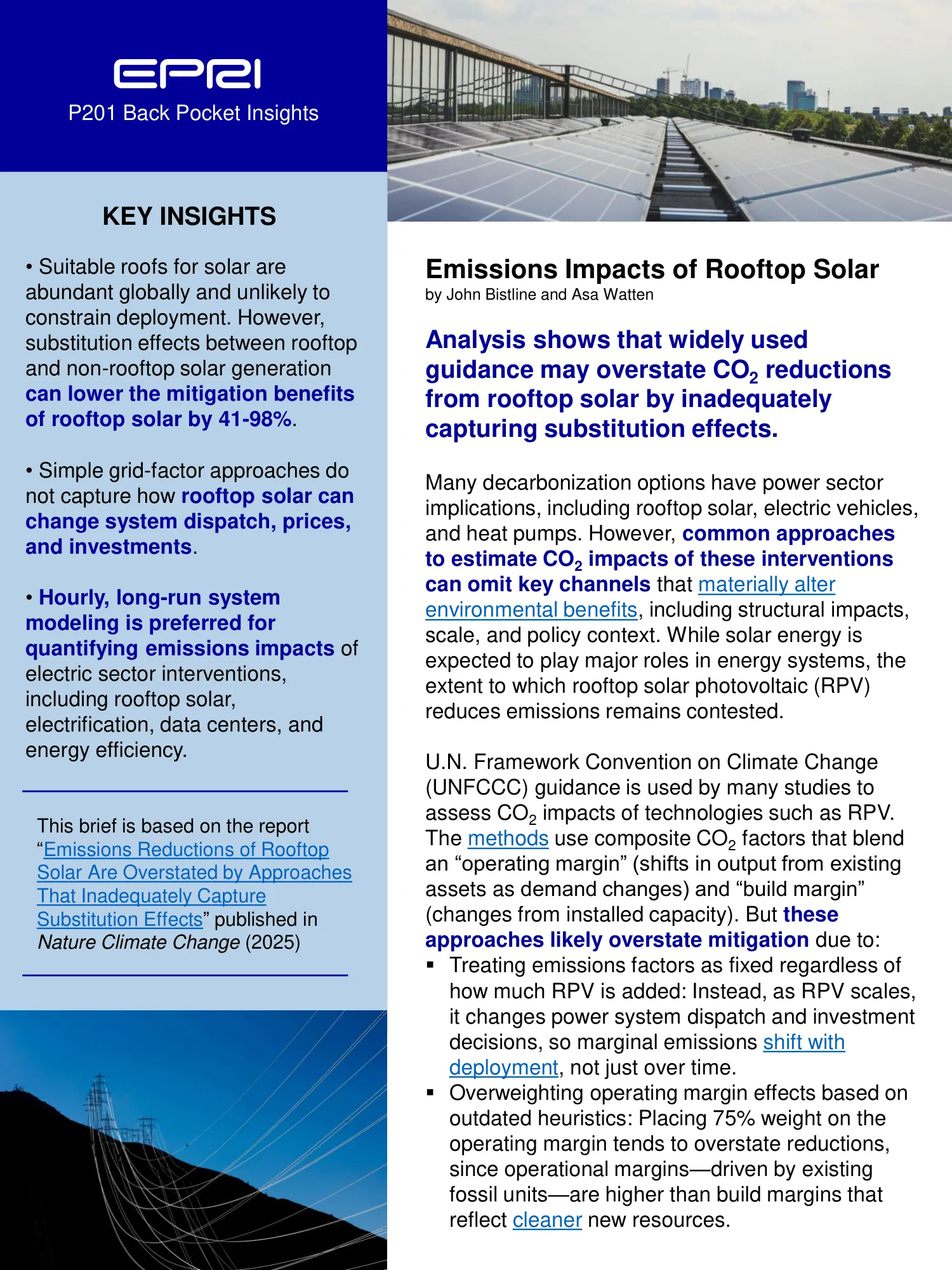
Emissions Impacts of Rooftop Solar
September 2025
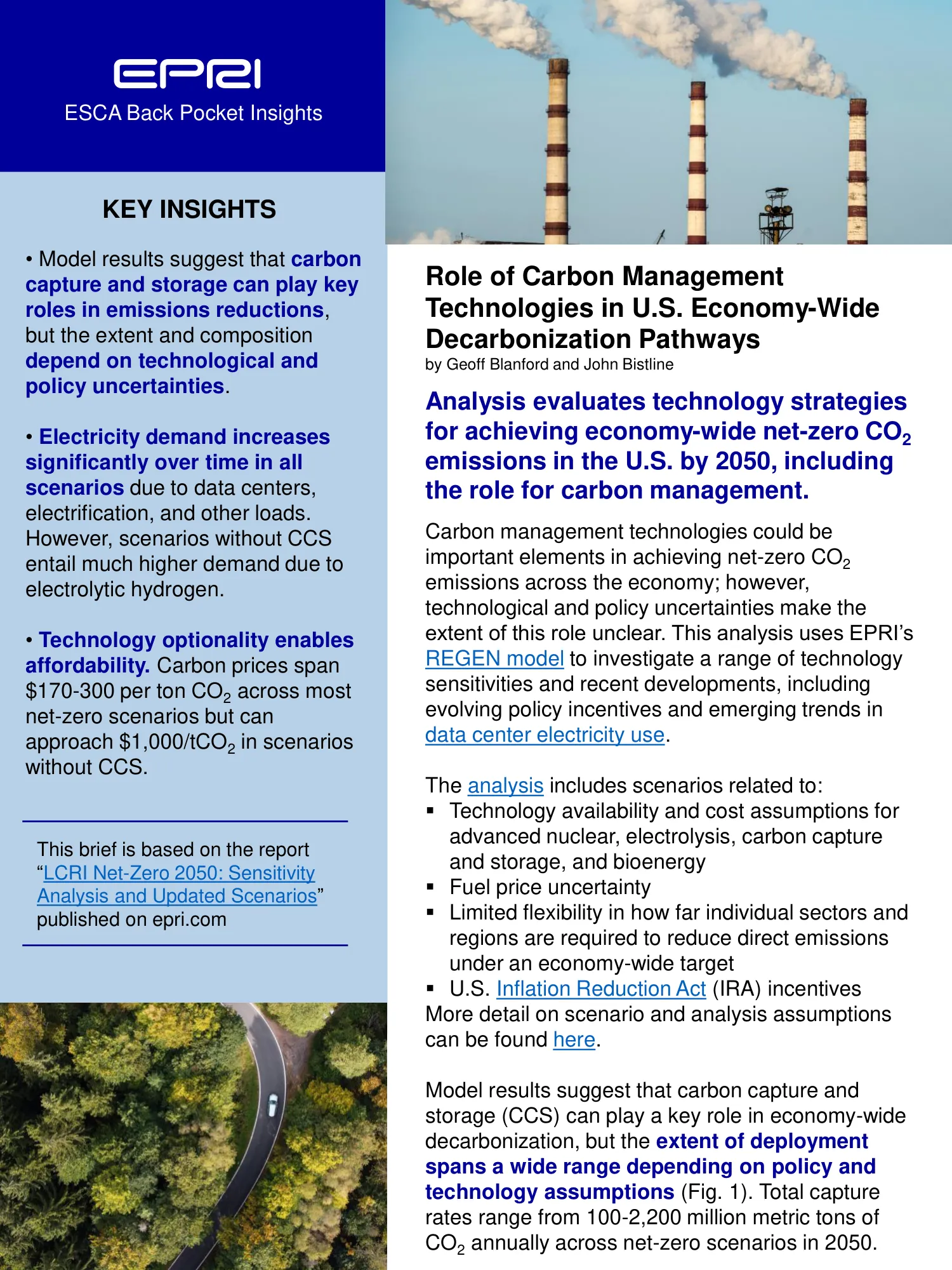
Role of Carbon Management Technologies in U.S. Economy-Wide Decarbonization Pathways
January 2025
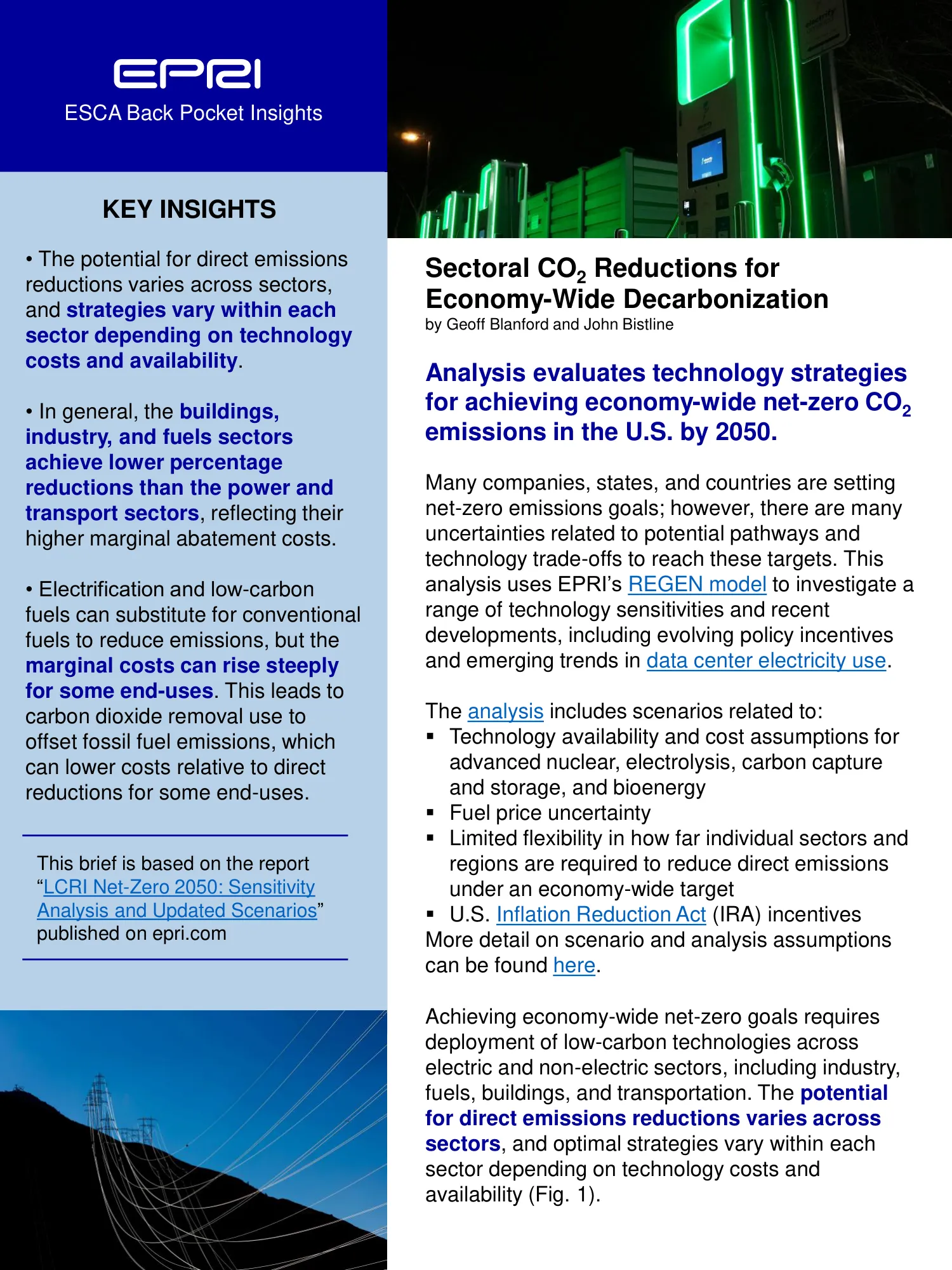
Sectoral CO2 Reductions for Economy-Wide Decarbonization
January 2025
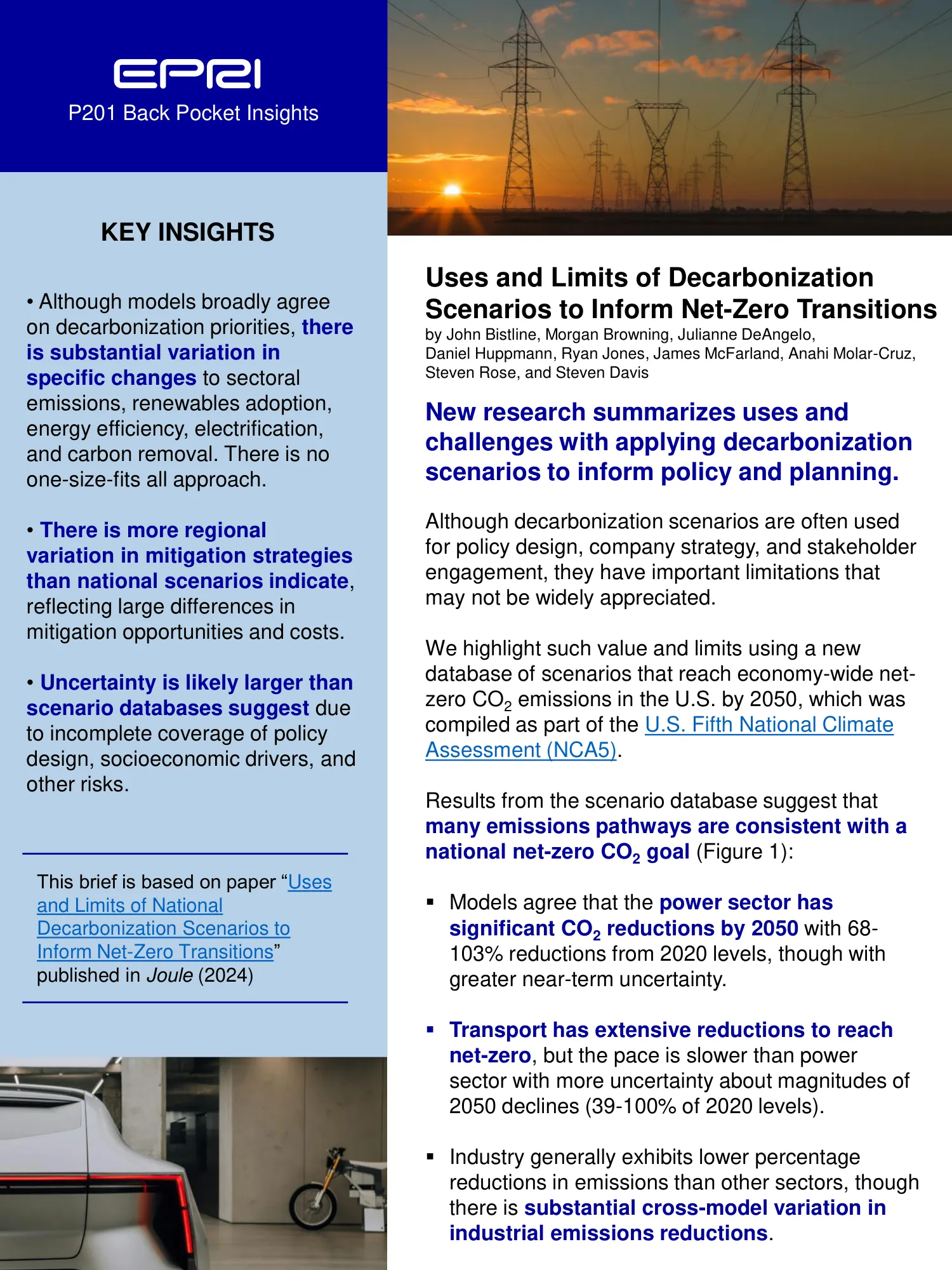
Uses and Limits of Decarbonization Scenarios to Inform Net-Zero Transitions
October 2024
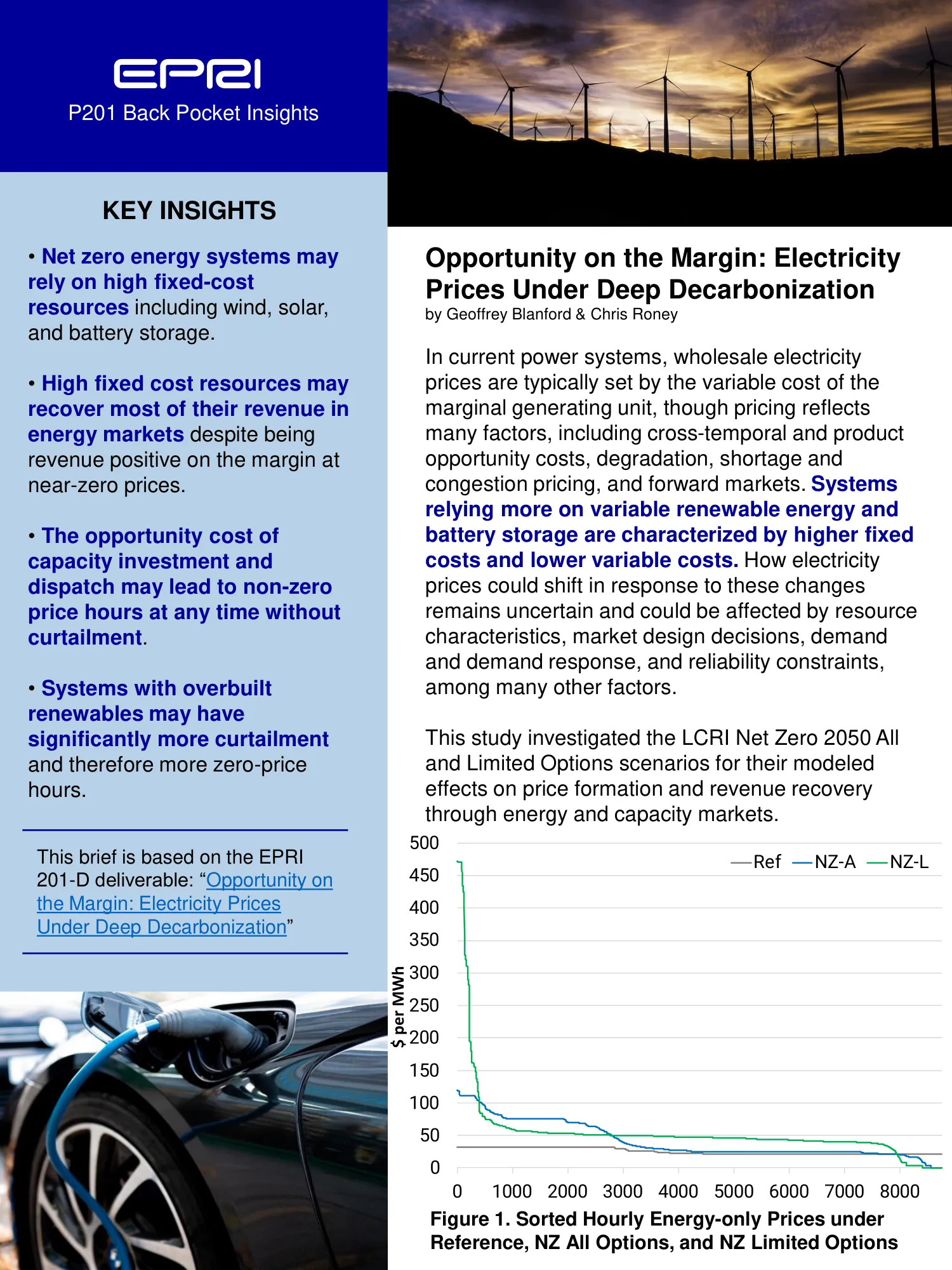
Opportunity on the Margin: Electricity Prices Under Deep Decarbonization
August 2024
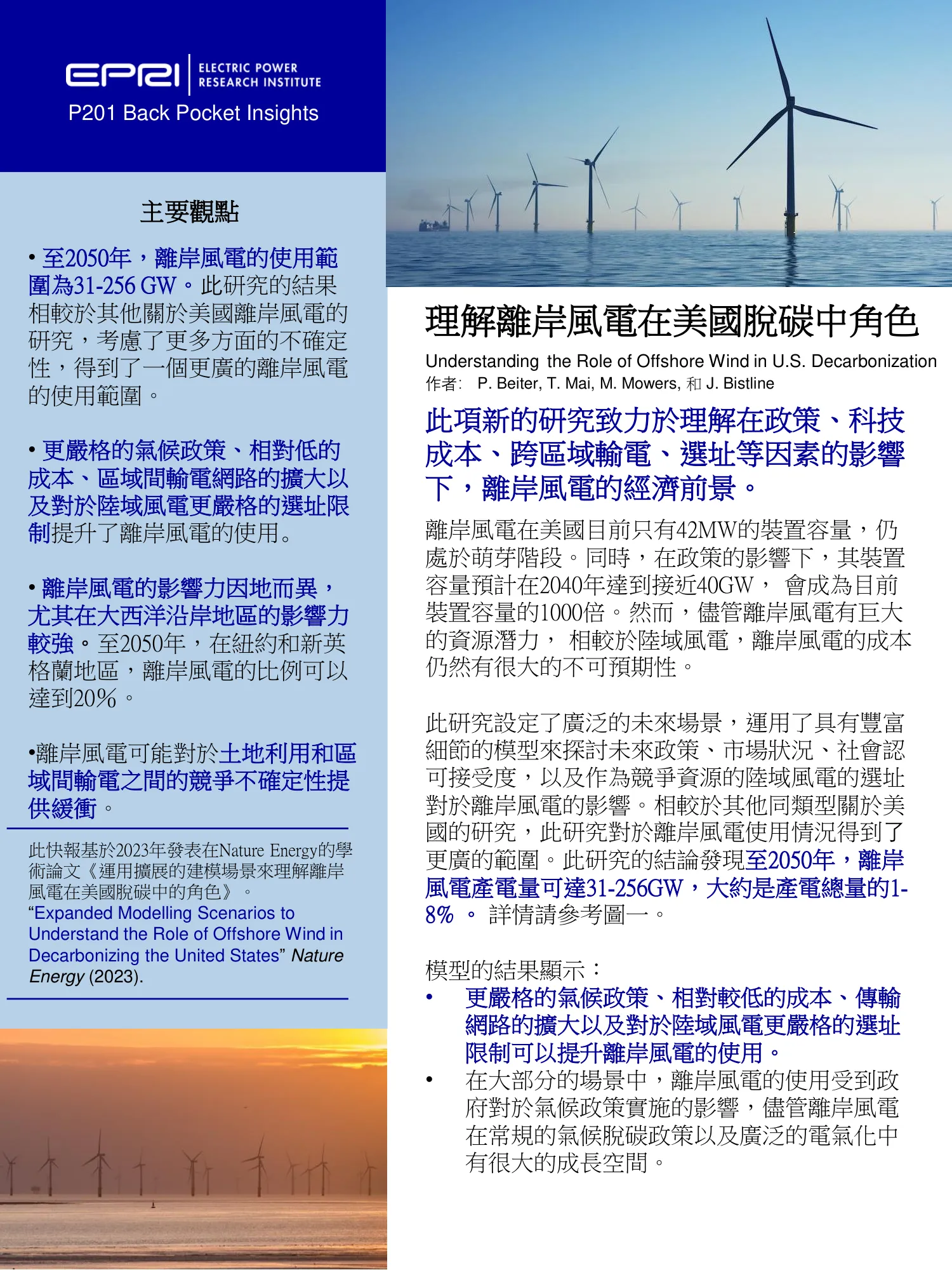
Understanding the Role of Offshore Wind in U.S. Decarbonization (中文)
October 2023
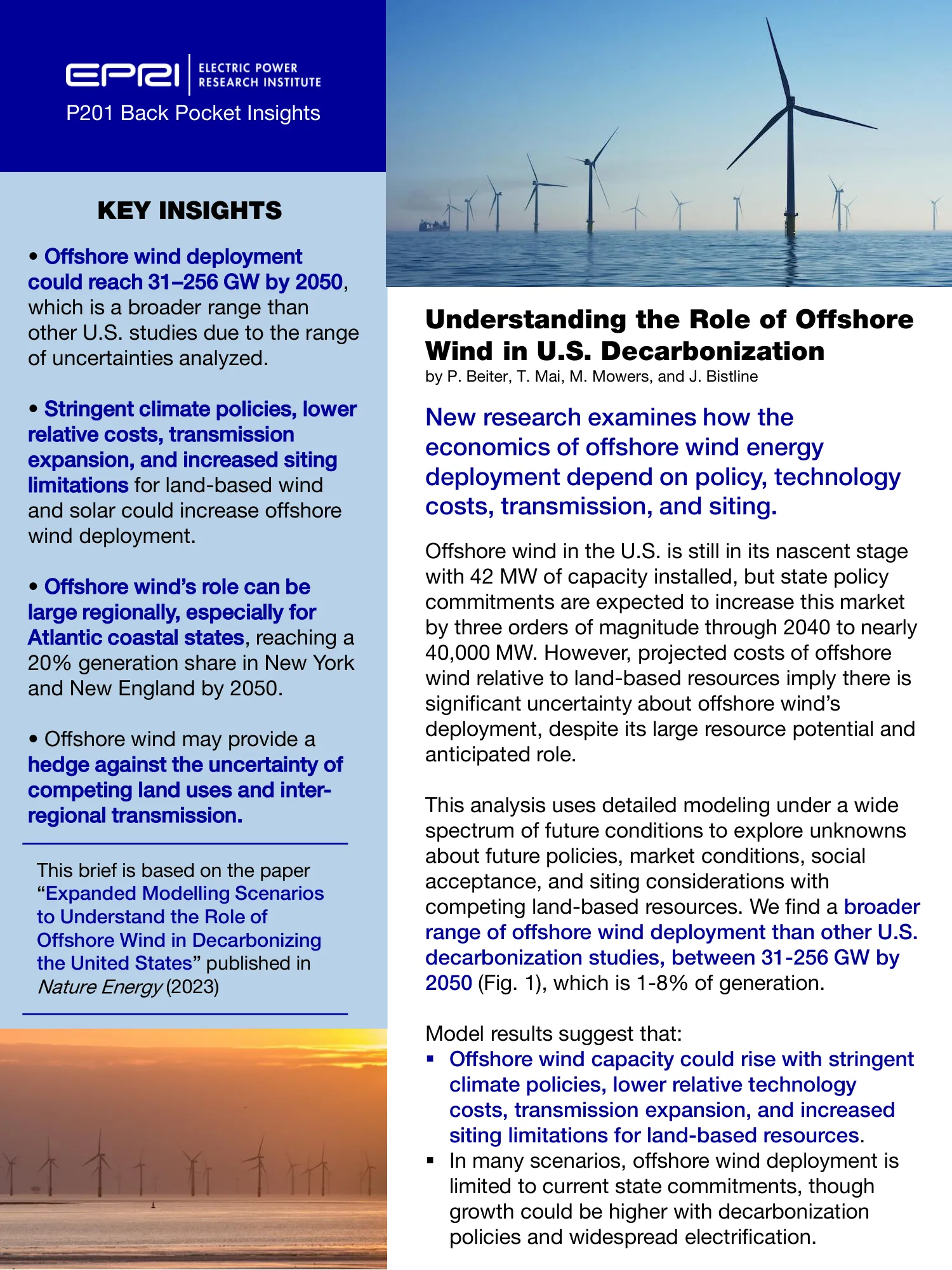
Understanding the Role of Offshore Wind in U.S. Decarbonization (English)
October 2023
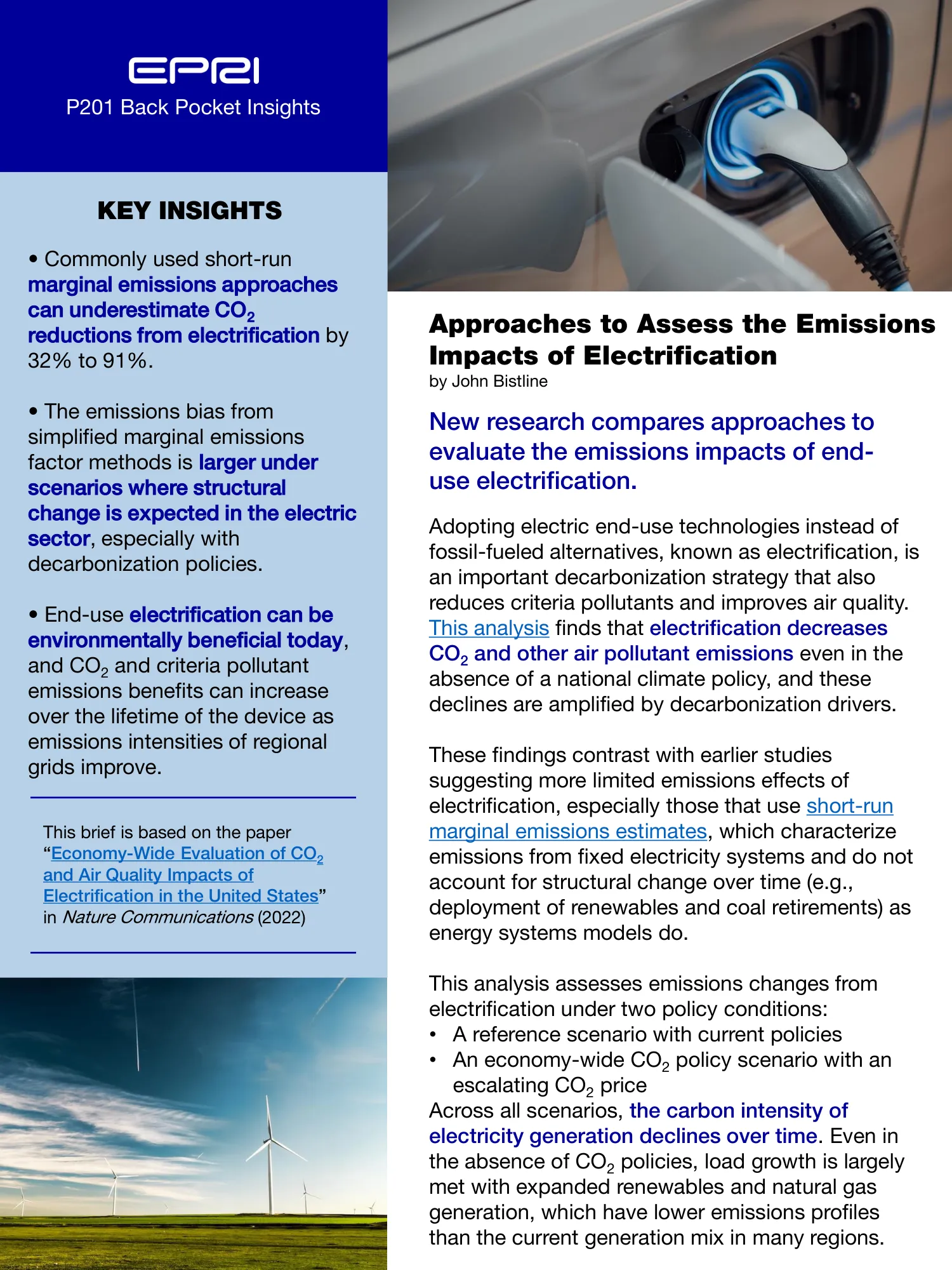
Approaches to Assess the Emissions Impacts of Electrification
November 2022
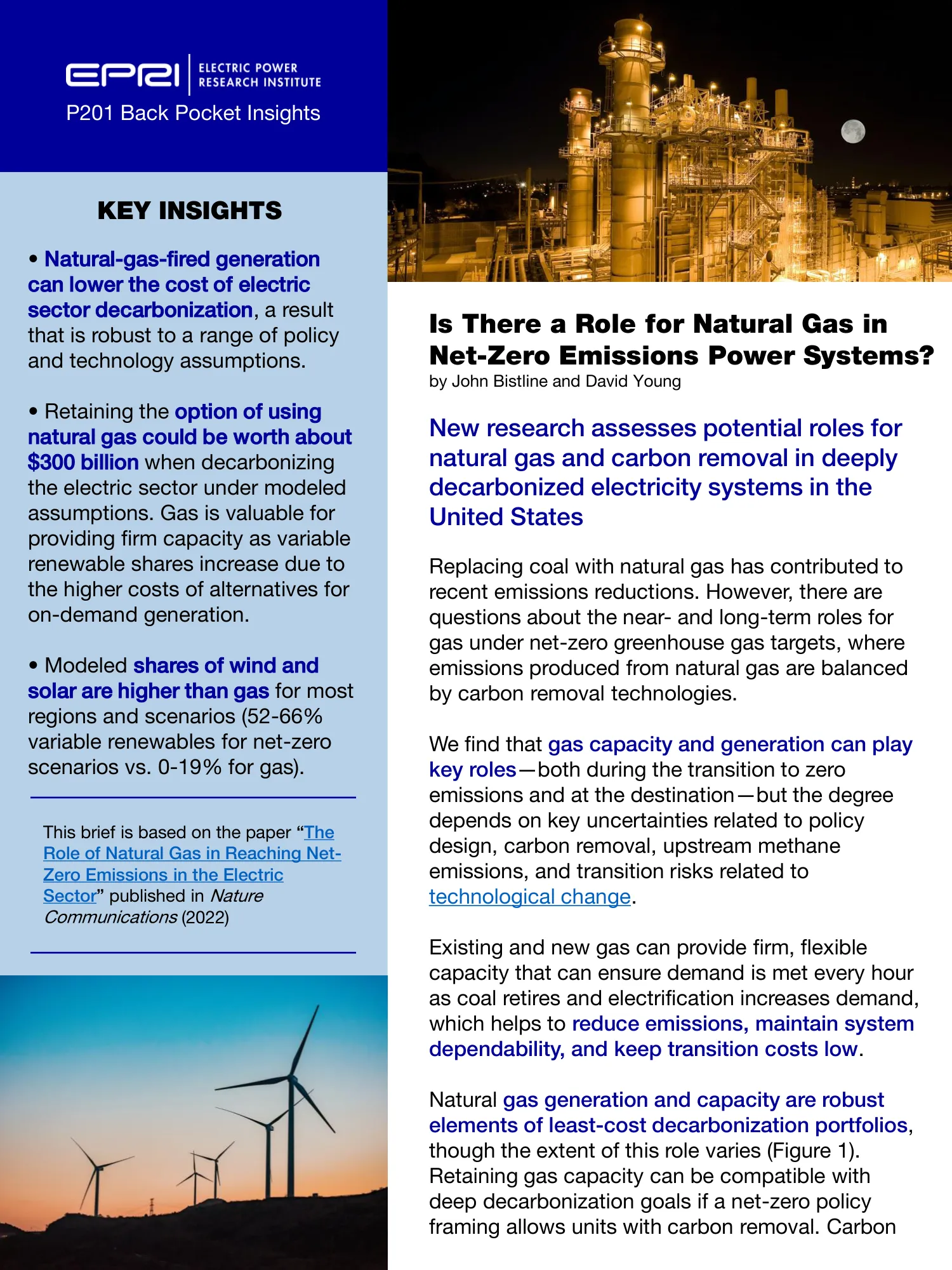
Is There a Role for Natural Gas in Net-Zero Emissions Power Systems?
August 2022
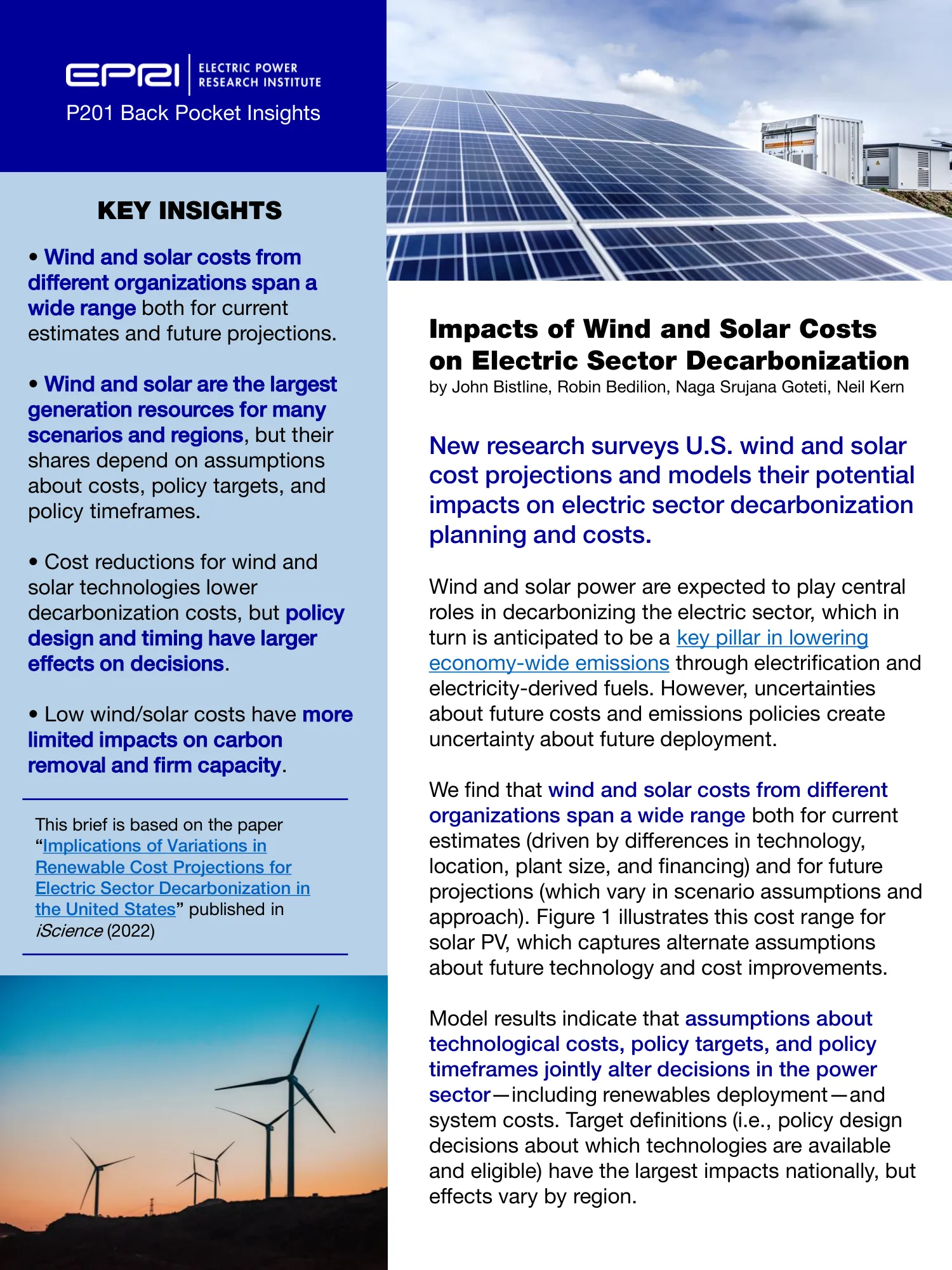
Impacts of Wind and Solar Costs on Electric Sector Decarbonization
May 2022
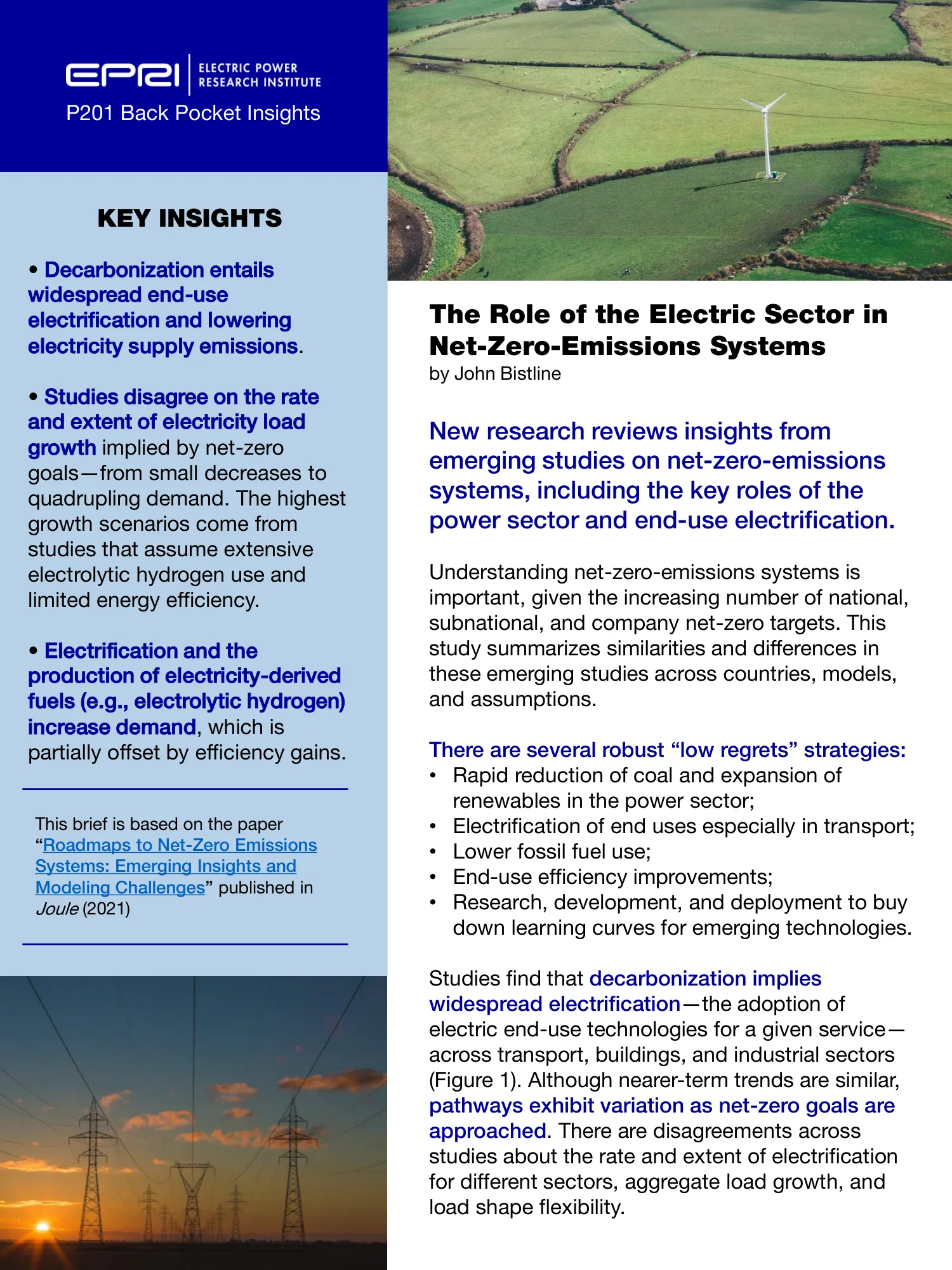
The Role of the Electric Sector in Net Zero Emissions Systems
October 2021
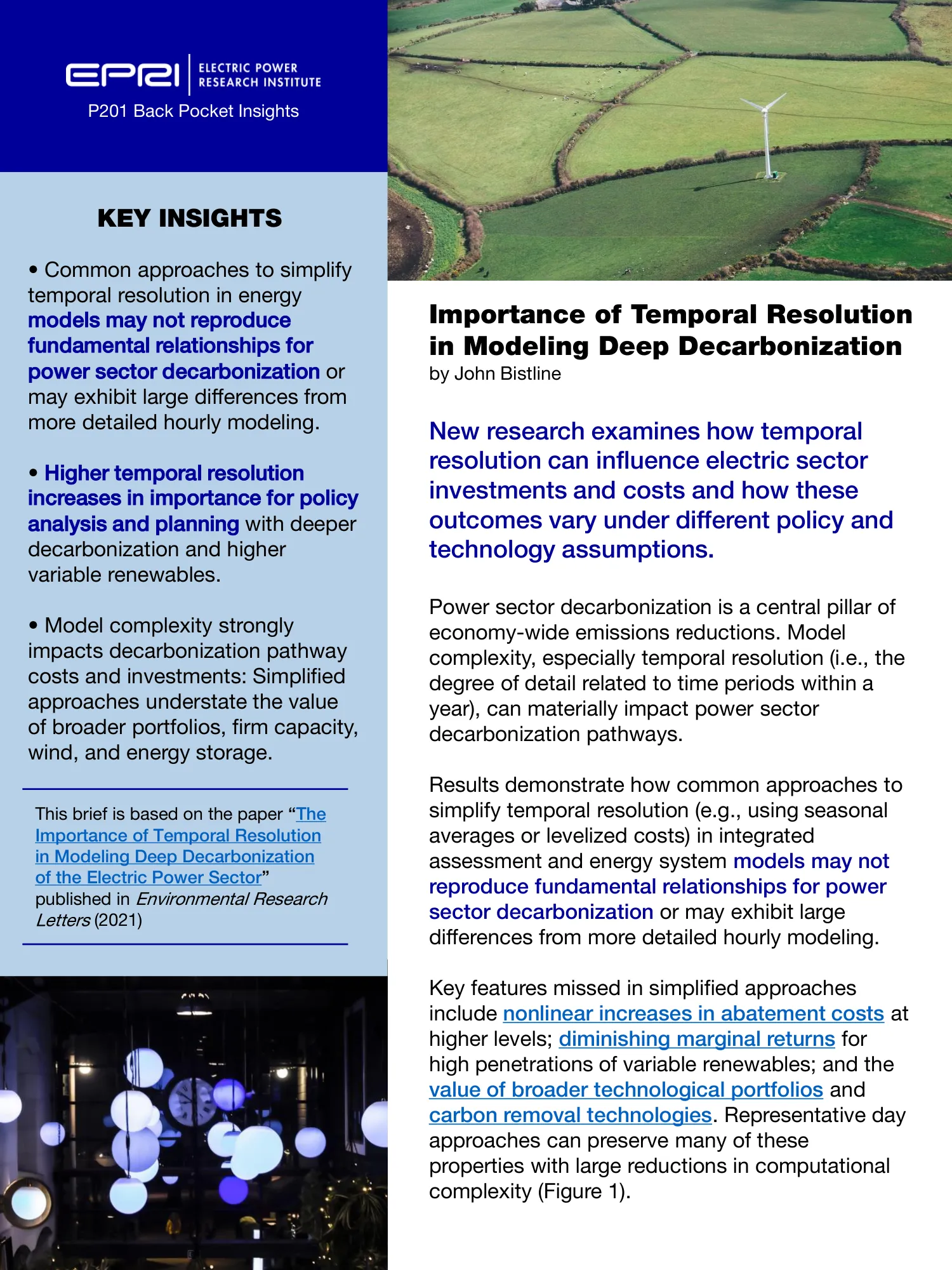
Importance of Temporal Resolution in Modeling Deep Decarbonization
July 2021
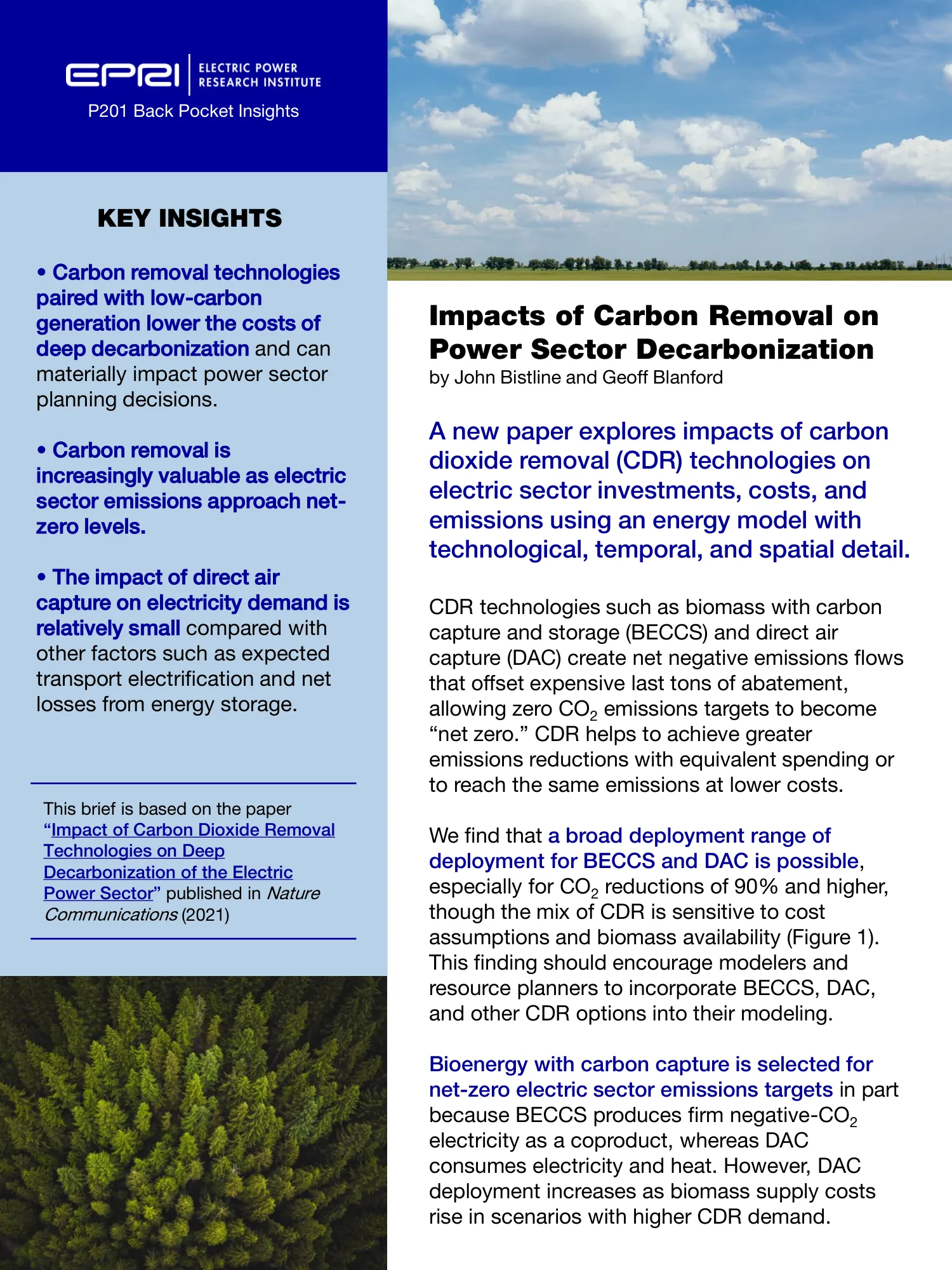
Impacts of Carbon Removal on Power Sector Decarbonization
June 2021
Insights from Natural Gas Fuel Price Scenarios
April 2020
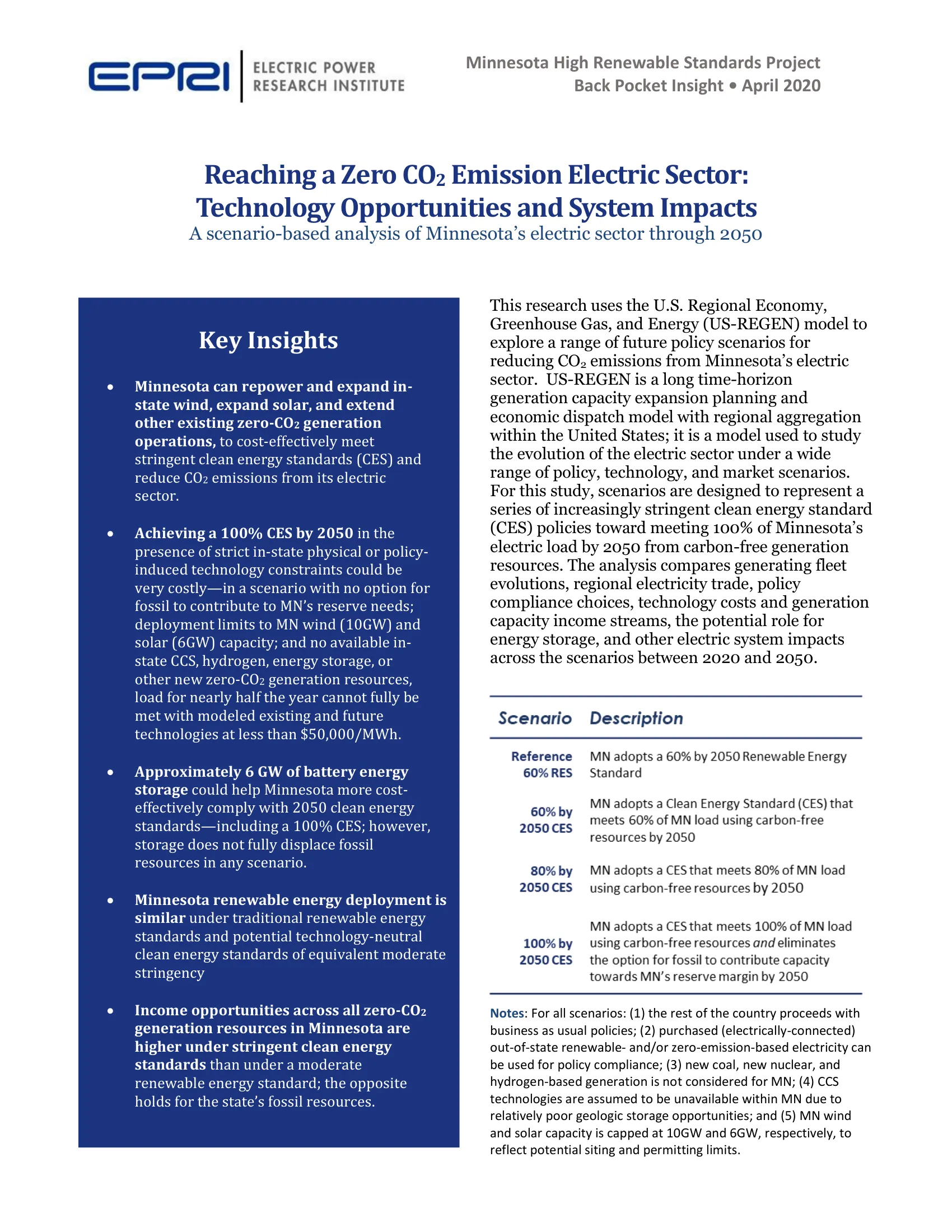
Reaching a Zero CO2 Emission Electric Sector- Technology Opportunities and System Impacts
April 2020
Insights from Natural Gas Fuel Price Scenarios: A scenario-based analysis of the US electric sector through 2050
January 2020