Transition Risk and Target Setting helps companies assess climate transition risk and set emissions reduction targets grounded in climate science and aligned with global goals. The work covers the technical requirements of climate-related financial disclosure, including the SEC’s climate risk disclosure rule, and develops methodologies for defensible, actionable corporate targets.
Publications and Presentations
Found 3 of 3
- 2026 Article
Research Priorities for Robust Climate Assessments in the United States
Kenney, Melissa A. et al (including Laura Fischer, Chris DeLyser Roney) Earth's Future
- 2025 Article
- 2022 Report
EPRI Reports
Found 13 of 13
| Details | Title | Authors | Date | Type |
|---|---|---|---|---|
Developing Meaningful Corporate Climate Transition Risk and Risk Management Metrics: A Framework and Path Forward | TECHNICAL BRIEF | |||
This technical brief raises awareness about the need for meaningful corporate climate risk metrics and the misleading use of non-risk metrics as proxies, such as greenhouse gas (GHG) emissions, GHG targets, weather events, and asset locations. Currently, there is an absence of agreed-upon climate risk and risk management metrics. This brief facilitates and advances the metric development process by outlining a conceptual framework for climate transition risk and non-risk metrics. It also offers a proposal for developing categories of climate risk metrics designed to inform different utility priorities. The brief focuses on utilities, but the conceptual proposal can be applied to other sectors. This topic is relevant to corporate climate risk disclosure rule development and compliance, climate reporting, and stakeholder engagement. | ||||
Assessment of Newer Global Emissions Scenarios for Corporate Climate Transition Risk and Target Setting Applications | TECHNICAL UPDATE | |||
This study evaluates the latest vintage of global greenhouse gas (GHG) emissions pathways from the Intergovernmental Panel on Climate Change (IPCC), the International Energy Agency, the Transition Pathway Initiative (TPI), Principles for Responsible Investing (PRI), and the Network for Greening the Financial System (NGFS). These pathways are key inputs to global climate policy, methodologies evaluating corporate climate strategies, and planning for future climate change. It is essential to understand the pathways and how to appropriately interpret and apply them in corporate climate target setting and risk assessment and management decisions and discussions. This study derives key insights regarding the following:
Regarding the latter, in addition to informing current climate change conversations, this study tests the robustness of prior insights and guidance derived from evaluating previous vintages of global emissions pathways. | ||||
The U.S. Securities and Exchange Commission (SEC) 2024 Climate Risk Disclosure Rule: Technical perspectives to inform potential future compliance, analyses, and dialogue | TECHNICAL BRIEF | |||
In 2024, the U.S. Securities and Exchange Commission (SEC) issued a final climate risk disclosure rule; however, its future is uncertain. Nonetheless, climate risk assessment is valuable for company planning and there is increasing demand for climate risk information and disclosure. Company-level climate risk assessment and disclosure are new activities for most companies and stakeholders, with significant scientific and analytical needs and challenges. This publication identifies the technical requirements, analytical needs, and technical issues associated with preparing for and responding to the SEC’s rule, as well as climate disclosure in general. Overall, this publication provides technical perspectives to inform (1) potential future disclosure, (2) climate risk assessment analytical activities and communications, and (3) internal and external engagement. | ||||
Compound Hazards and the Power Sector in a Changing Climate | TECHNICAL REPORT | |||
Compound climate hazards, or the combination of two or more climate drivers or phenomena (e.g., heat waves, droughts, extreme rainfall events), are becoming more common under climate change and have the potential to create even greater impacts than what would be expected from individual climate extremes (IPCC, 2021). These types of events can produce a wide range of damaging impacts on the power system, ranging from direct physical impacts to energy shortages. EPRI’s Climate Resilience and Adaptation Initiative (Climate READi) has developed this white paper to serve as a resource to highlight the importance of compound hazards to the power sector. Adequately assessing the impact of compound hazards on the power system involves two crucial exercises:
This white paper provides background on the types of compound hazards and identifies categories of compound hazards directly relevant to the power sector. Then, this paper reviews approaches and methodologies commonly used to study compound hazards in the literature and explores how compound hazards are currently accounted for in power system planning. Overall, Climate READi highlights three main areas where power system operators would benefit the most from future research: 1) improvements in the characterization of compound hazards relevant to the power sector, 2) in-depth studies of impacts of compound hazards on power system components or the system as a whole, and 3) work on how the power sector can increase resilience to compound hazards. | ||||
READi Insights: The Fifth National Climate Assessment - Key Insights and Connections to Climate READi | TECHNICAL BRIEF | |||
On November 14, 2023, the U.S. Global Change Research Program (USGCRP) released the Fifth National Climate Assessment (NCA5), updating the Fourth Assessment published in 2018. This report analyzes the impacts of global change in the United States and illustrates the country’s efforts on climate change. USGCRP oversees the development of this assessment, as required through the Global Change Research Act (GCRA) of 1990. Several EPRI researchers and Climate READi Affinity Group organizations participated in developing the NCA5. | ||||
Grounding Climate Risk Decisions: Physical Climate Risk Assessment Scientific Foundation and Guidance for Companies – Initial Key Co mpany-Level Insights, Technical Principles, and Technical Issues | TECHNICAL UPDATE | |||
The climate is changing, and society needs to assess and plan for potential changes in temperature, precipitation, and extreme weather, as well as related conditions, such as stream flows and sea-levels. Natural condition variability and extremes are nothing new for planners and decision-makers; however, with a changing climate there is the potential for changes to the intensity, frequency, duration, variability, and the geographic extent of physical conditions in the areas affected. It is prudent to assess the potential physical changes and the resulting implications, risks, and risk management options. However, this is a complex and challenging task, requiring knowledge and utilization of different scientific disciplines, technical resources, and tools, as well as development of new capabilities and advances in science to inform company- and system-level applications. For many, this is a new topic. There is also an overall lack of familiarity with, and common understanding of, the science, how to use it, and what is associated with appropriate physical climate risk assessment and management for individual companies and systems. EPRI has begun developing technical resources and guidance for company- and system-level assessments and for educating based on evaluating the science associated with understanding the relationship between physical climate change and a company, system, or community. This document is a summary of insights from our initial analysis. The publication shares our set of initial findings for discussion and to facilitate dialogue, highlighting important concepts and messages that are emerging from the study. Physical climate risk assessment requires more than knowing whether the climate is changing, or could be changing, or whether an asset or system is exposed to those changes. We define a set of five assessments that are required for meaningful company- and system-level physical climate risk assessment, as well as tiers of analyses for identifying different scales of potential risks and responses and risk management options. Throughout the study, we characterize and assess the relevant science and identify (1) key company-level insights, (2) technical principles for physical climate risk assessment, and (3) technical issues to consider in assessing and communicating company- and system-level physical climate risk and management of that risk. The study’s focus is assessing and translating the science for electric power physical climate risk assessment applications; however, many of the insights and guidance are applicable to other sectors and types of companies and systems, as well as local communities. | ||||
EPRI Public Comments on the SEC’s Proposed Climate Risk Disclosure Rule: The Enhancement and Standardization of Climate-Related Disclosures for Investors | TECHNICAL BRIEF | |||
On June 7, 2022, EPRI submitted public comments to the Securities and Exchange Commission (SEC) on its proposed rule for climate risk disclosure (The Enhancement and Standardization of Climate-Related Disclosures for Investors, File Number S7–10–22). This publication represents EPRI’s comments. EPRI’s comments are also available along with other public comments on the SEC’s website for the proposed rule (link). EPRI has been assessing the science relevant to company-level climate risk assessment, educating, and developing guidance, as well as advancing greenhouse gas (GHG) emissions accounting research and understanding of technical issues. Among other things, EPRI’s research has helped identify critical technical considerations for climate risk disclosure rules, including essential elements of company-level risk assessment. EPRI’s public comments include scientific observations to facilitate the development and communication of meaningful climate risk and risk management information, as well as technical considerations to specific proposals in the proposed rules. Among other things, EPRI’s public comments discuss the conflation of issues that is creating confusion and complicating climate risk assessment, the state of science and risk assessment capabilities, meaningful risk and risk management information and potential disclosure requirements for non-risk information that would be misleading, developing scenario analysis that is reasonable and appropriate for assessing individual company risk and comparing to others, capturing all the uncertainties relevant to low-carbon transitions, differentiating changes in physical conditions due to climate change from historically conditions, and GHG emissions accounting and reporting issues, including the technical challenges associated with Scope 3 emissions where explicit risk metrics, rather than emissions reporting, are needed if potential changes in associated activities represent material risks. | ||||
Technical Considerations for Climate-Related Risk Disclosure Rules | TECHNICAL UPDATE | |||
Investors are increasingly demanding climate risk disclosure information from companies (for example, Task Force for Climate-Related Financial Disclosures (TCFD), shareholder resolutions), and proposed climate risk disclosure regulations are emerging. However, many investors and other stakeholders are unfamiliar with the science, and unsure how climate risk assessment and disclosure could and should be done. Over the last few years, EPRI has been actively assessing the science, addressing scientific gaps, and developing technical resources and guidance related to company climate-related risk assessment, climate scenarios, greenhouse gas goal (GHG) setting, and GHG accounting. This work has informed company reports and reporting, risk assessment methods and analysis, and recent activities by stakeholders such as the TCFD and Moody’s. This technical brief summarizes critical technical considerations derived from EPRI’s research relevant to a climate risk disclosure rulemaking. Climate risk disclosure rules will likely have a significant impact on how things proceed. However, they could promote or hinder accurate and reliable risk assessment, risk management, and properly informed decision-making—company and investor. The technical issues identified in this technical brief will be important to consider. Doing so will facilitate grounded risk assessment and management and make the resulting disclosure information more reliable, transparent, and comparable for investors. | ||||
IPCC's 2021 Climate Science Assessment Report: High-Level Technical Summary and Perspectives | TECHNICAL BRIEF | |||
In August 2021, the Intergovernmental Panel on Climate Change (IPCC) released its Working Group I (WGI) contribution to the Sixth Assessment Report assessing current knowledge on physical earth system changes related to climate change. The Sixth Assessment updates the WGI Fifth Assessment (2013), incorporating more recent data and scientific advances. This technical brief, authored by EPRI staff who serve as authors on various IPCC working groups, highlights key insights from the WGI report with regard to observed climate change, human attribution, future climate change, and weather extremes (observed and projected) and provides technical perspectives on the implications of the findings for company and industry planning, policy, and other research. Keywords | ||||
EPRI Comments on Moody’s “Proposed framework to assess carbon transition risks for electric power companies” | TECHNICAL UPDATE | |||
In July 2020, Moody’s Investors Service requested public feedback on their “Proposed framework to assess carbon transition risks for electric power companies.” EPRI submitted detailed comments, which we are providing to the public via this publication. EPRI has been exploring the complex topic of climate-related risk for several years, particularly low-carbon transition risk, and completed two studies directly relevant to Moody’s efforts. EPRI also has extensive related scientific expertise and a long history of research community leadership and participation, including in the Intergovernmental Panel on Climate Change (IPCC) and the Task Force on Climate-Related Financial Disclosures (TCFD) Advisory Group for Scenario Guidance. Based on EPRI’s research and expertise, EPRI’s comments suggest that Moody’s proposed framework be reconsidered to more accurately inform investors, companies, and communities on a company’s risk. EPRI’s comments noted that Moody’s proposed framework did not assess an individual company’s actual carbon transition risk, and that EPRI had significant concerns about the ability of the framework as structured to effectively inform. EPRI’s full comments include high-level feedback, EPRI’s list of technical considerations for low-carbon transition risk analyses, general comments on Moody’s proposed framework, and detailed comments related to individual components of the framework. In addition, EPRI’s comments are relevant to other transition risk assessment frameworks proposed by Moody’s and can be helpful to informing and assessing risk assessment and greenhouse gas goal setting approaches proposed by other organizations. Note that, Moody’s has since revised their methodology and begun applying it to utilities in the United States. The revised methodology has many of the same elements as Moody's proposed framework. As such, EPRI’s comments can be helpful in interpreting Moody’s “scores” and engaging with stakeholders. | ||||
1-10 of 13
Back Pocket Insights
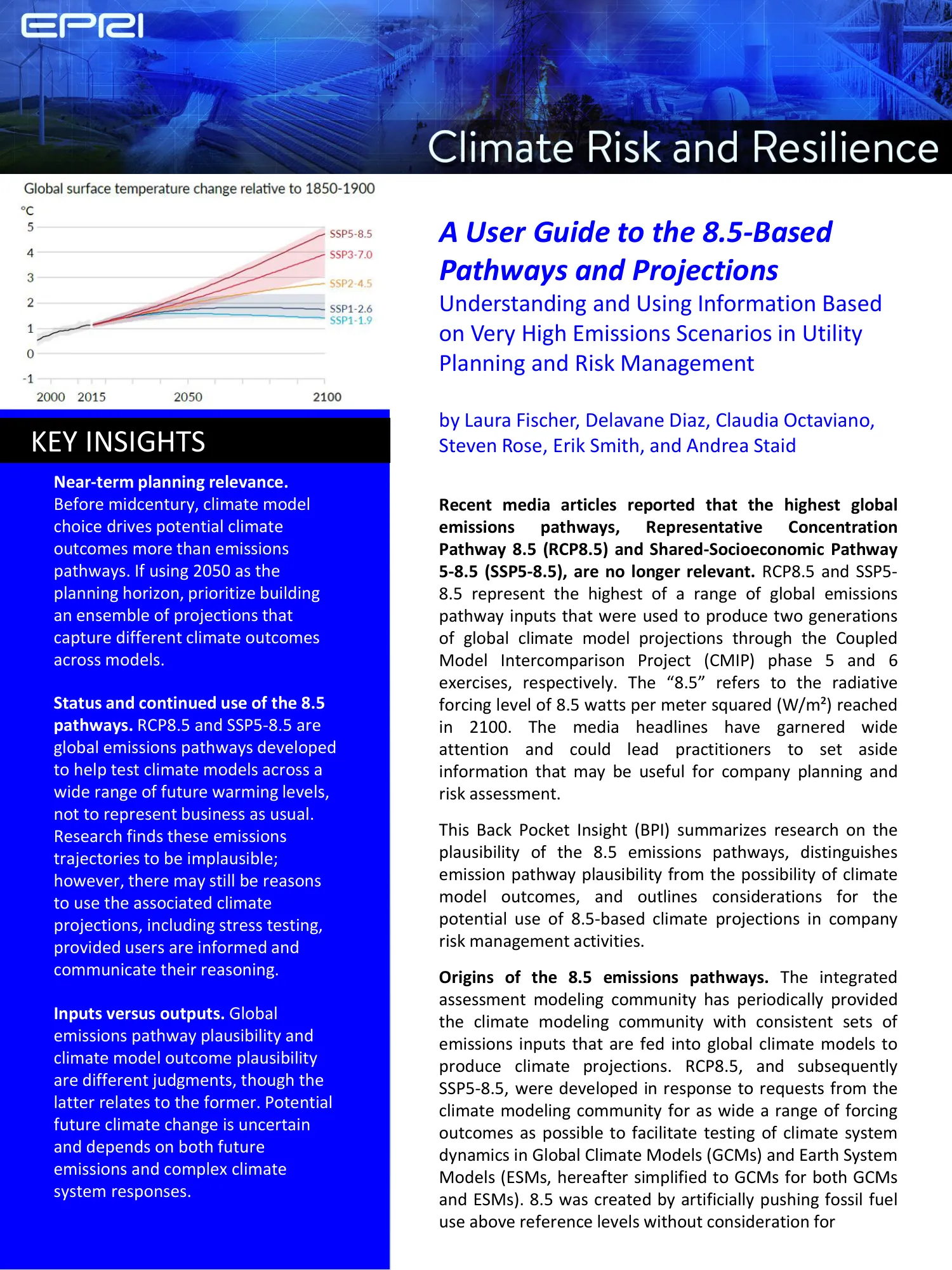
A User Guide to the 8.5-Based Pathways and Projections
October 2026
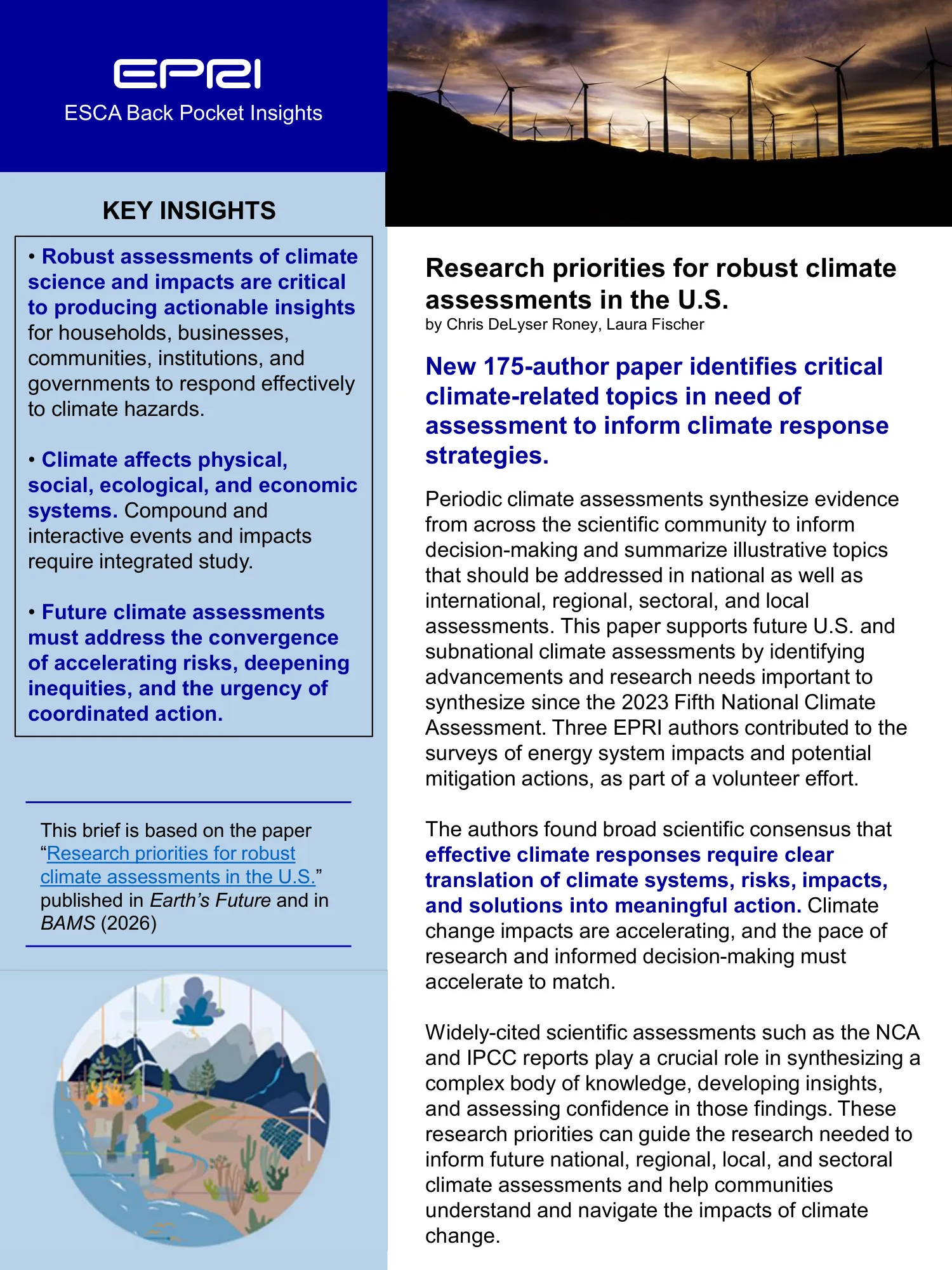
Research Priorities for Robust Climate Assessments in the U.S.
September 2026
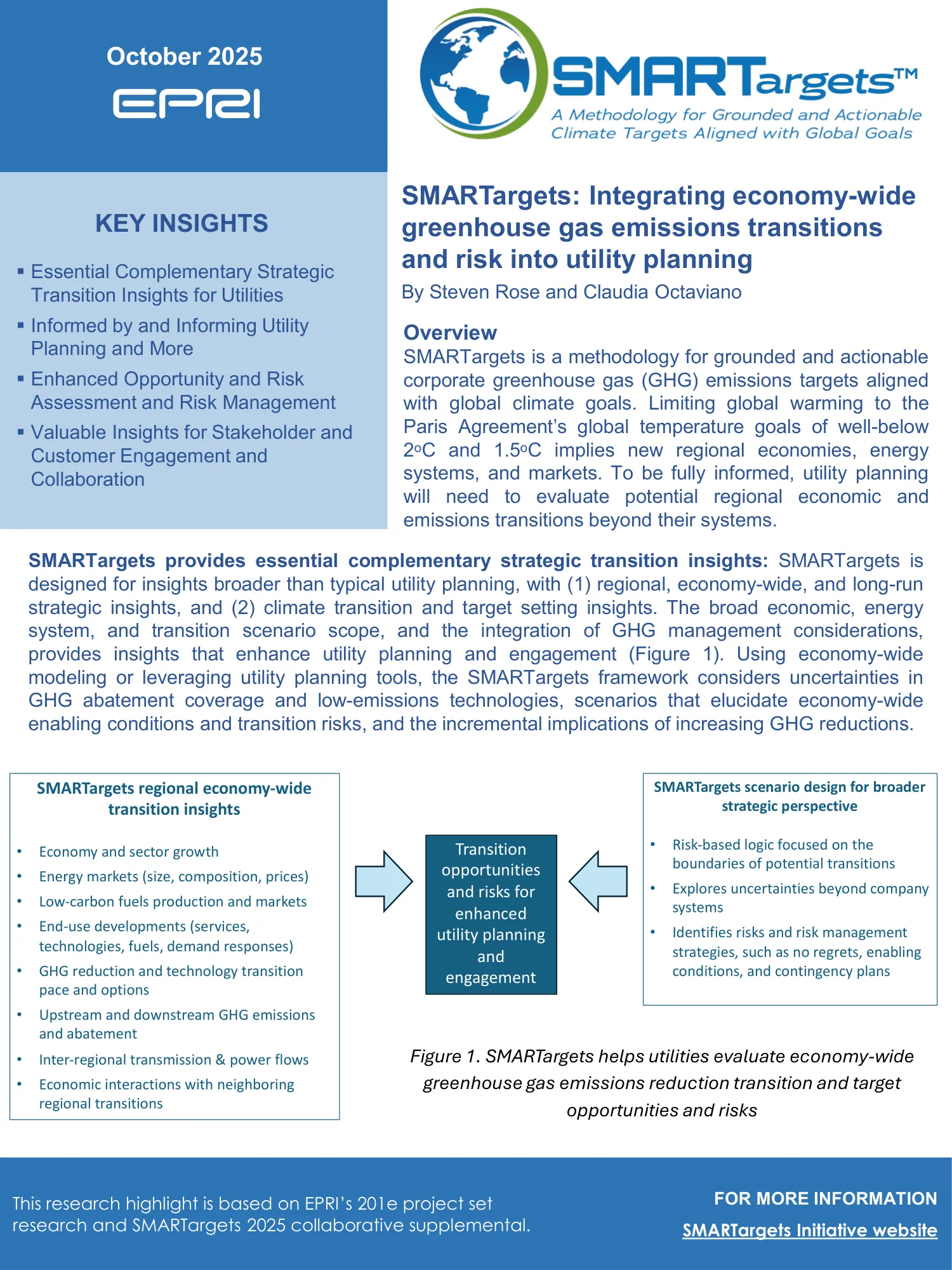
SMARTargets: Integrating economy-wide greenhouse gas emissions transitions and risk into utility planning
October 2025
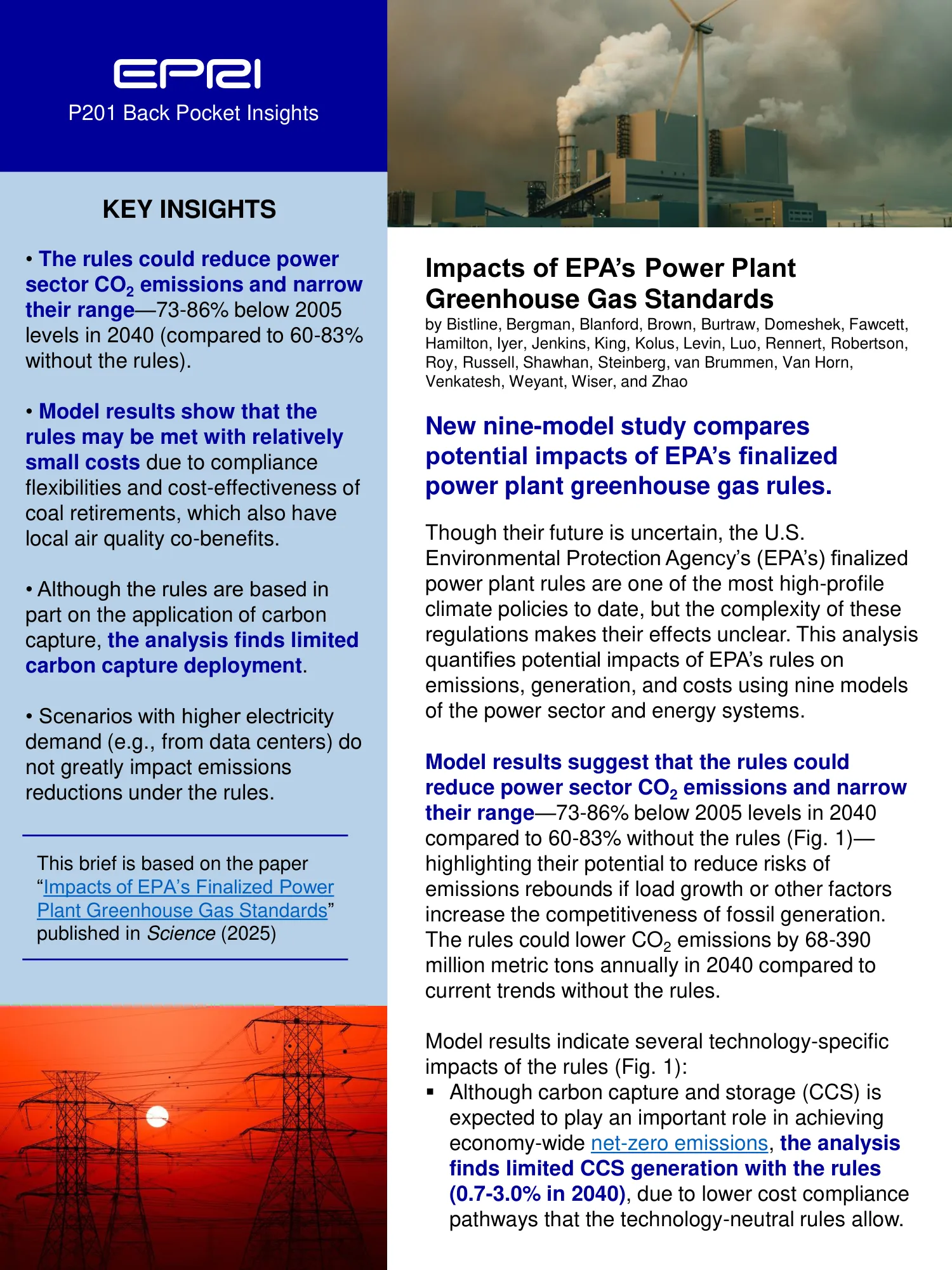
Impacts of EPA's Power Plant Greenhouse Gas Standards
January 2025
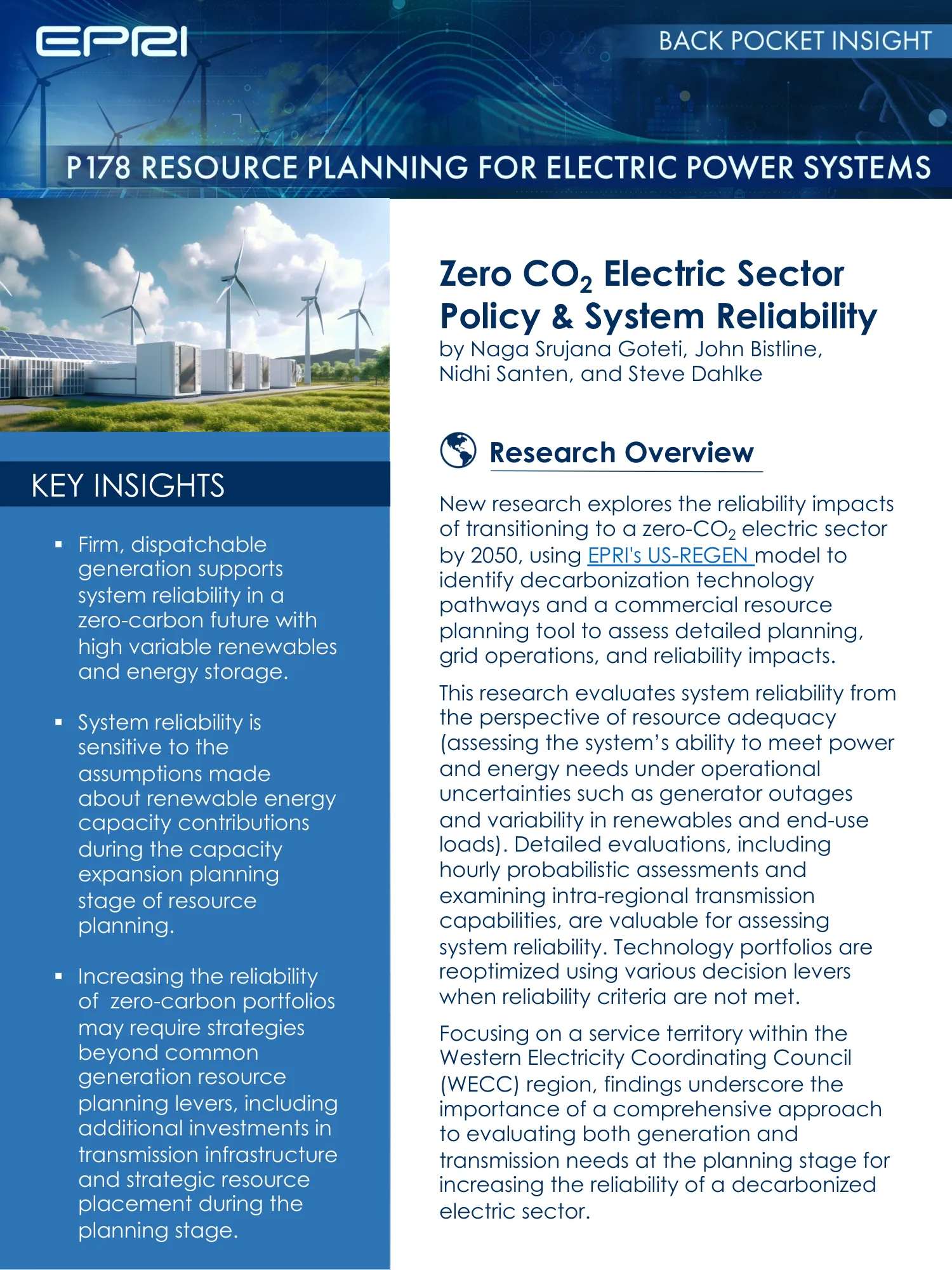
Zero CO2 Electric Sector Policy & System Reliability
May 2024
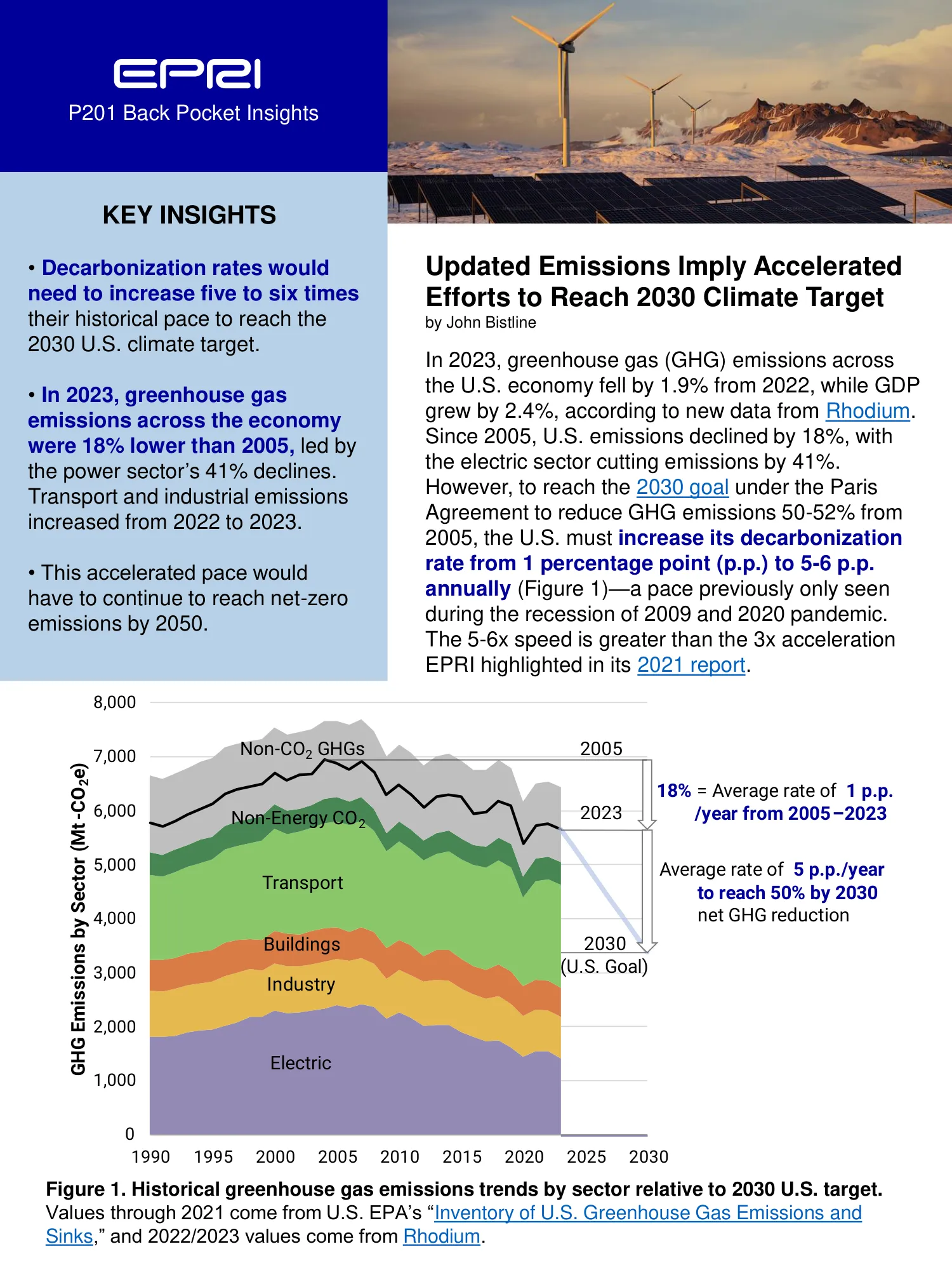
Updated Emissions Imply Accelerated Efforts to Reach 2030 Climate Target
January 2024
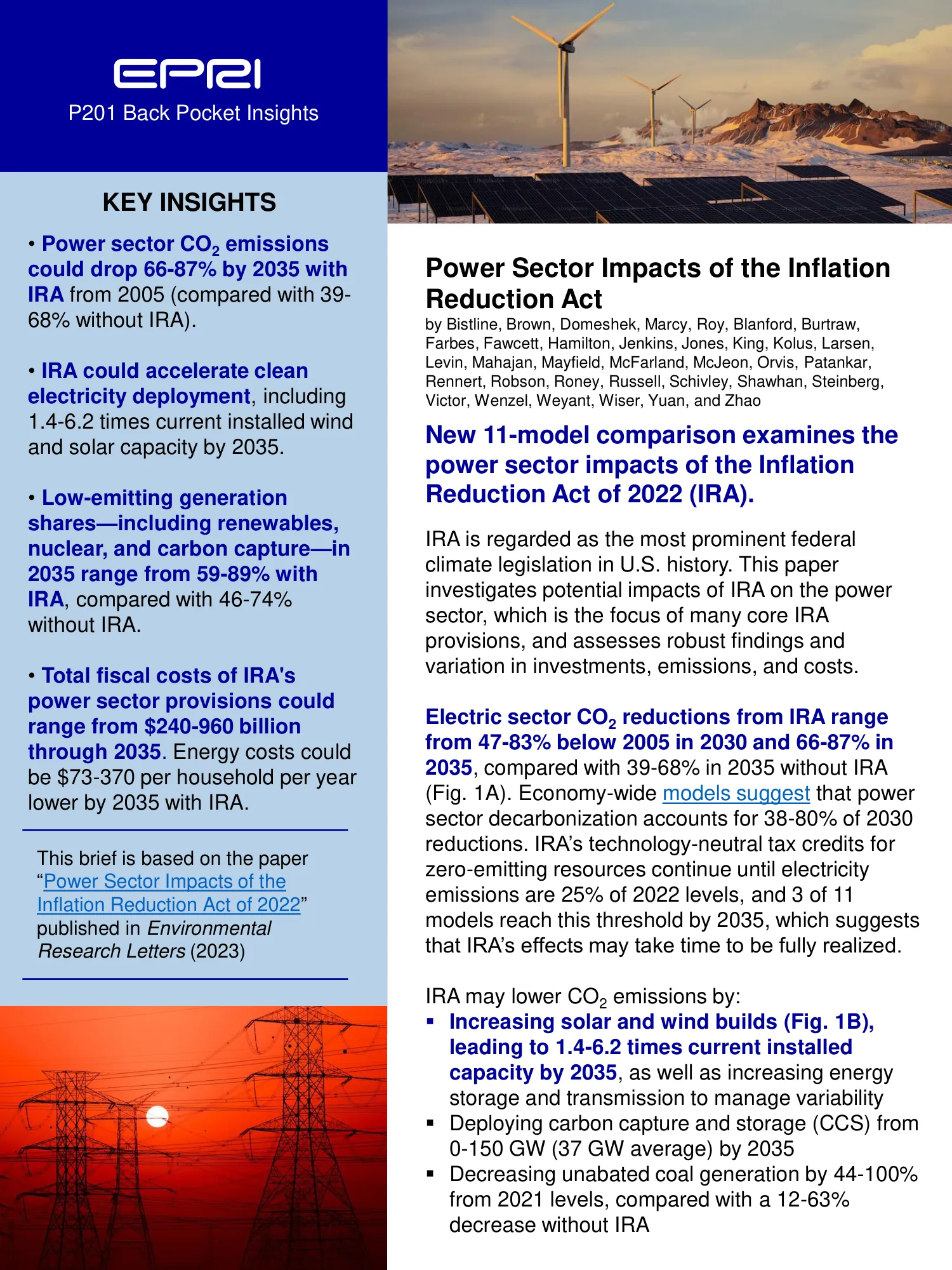
IRA MIP Power Summary
December 2023
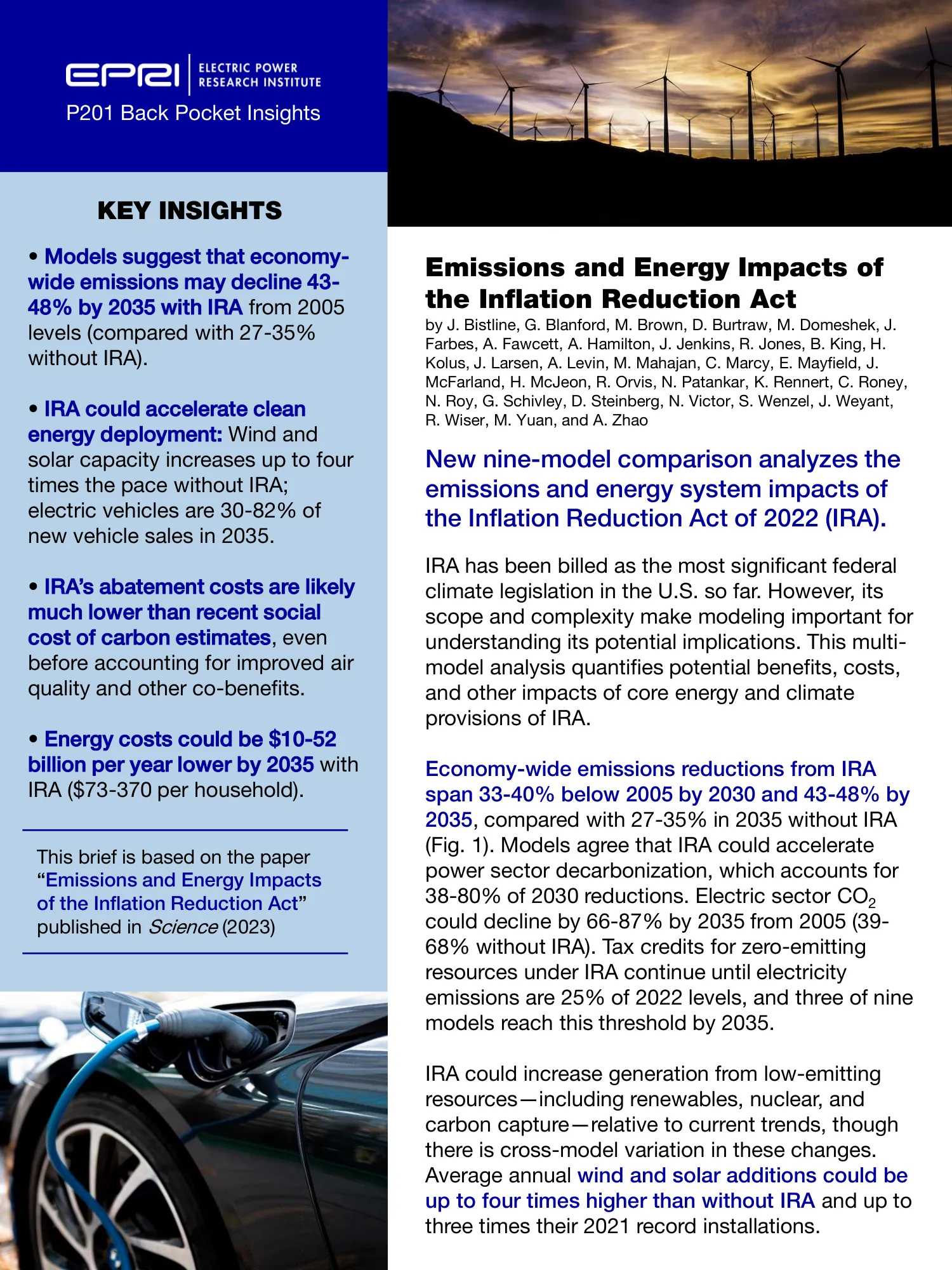
Emissions and Energy Impacts of the Inflation Reduction Act
August 2023
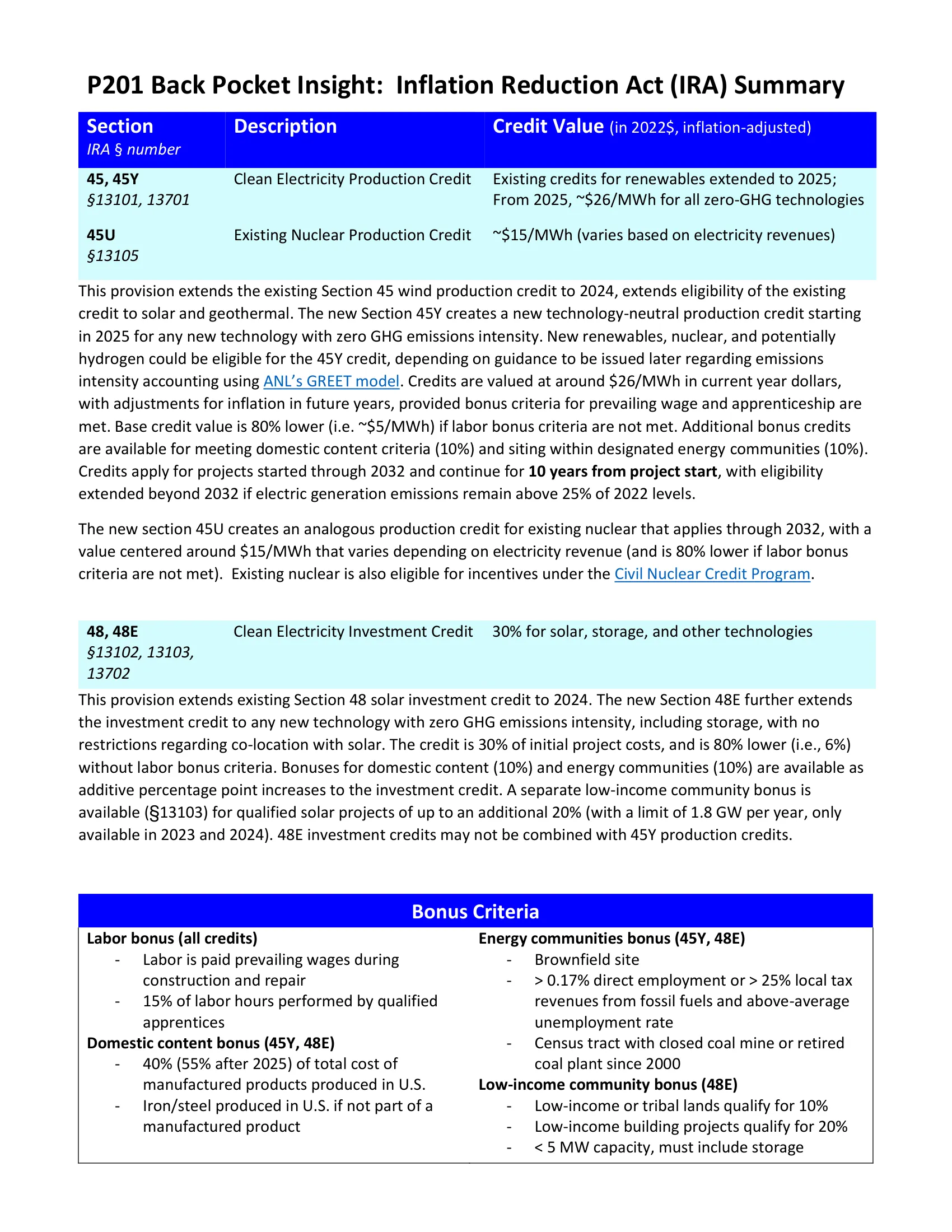
Inflation Reduction Act Two Pager
June 2023
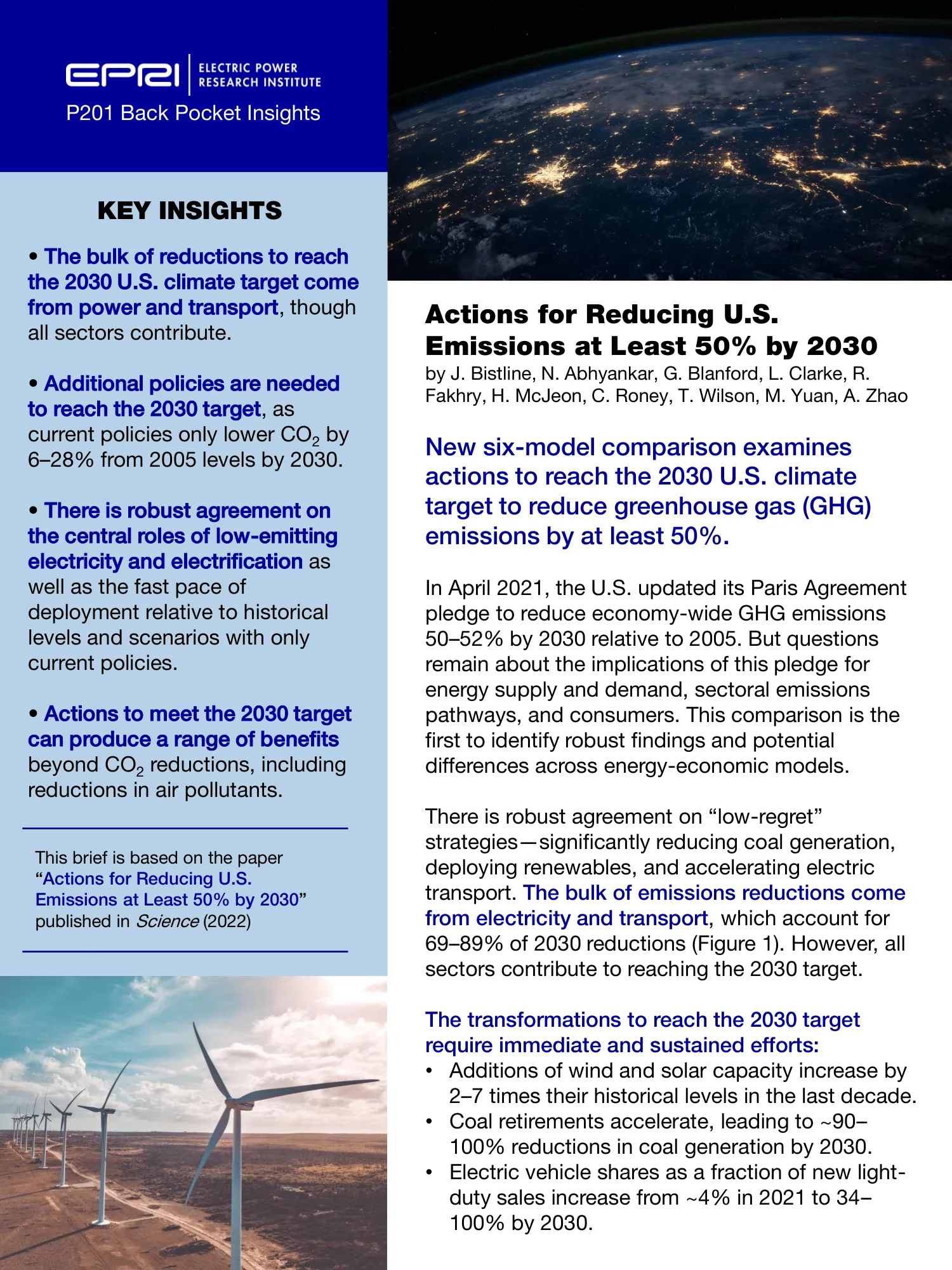
Actions for Reducing U.S. Emissions at Least 50% by 2030
May 2022
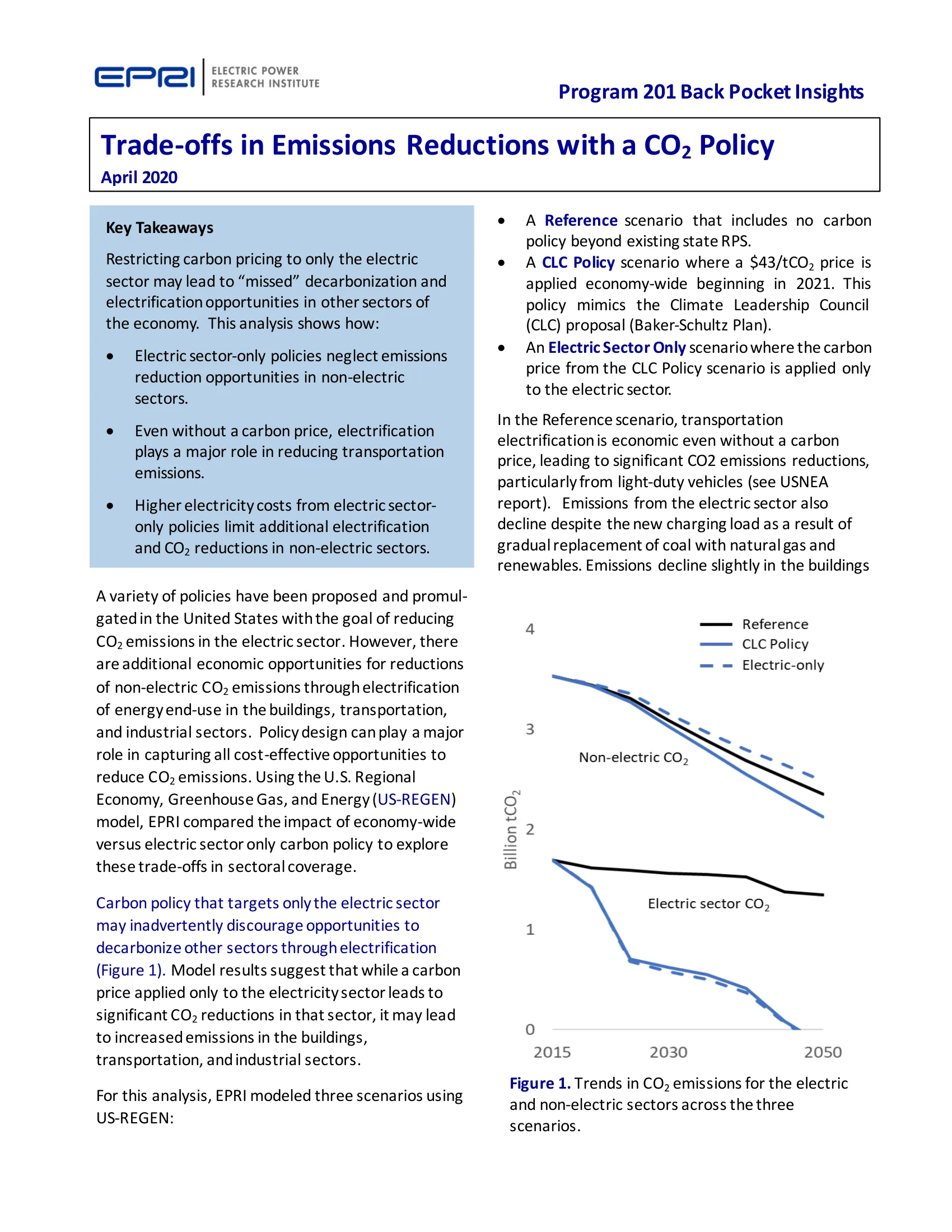
Trade-offs in Emissions Reductions with a CO2 Policy
April 2020
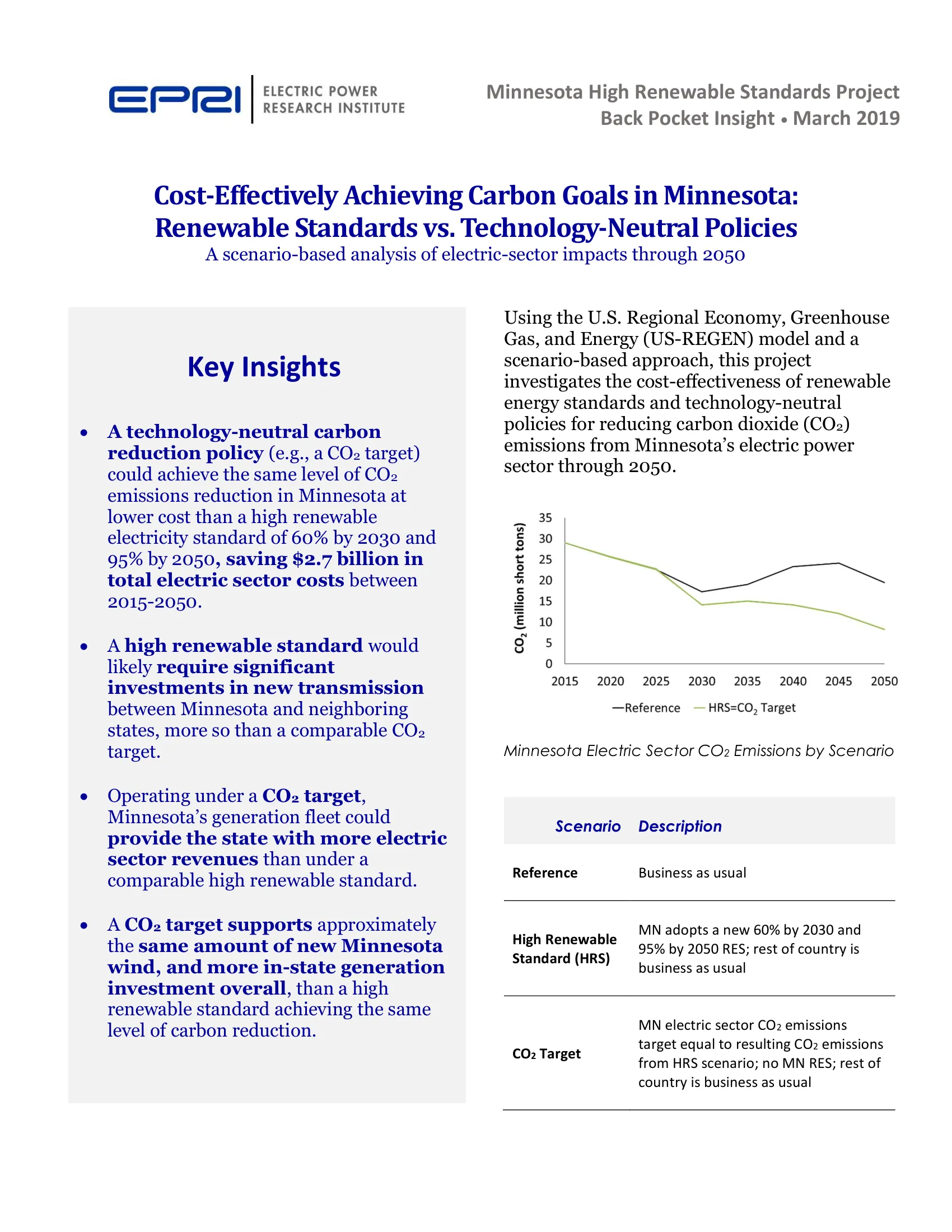
Cost-Effectively Achieving Carbon Goals in Minnesota Renewable Standards vs. Technology-Neutral Policies
December 2019
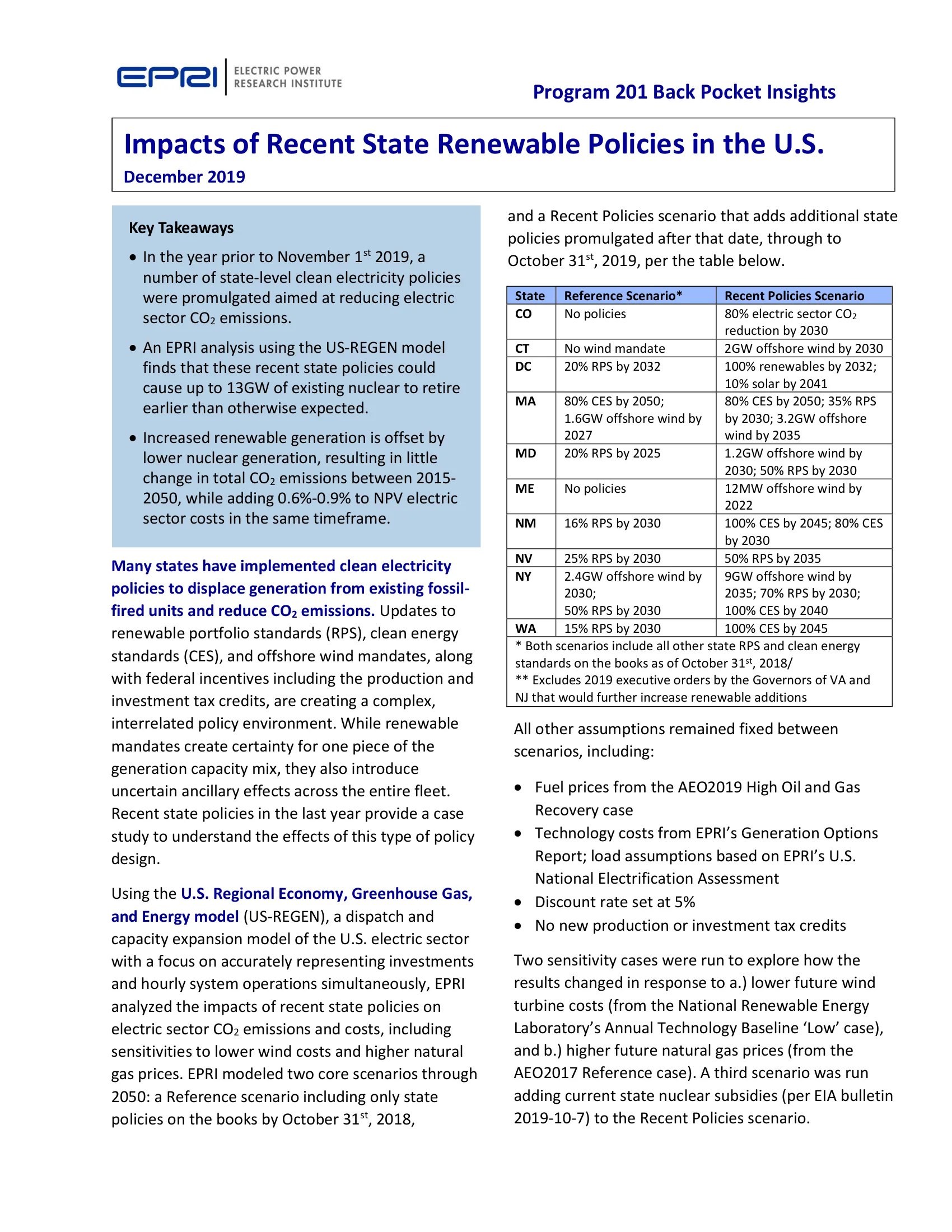
Impacts of Recent State Renewables Policies in the U.S.
December 2019
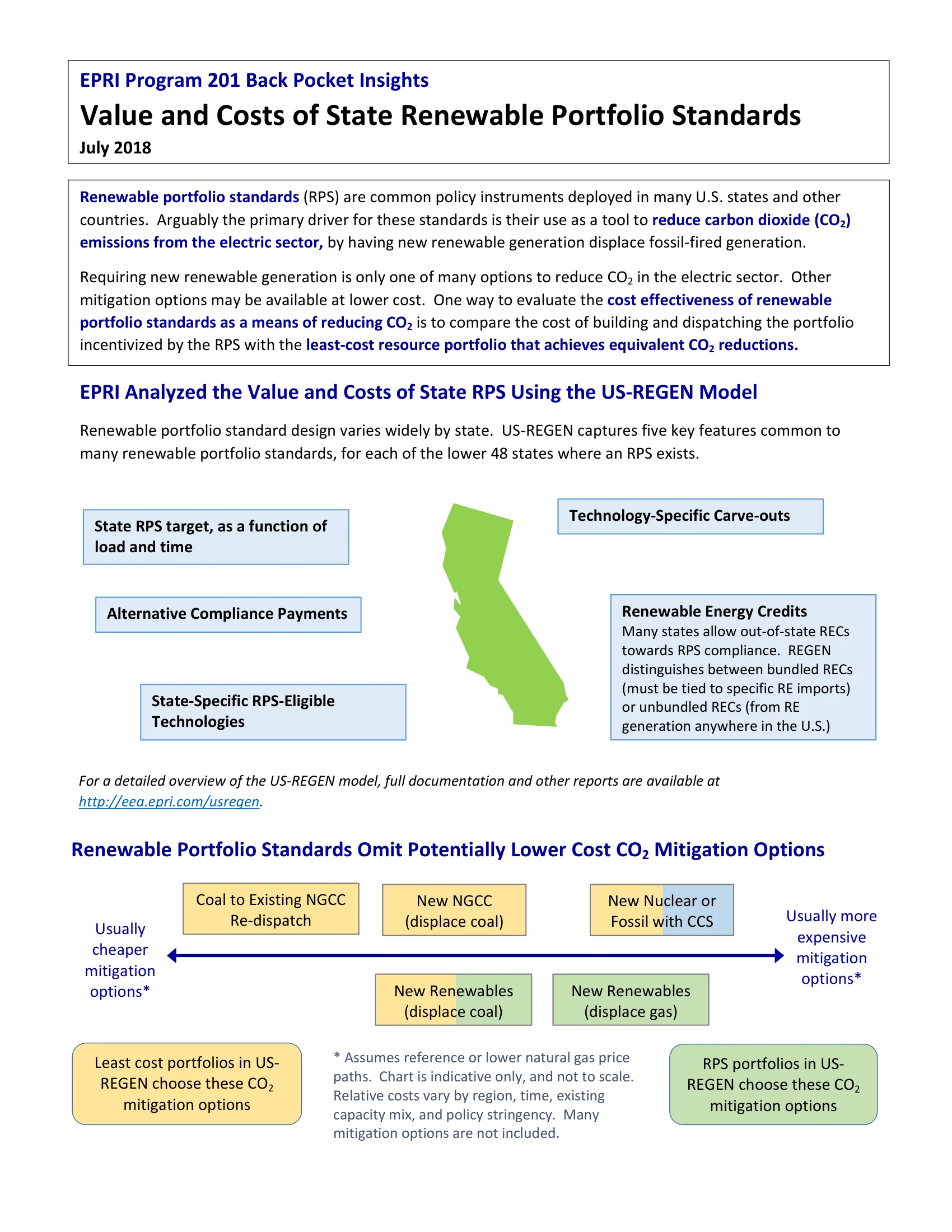
Value and Costs of State Renewable Portfolio Standards
July 2018
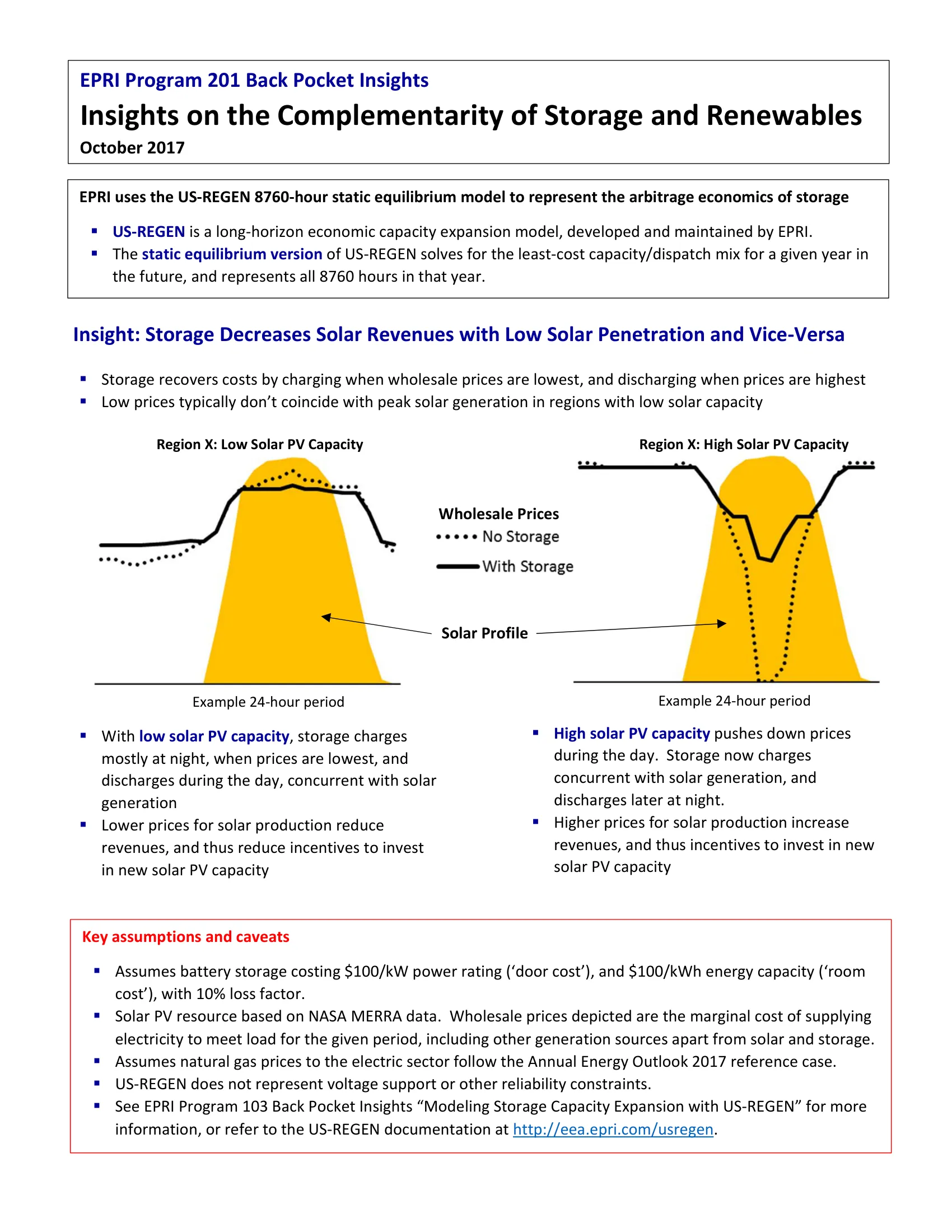
Insights on the Complementarity of Storage and Renewables
October 2017
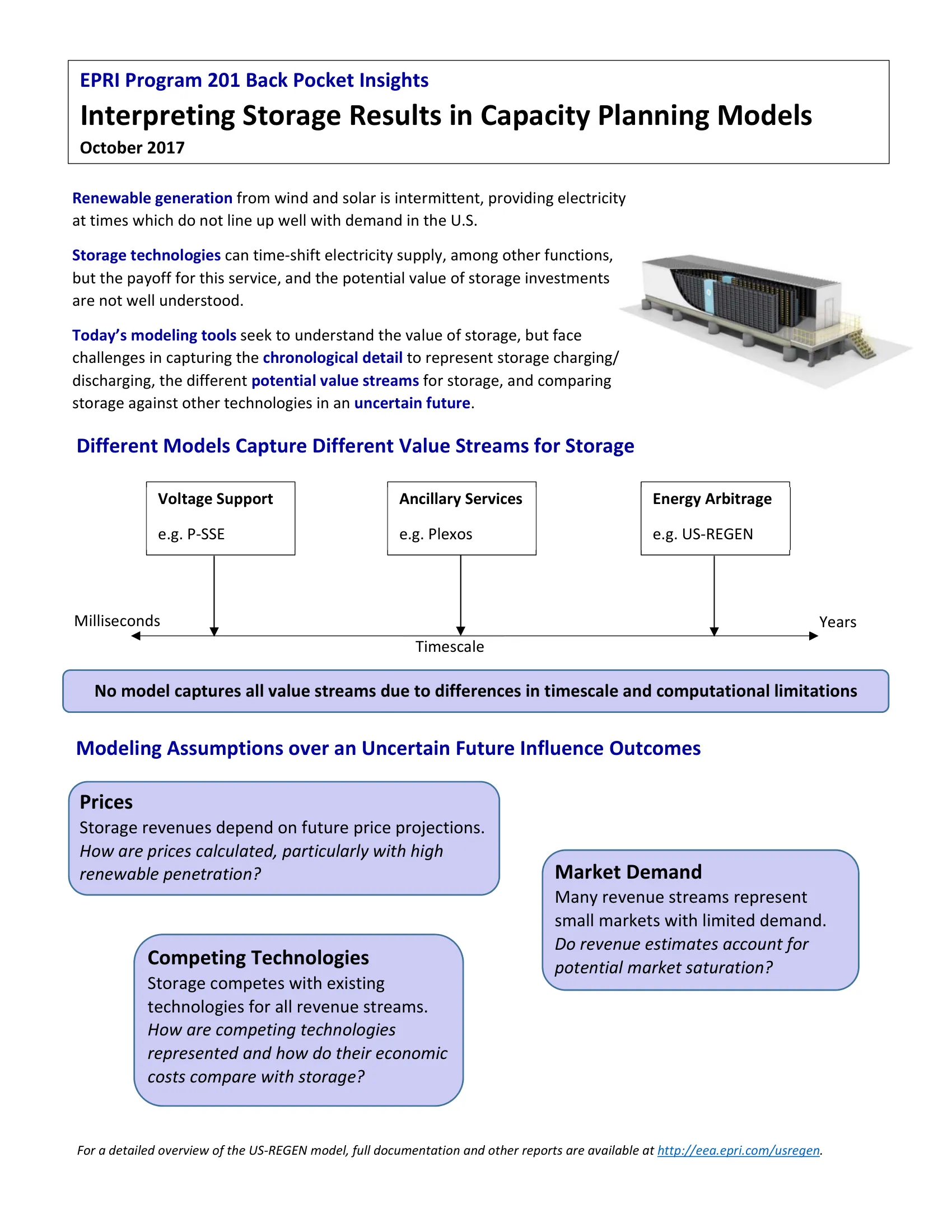
Interpreting Storage Results in Capacity Planning Models
October 2017
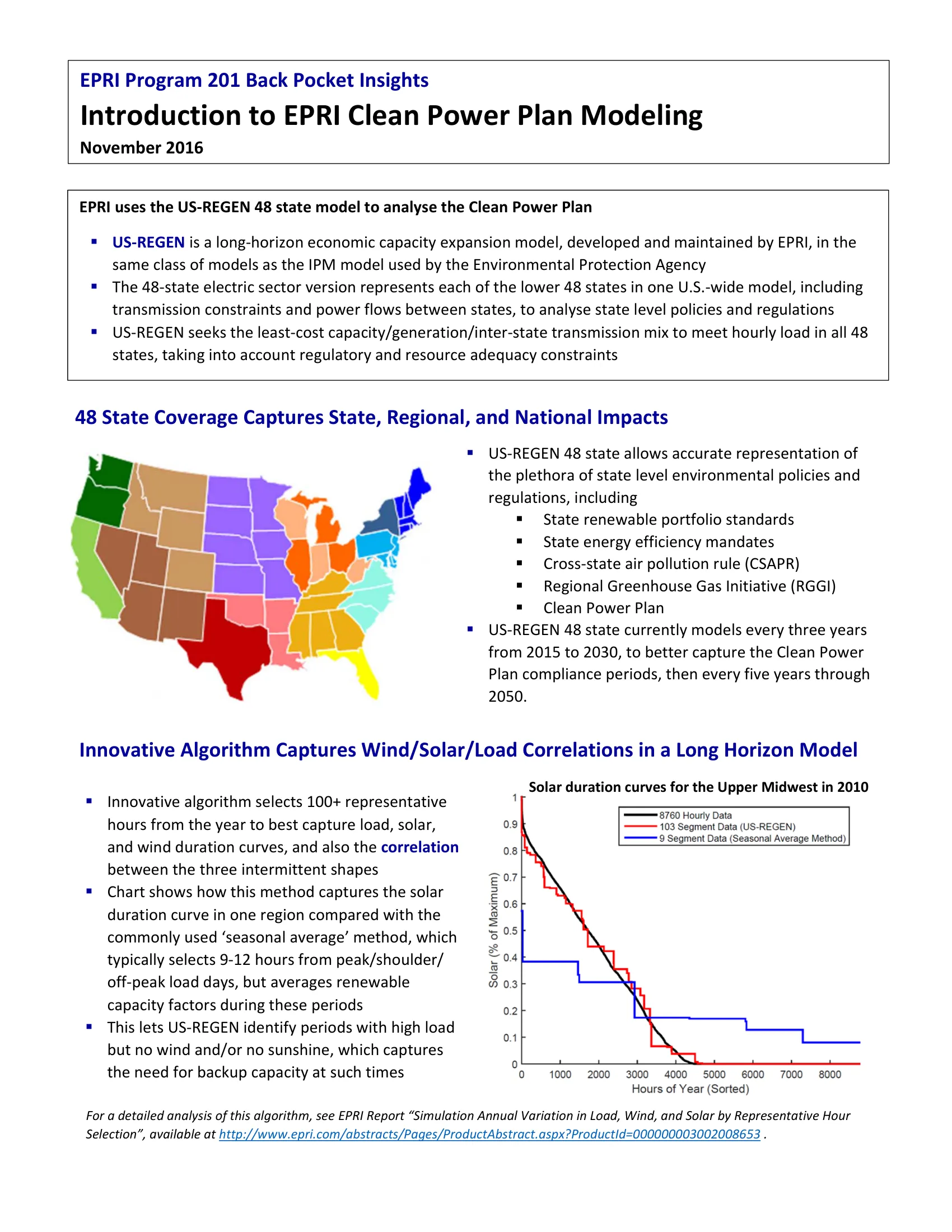
Introduction to EPRI Clean Power Plan Modeling
October 2017
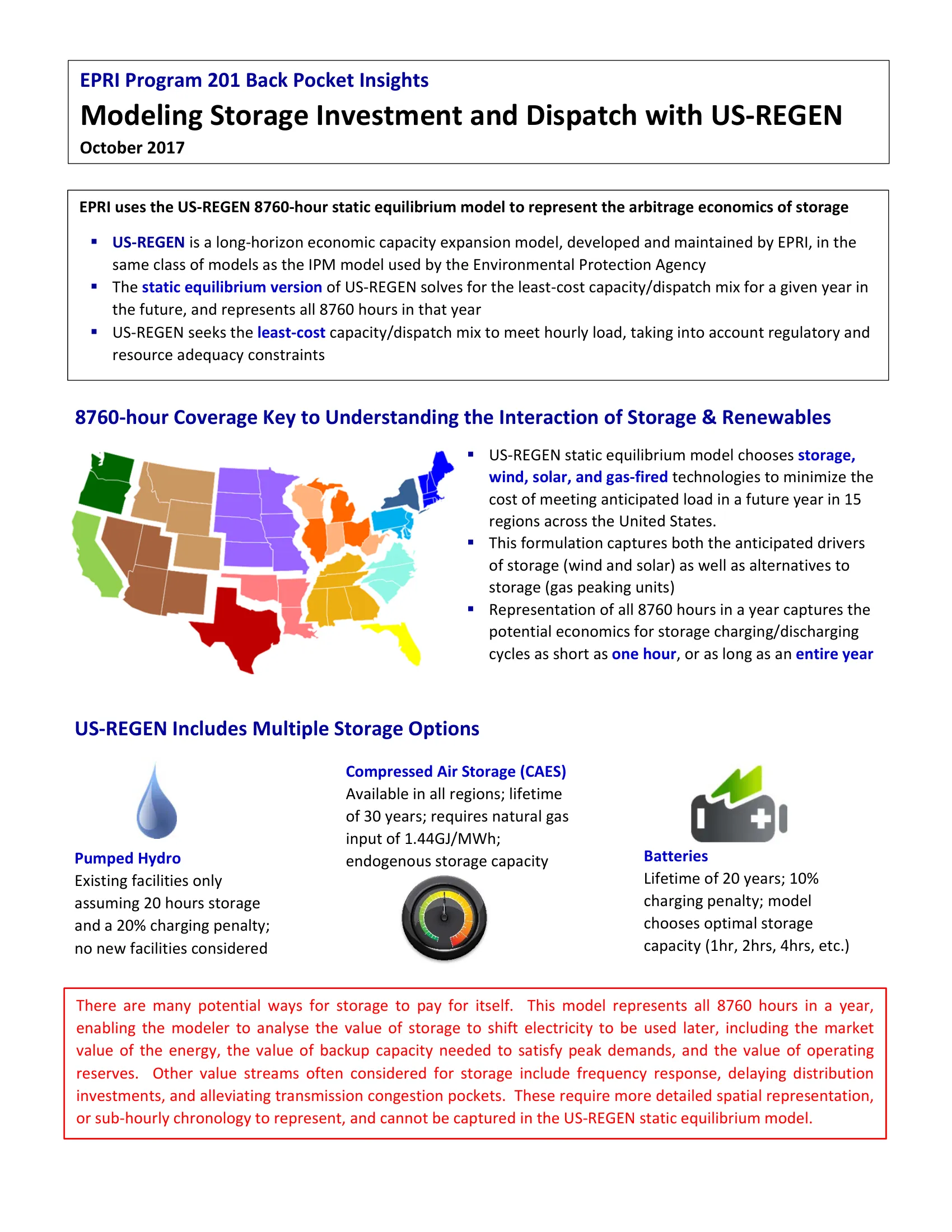
Modeling Storage Investment and Dispatch with US-REGEN
October 2017