Resource Planning for Electric Companies provides methods, tools, and practice reviews to improve long-term integrated resource planning. The work covers stochastic and robust analysis under uncertainty, the value of operational and managerial flexibility, load and market forecasting practices, and the state of resource planning in the United States, Canada, and worldwide.
Publications and Presentations
Found 6 of 6
- 2025 Article
- 2024 Web
Assessing the Flexibility of Green Hydrogen in Power System Models
Anna Lafoyiannis, Maren Ihlemann, Jo Ann Rañola Energy Systems Integration Group.
- 2023 Report
A Survey of Global Electric System Resource Planning Approaches to Achieve Decarbonization Goals
Jo Ann Rañola, Naga Srujana Goteti, Bailie Neary EPRI, Palo Alto, CA: 3002028306
- 2022 Article
Capacity at Risk: A Metric for Robust Planning Decisions under Uncertainty in the Electric Sector
John Bistline, Naga Srujana Goteti Environmental Research Communications
- 2019 Article
Turn Down For What? The Economic Value of Operational Flexibility in Electricity Markets
John Bistline IEEE Transactions on Power Systems
- 2018 Article
Managerial flexibility in levelized cost measures: A framework for incorporating uncertainty in energy investment decisions
John Bistline, Stephen Comello (Stanford), Anshuman Sahoo (Stanford) Energy
EPRI Reports
Found 28 of 28
| Details | Title | Authors | Date | Type |
|---|---|---|---|---|
A Proposed Framework to Assess Headroom for Integrating Data Centers into Regional Power Systems: An Industry Playbook for Unlocking System Potential with Flexibility | WHITE PAPER | |||
This discussion paper presents a practical framework to help power system planners evaluate how much additional load, particularly from rapidly growing data centers (DCs), can be integrated without expanding generation, storage, or transmission infrastructure. As DC growth creates unprecedented planning challenges and opportunities for the electricity sector, the framework defines and quantifies available system “headroom” through a staged analytical approach. This approach combines probabilistic resource adequacy assessments to capture operational uncertainty; hourly nodal operations simulations to represent generator constraints and transmission limits; sub-hourly operations simulations to account for fast-response dynamics such as load variability and ramping; and power flow analyses to evaluate locational risks and transmission reliability requirements. At each stage, the framework compares inflexible and flexible DC operating profiles, demonstrating how DC flexibility—aligned with EPRI’s Flex MOSAIC™ flexibility classes—can mitigate reliability risks and unlock additional capacity. The paper also highlights practical considerations for realizing this headroom, including co-simulation of grid-enhancing technologies (GETs), and positions the framework as a complementary tool to follow-on analyses supporting faster, reliability-conscious large-load interconnection planning. | ||||
Load Forecasting Practices for Long-Term Electric Resource Planning | TECHNICAL UPDATE | |||
This report compiles information about load forecasting practices, focusing on forecast development that relates to electric resource and integrated system planning. A sample of documents focused on integrated resource plans, load forecast methodology, or supporting documents from electric companies and planning agencies was analyzed. Load forecasting methods, processes, data, and assumptions are investigated. The research also conducted a broad, high-level comparison of industry practices with EPRI’s internal long-term load modeling tools. Connections to resource planning needs and directions for future research are identified. | ||||
EPRI Public Comments in Response to the Minnesota Public Utilities Commission Request for Comment on the Regulatory Cost of Greenhouse Gas Emissions for Gas Integrated Resource Plans | TECHNICAL UPDATE | |||
On August 25, 2025, the Minnesota Public Utilities Commission (‘The Commission’) published a notice of public comment soliciting public feedback on its proposed use of regulatory costs of greenhouse gas (GHG) emissions in utility resource planning (Docket Number E999/CI-07-1199; G008,G002,G011/CI-23-117; G999/CI-21-565). Under the proposal, state natural gas utilities would be required to assign costs to the GHG emissions associated with their plans and operations. This is a significant development with precedent setting potential for other states, as well as potential federal policy. To EPRI’s knowledge, this is the first time GHG pricing has been suggested in gas utility resource planning. As such, there are new technical issues that are important for The Commission, utilities, and the public to consider. On November 21, 2025, EPRI submitted the public comments in this document to The Commission and the related public docket. EPRI has been studying topics directly related to the issues at hand for nearly twenty years and has over fifty years of research experience in the relevant underlying science. EPRI’s comments identify the following important technical considerations if applying the costs of GHGs in natural gas utility resource planning:
EPRI’s public comments include a detailed discussion for each topic, as well as references to supporting research and resources. EPRI’s public comments primarily draw on its extensive research related to the estimation and use of the social costs of greenhouse gases (EPRI’s Social Cost of Greenhouse Gases Scientific Initiative) and related to the development of corporate climate targets and strategies (EPRI’s SMARTargets Initiative). | ||||
Powering Intelligence 2026: Updated Scenarios of U.S. Data Center Electricity Use and Power Strategies | TECHNICAL REPORT | |||
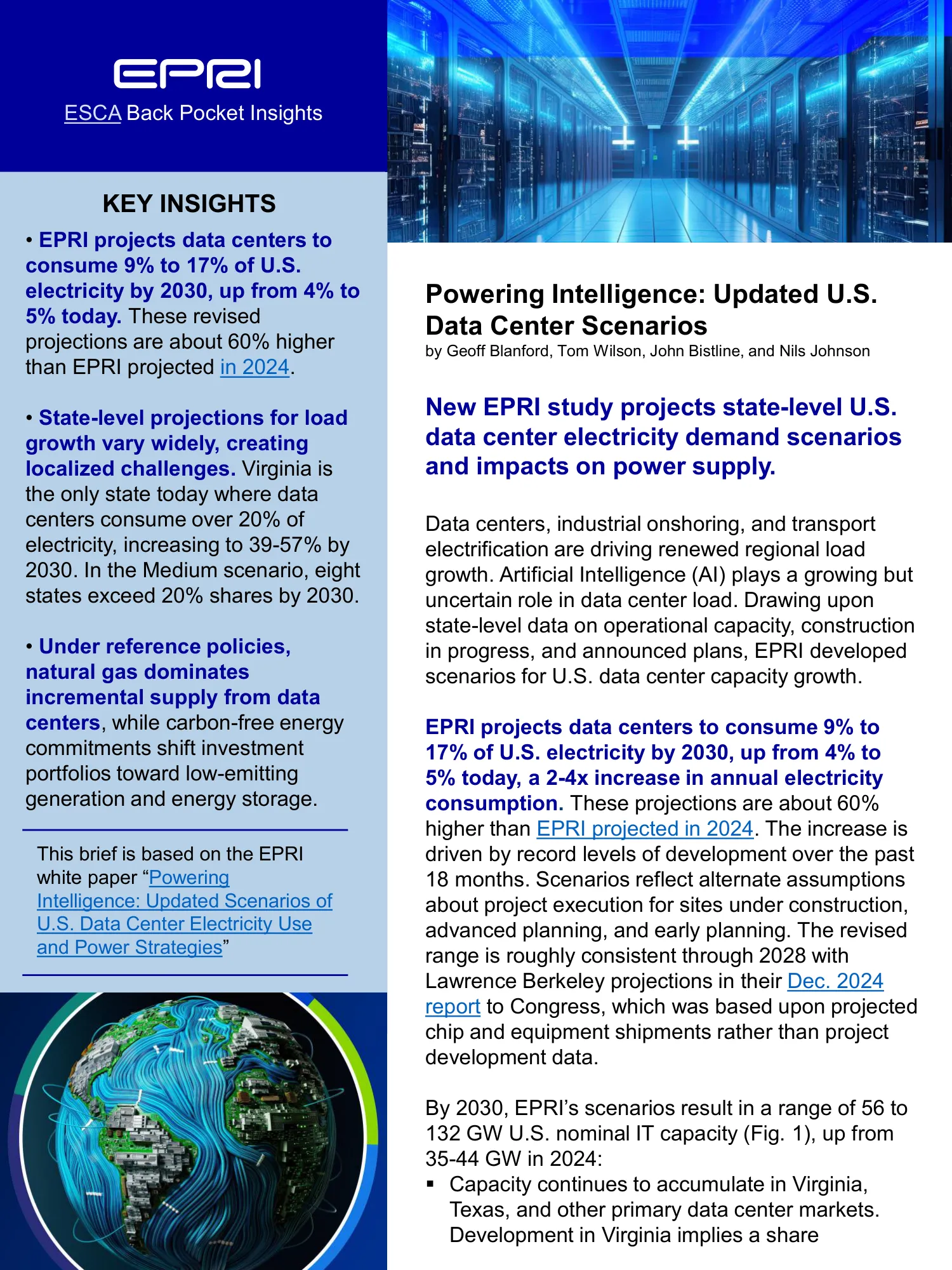
Data centers have become the fastest-growing source of U.S. electricity demand, and regional clusters of facilities are transforming local grid dynamics, fueled by increased consumer demand for streaming and other data-intensive services, cryptocurrency, and artificial intelligence (AI). Drawing upon state-level data on operational capacity, construction in progress, and announced plans, EPRI developed Low, Medium, and High scenarios for U.S. data center capacity growth through 2030. Data centers are projected to consume 9% to 17% of U.S. electricity by 2030, up from 4% to 5% today. The projected range of 2030 data center electricity demand is 60% higher than prior EPRI scenarios, which reflects the accelerated pace of data center development. Capacity continues to accumulate in primary data center markets, but the emergence of new capacity in other states suggests increased prioritization of power access and land availability, particularly for large AI training centers. Under reference policies, natural gas dominates incremental supply, while carbon-free energy commitments shift investment portfolios toward low-emitting generation and energy storage. Collaboration is essential to maintain and enhance grid reliability and to address affordability and community impacts as data centers connect to the grid. | ||||
Comparing Open-Source Integrated Planning Models in 2025 | TECHNICAL UPDATE | |||
Integrated planning for low-carbon energy systems may require models that can coordinate long-term investments and short-term operations across electricity, hydrogen, heat, fuels and storage. This report provides a structured comparison of open-source frameworks to help researchers and practitioners understand the features of various open-source integrated planning models. The report evaluates each tool along five dimensions: 1) scope (e.g., sector coupling, network representation, temporal and spatial resolution), 2) modeling language and formulation (e.g., software implementation, formulations), 3) data management (e.g., inputs, workflows, standards compatibility) 4) treatment of uncertainty (e.g., support for stochastic analysis, decomposition techniques, sensitivity analysis, design for alternatives), and 5) usability and ecosystem (e.g., documentation, licensing, community support). The comparison shows the different modeling choices available to the practitioner that can shape the analysis in a resource planning study. | ||||
Using Large Language Models to Support Utility-Scale Capacity Expansion Inputs | TECHNICAL UPDATE | |||
Modeling to support utility scale resource planning is data intensive; the sourcing, organizing, processing, and analyzing of needed data can be challenging and time consuming. Advancements in Artificial Intelligence (AI) tools, such as Large Language Models (LLMs) can boost researchers’ efficiency and accuracy working on such tasks. LLMs are text based predictive models trained to input and output natural language, code, and data. By using LLMs, energy system inputs such as forecasted demand, existing and planned generators, and/or fuel prices can be sourced or developed. Further, processing this data with the help of LLMs can help to develop the code and analysis to input such data into generalized data structures that work across tools. This report explores the practical application LLMs as coding partners for developing inputs to capacity expansion models, focusing on hands-on tasks where LLMs supported coding and data preparation. | ||||
Long-Term Electric System Planning Under Load Uncertainty: Key Insights and Implications | TECHNICAL BRIEF | |||
Rapid growth in electricity demand from data centers and transportation electrification has introduced significant uncertainty into long-term resource planning. This technical brief summarizes recent EPRI research comparing deterministic and adaptive planning approaches for managing large, uncertain loads. Deterministic planning optimizes for individual scenarios, while adaptive planning identifies a near-term action plan and a roadmap for future adjustments as conditions evolve. Using stylized load scenarios, the analysis highlights how resource portfolios differ under each paradigm: adaptive plans tend to favor greater resource diversity, earlier investments in solar and short-duration storage, and slower retirements of firm resources. These findings underscore the importance of high-quality scenario development to support robust planning. Adaptive planning offers a promising complement to traditional methods, enabling flexible strategies that hedge against a wide range of futures while balancing reliability, cost, and decarbonization goals. | ||||
Market Import Assumptions and Modeling Practices for Integrated Resource Planning | TECHNICAL REPORT | |||
As regional energy systems experience higher levels of variable renewable generation, rising electricity demand, and increasing climate and weather-related risks, electric company resource planners are increasingly interested in understanding the extent to which the systems they plan may rely on neighboring regions during periods of high system stress. Modeling improvements with respect to how regional imports are characterized may support identifying more reliable resource portfolios. This report reviews current approaches for representing market interactions and other regional imports in long-term resource planning models. Ten integrated resource plans (IRPs) and other long-term planning documents are reviewed to identify methods for modeling market interactions and regional imports. In addition, a survey conducted with electric company planning practitioners and interviews with subject matter experts in electric system planning reveal additional insights into modeling practices. The findings from this analysis provide guidance for companies seeking to better understand current industry practices for modeling import availability and to adopt improved methods in their own long-term resource planning efforts. | ||||
State of Electric Sector Resource Planning in Canada 2024 | PRESENTATION | |||
Long-term resource planning in the electric sector plays a critical role in guiding infrastructure investment, shaping energy prices, supporting decarbonization goals, and promoting economic growth in Canada. This report reviews resource plans from major electric companies across provinces with regulated electricity markets, which collectively generate most of Canada’s electricity. It offers insights into the uncertainties prioritized by companies, including load forecasts and policy futures, scenario planning, and near-term resource additions or changes. The report also examines resource planning in Alberta and Ontario's deregulated electricity markets, focusing on system operators' planning outlooks. While investment decisions are primarily driven by competitive market signals, resource planning in these markets supports informed decision-making for electric companies. | ||||
PRE-SW: plexos2duckdb v0.1.0 Beta | SOFTWARE | |||
plexos2duckdb extracts results from a PLEXOS solution file to a duckdb SQL database. To access PRE-SW: plexos2duckdb v0.1.0 Beta, click here: https://github.com/epri-dev/plexos2duckdb Benefits & Values
Platform Requirements
| ||||
1-10 of 28
Back Pocket Insights
Powering Intelligence - Updated U.S. Data Center Scenarios
February 2026
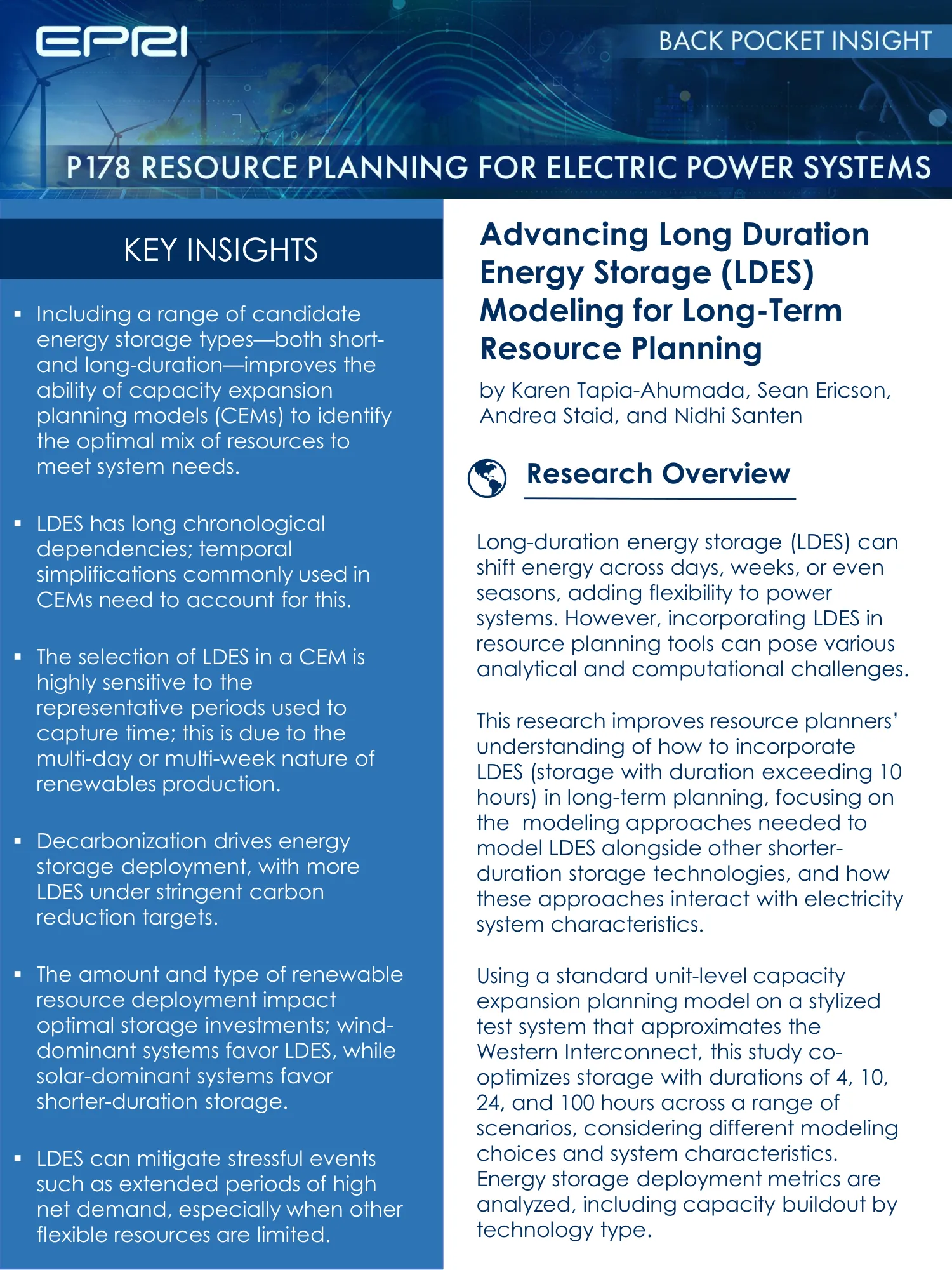
Advancing Long Duration Energy Storage (LDES) Modeling for Long-Term Resource Planning
July 2025
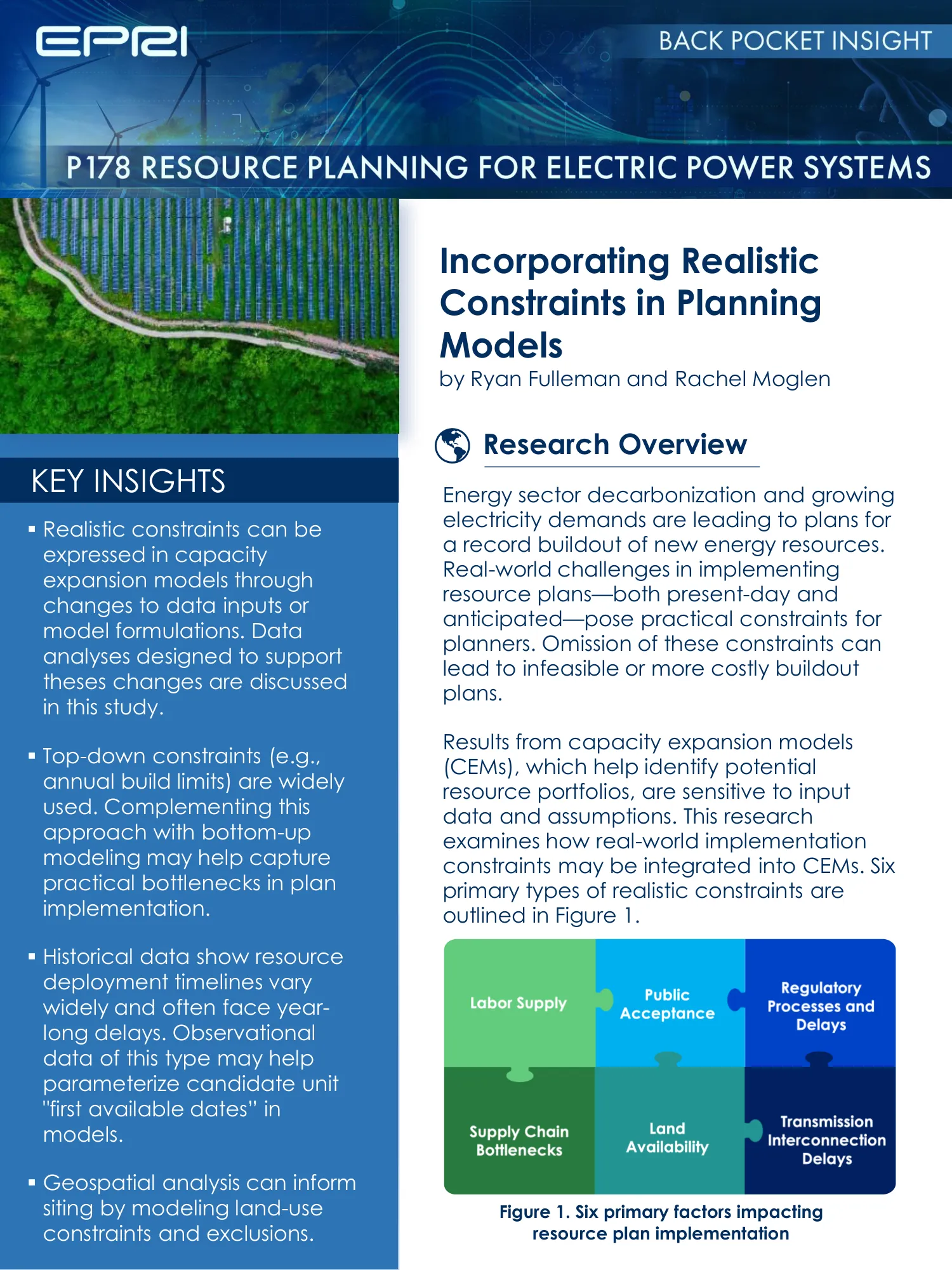
Incorporating Realistic Constraints in Planning Models
July 2025
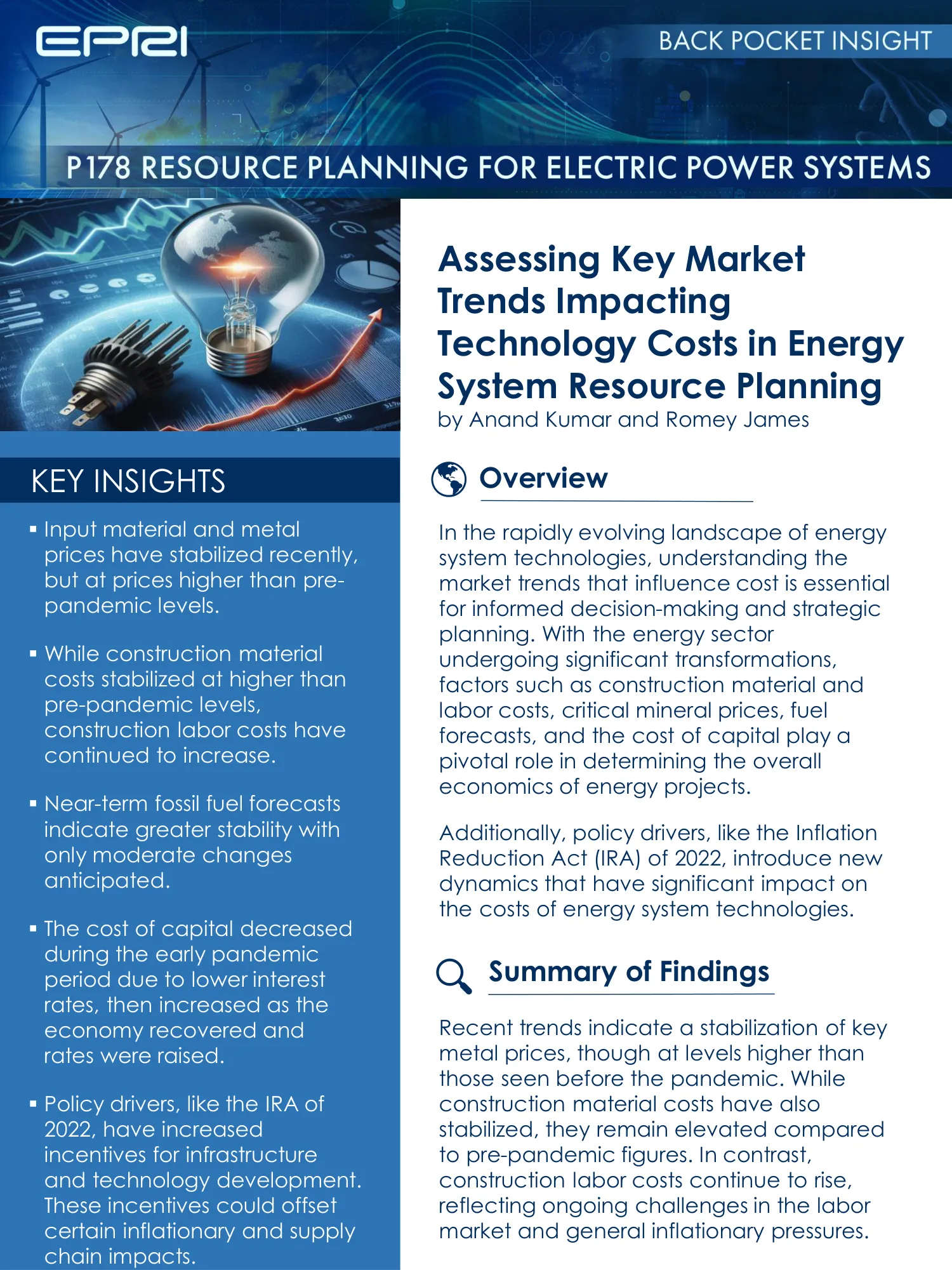
Assessing Key Market Trends Impacting Technology Costs in Energy System Resource Planning
August 2024
Assessing the Impacts of Dark Doldrums Events on Electric System Resource Portfolios
May 2024
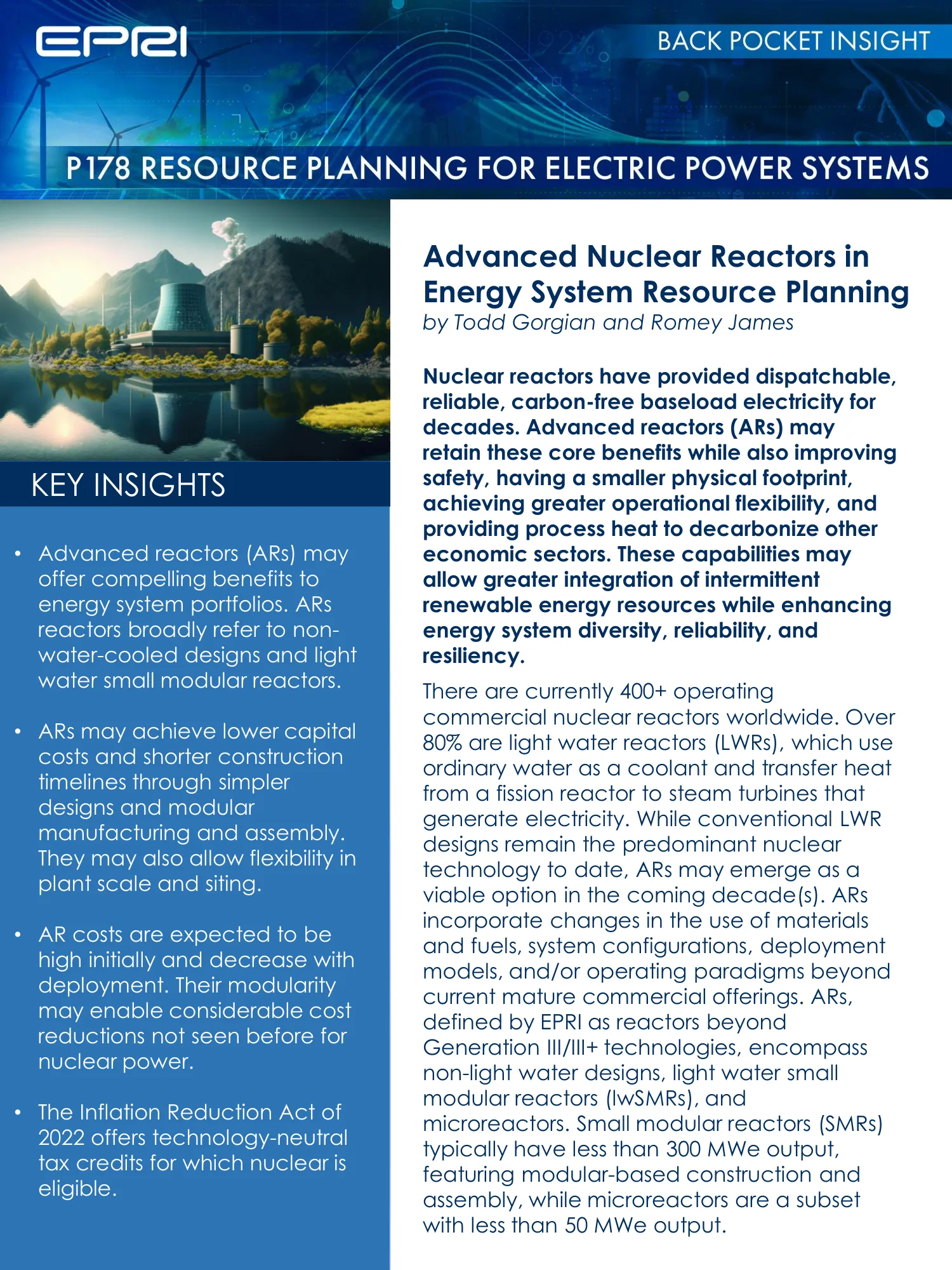
Advanced Nuclear Reactors in Energy System Resource Planning
March 2024
Carbon Capture and Storage in Energy System Resource Planning
March 2024
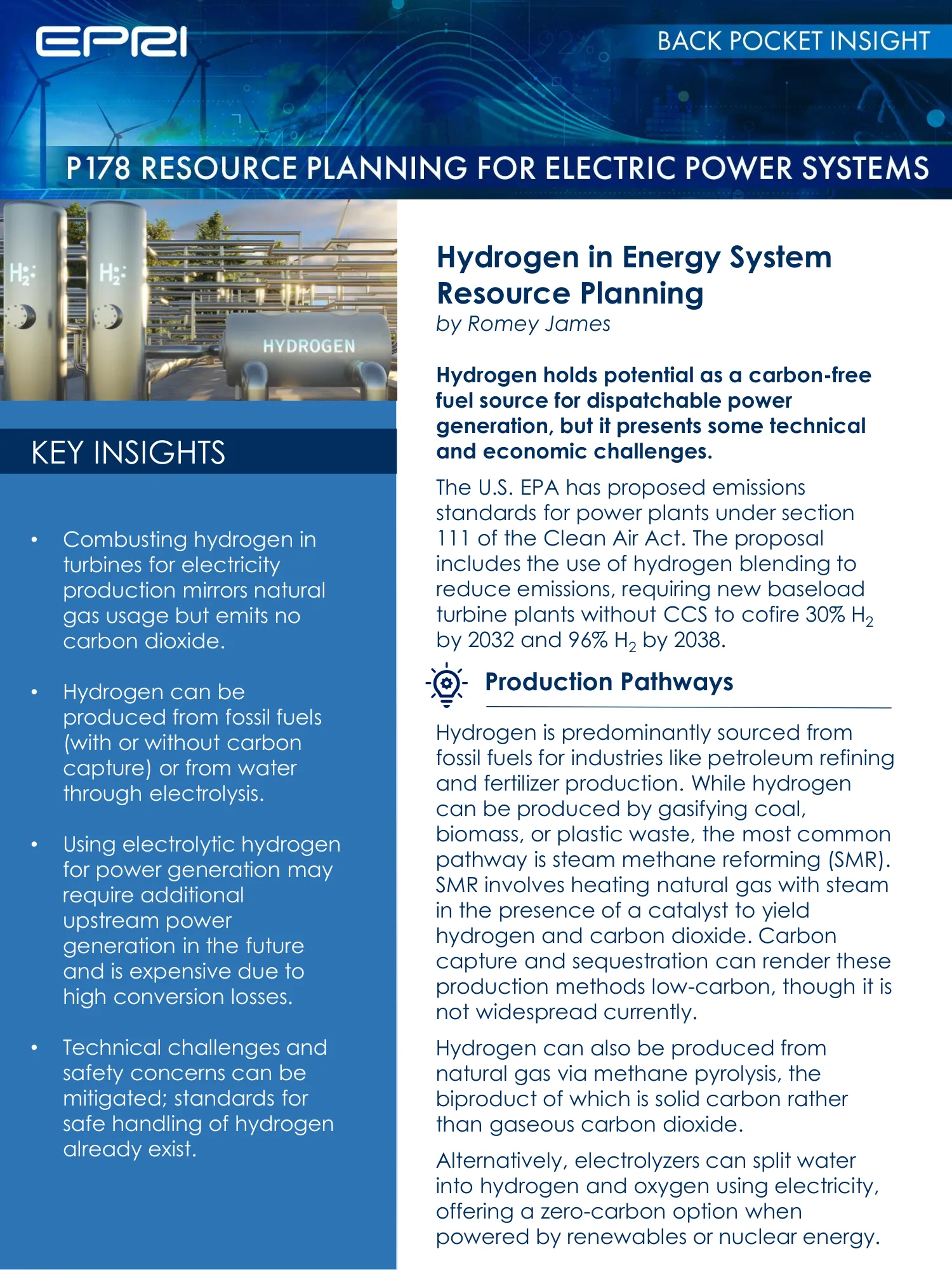
Hydrogen in Energy System Resource Planning
March 2024
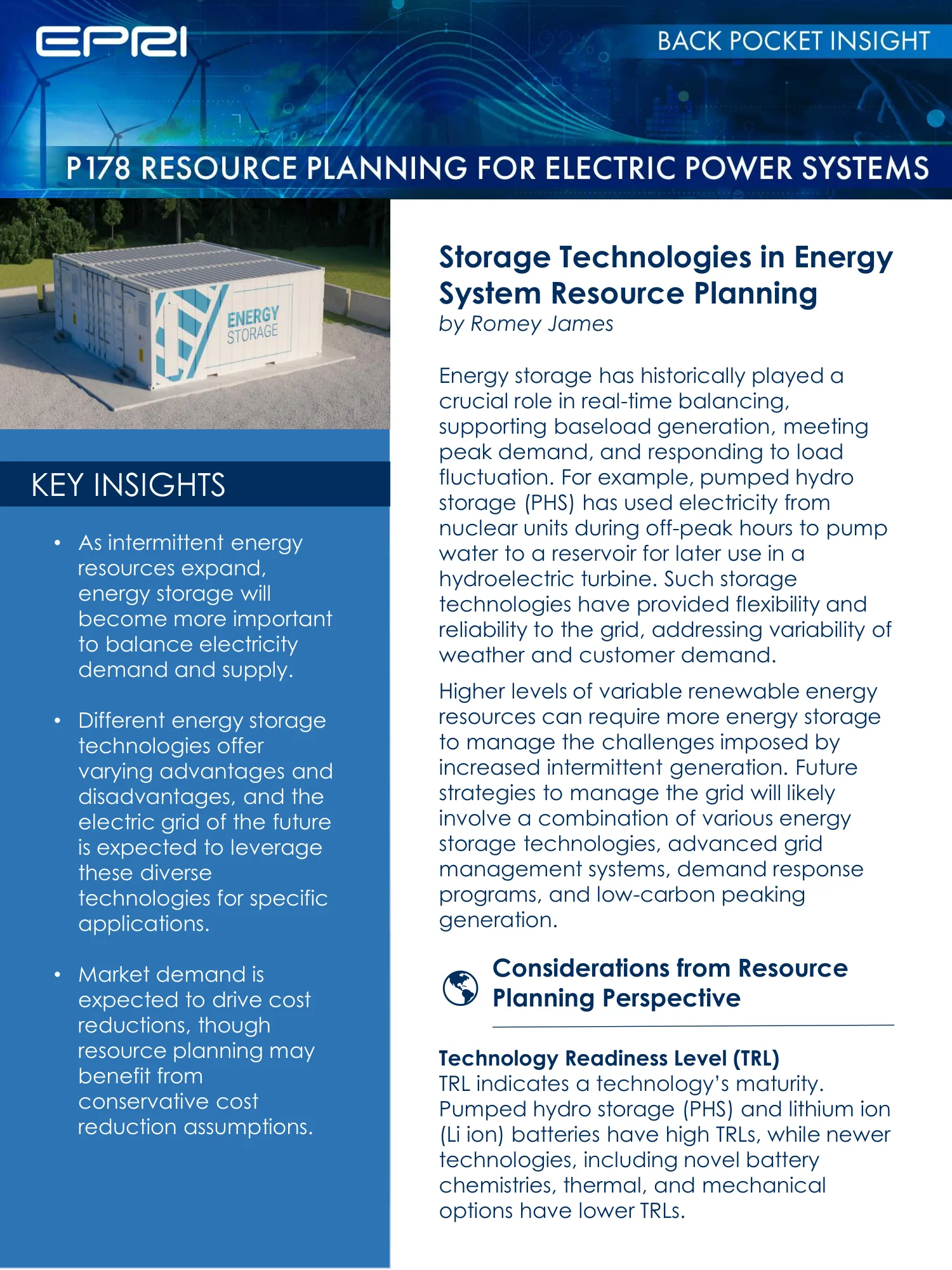
Storage Technologies in Energy System Resource Planning
March 2024