
ESCA thought leadership supports robust decision making and planning for structural changes to the electric and energy sectors including decarbonization, electrification, load growth, climate impacts, and other drivers. ESCA staff develop original analyses widely distributed in academic journals, national assessments, and expert forums. Our research provides credible and timely analysis of major energy sector transitions. Find recent featured research and quick insights below.
Featured Research
Highlighted reports and analyses on energy systems, climate, technology, and policy.
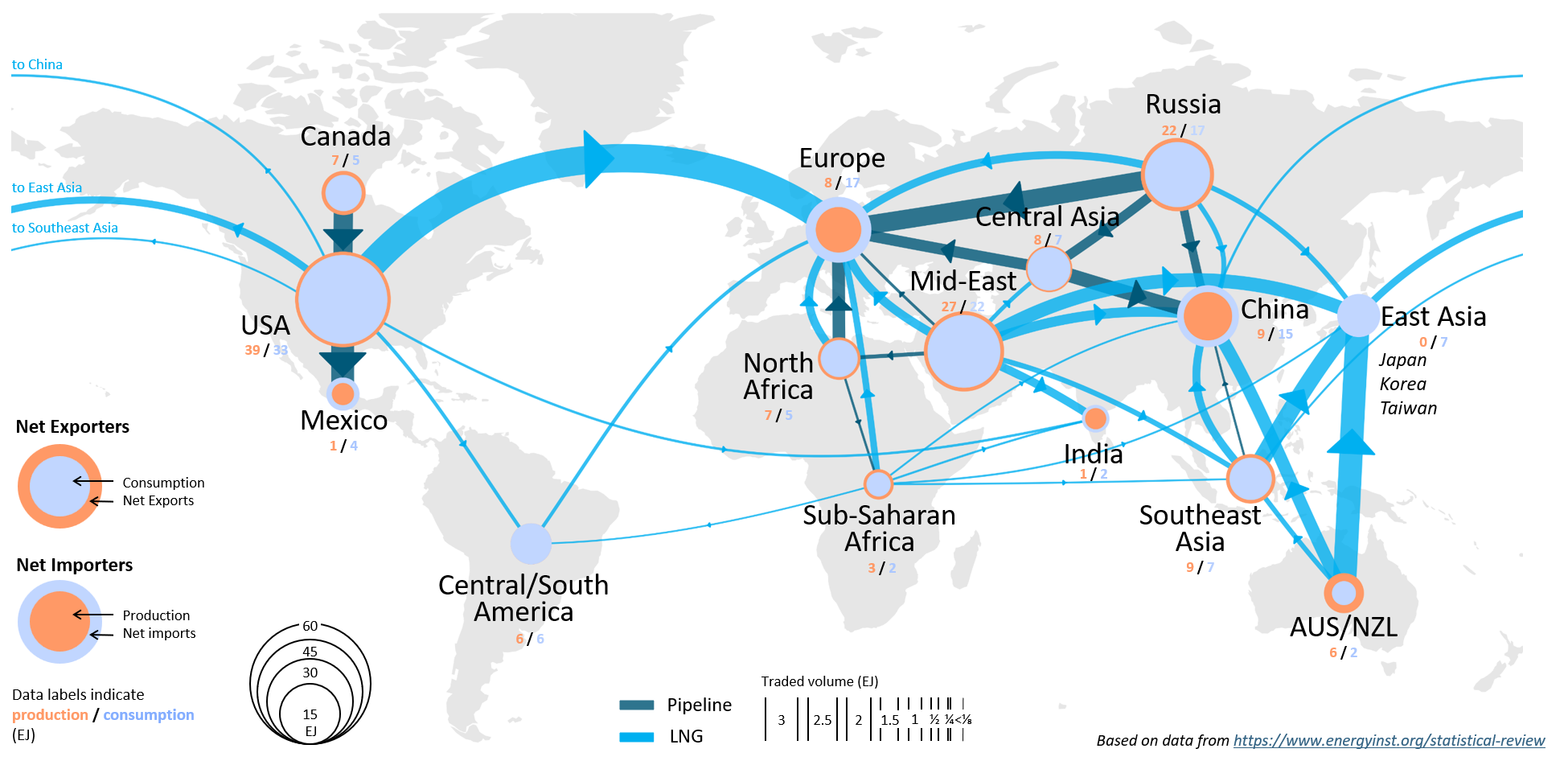
Impacts of Persian Gulf Supply Disruptions
Analysis of how supply chain disruptions in the Persian Gulf affect global energy markets, trade flows, and grid reliability

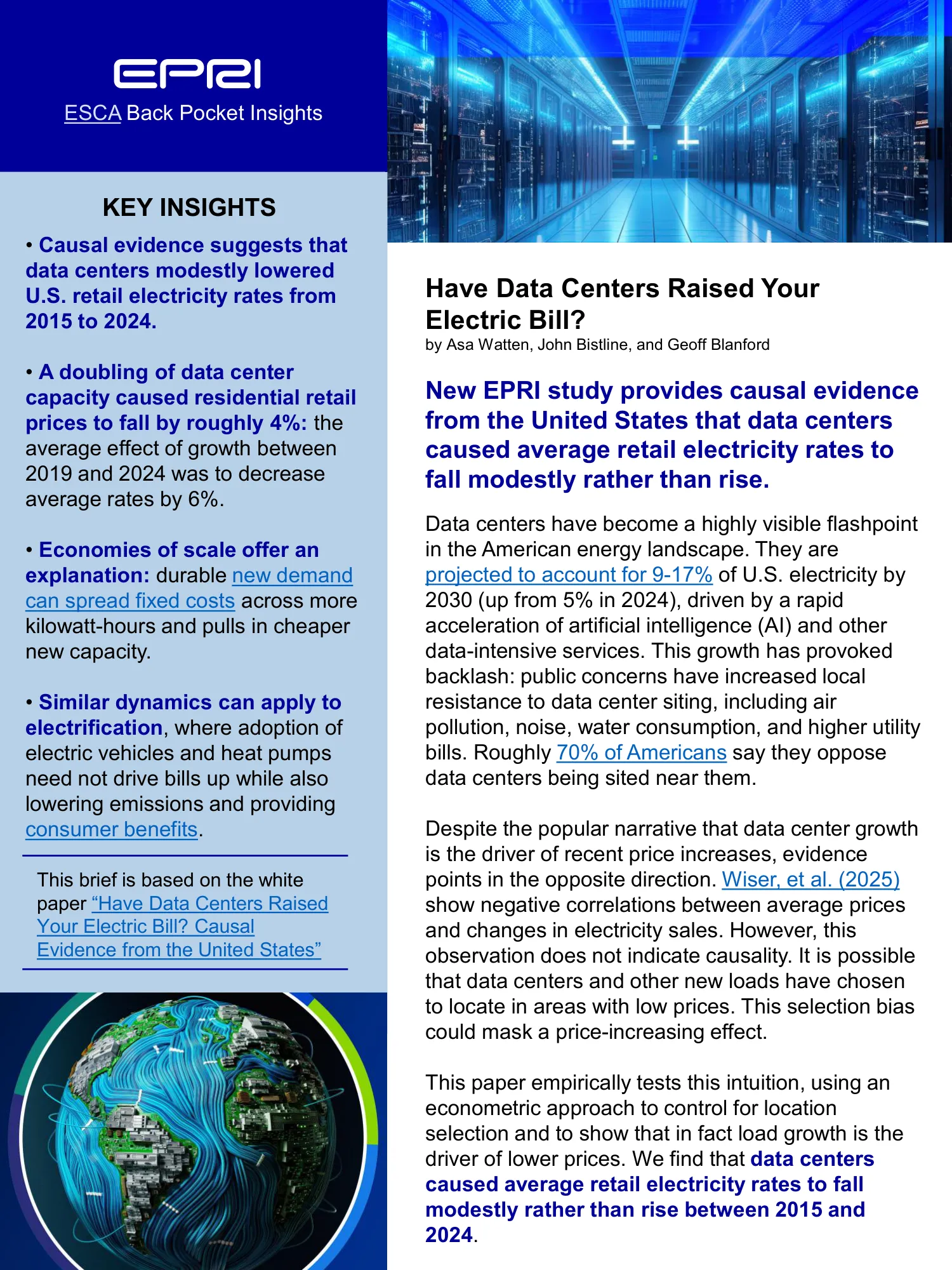
Have Data Centers Raised Your Electric Bill?
Examines the relationship between data center energy demand and consumer electricity costs

Powering Intelligence
Updated scenarios of U.S. data center electricity use and power strategies, analyzing the growing energy demand of AI and machine learning workloads.

Energy Wallet: U.S. and State-Level Household Energy Expenditures, Past, Present, and Future
Interactive analysis of household energy expenditures across the United States and by state, covering historical trends, current costs, future scenarios, electricity, fuels, and energy affordability.
Net-Zero 2050: Sensitivity Analysis and Updated Scenarios
Scenario analysis of pathways to net-zero emissions by 2050, highlighting sensitivities in technology deployment, fuel prices, electricity demand, and decarbonization outcomes.

Representation of Geothermal Resources and Technologies in EPRI's US-REGEN Model: Guidelines for Enhancing Geothermal Integration in Capacity Expansion Models
Guidance for representing geothermal resources and geothermal technologies in the US-REGEN capacity expansion model to improve long-term planning and geothermal integration studies.

Stochastic Modeling Practices for Integrated Resource Planning
Overview of stochastic modeling methods for integrated resource planning, including uncertainty analysis, scenario design, and planning under risk.

Evaluating Local Climate Change Impacts
Methods for assessing local climate change impacts, downscaling climate information, and evaluating place-based risks relevant to resilience and power sector planning.

Drivers and implications of alternative routes to fuels decarbonization in net-zero energy systems - Nature
Study of alternative pathways for fuels decarbonization in net-zero energy systems, including hydrogen, low-carbon fuels, infrastructure needs, and system tradeoffs.
Climate Informed Planning and Adaptation for Power Sector Resilience
Guidance for climate risk assessment, adaptation planning, and resilience strategies for the electric power sector under changing physical climate hazards.
Integrated Strategic System Planning Initiative: Modeling Framework, Demonstration Study Results, and Key Insights
Modeling framework and demonstration results for integrated strategic system planning across generation, transmission, distribution, and other interconnected energy infrastructures.
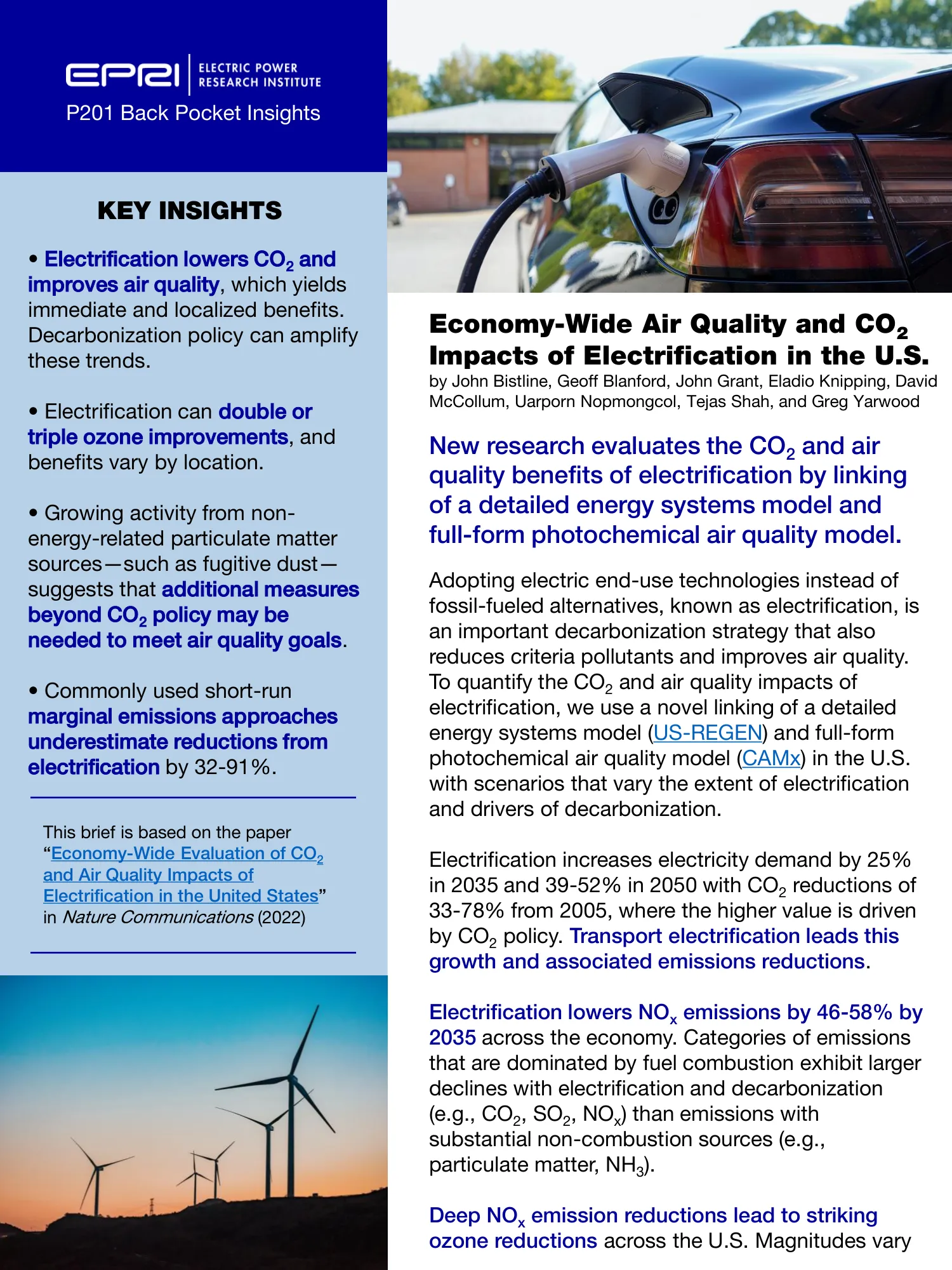
Economy-wide evaluation of CO2 and air quality impacts of electrification in the United States - Nature Communications
Analysis of economy-wide electrification impacts on U.S. carbon dioxide emissions, air quality, and cross-sector environmental outcomes.

TAGWeb - Technology Assessment Guide
Web-based technology assessment guide for comparing energy technology performance, costs, characteristics, and planning assumptions.

GHG Accounting Compendium
Reference compendium on greenhouse gas accounting methods, emissions quantification, boundary setting, and reporting considerations.

24/7 Carbon-free Energy: Matching Carbon-free Energy Procurement to Hourly Electric Load
Analysis of 24/7 carbon-free energy strategies that match hourly clean energy procurement to hourly electric load and evaluate emissions reduction performance.
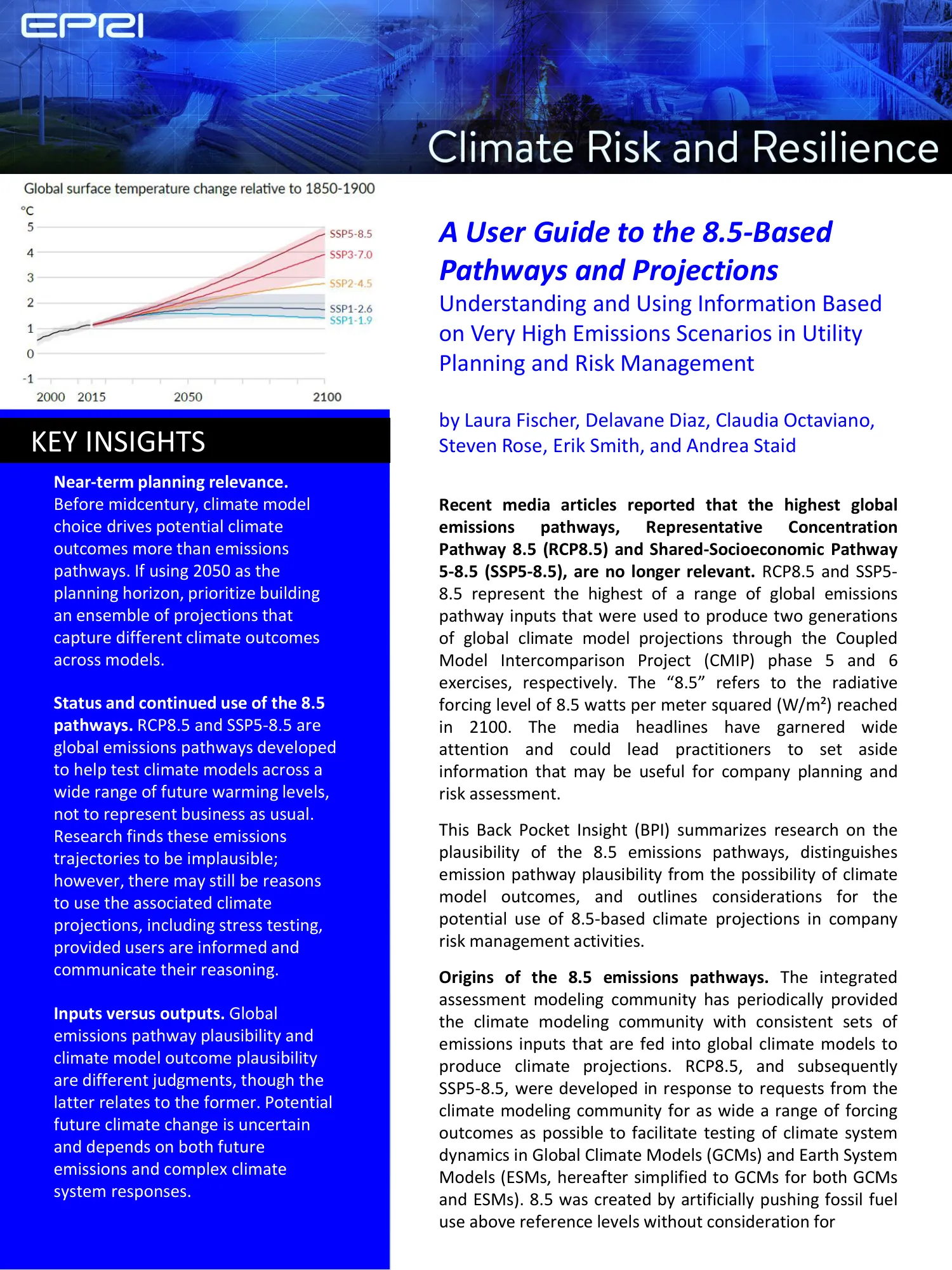
A User Guide to the 8.5-Based Pathways and Projections
October 2026
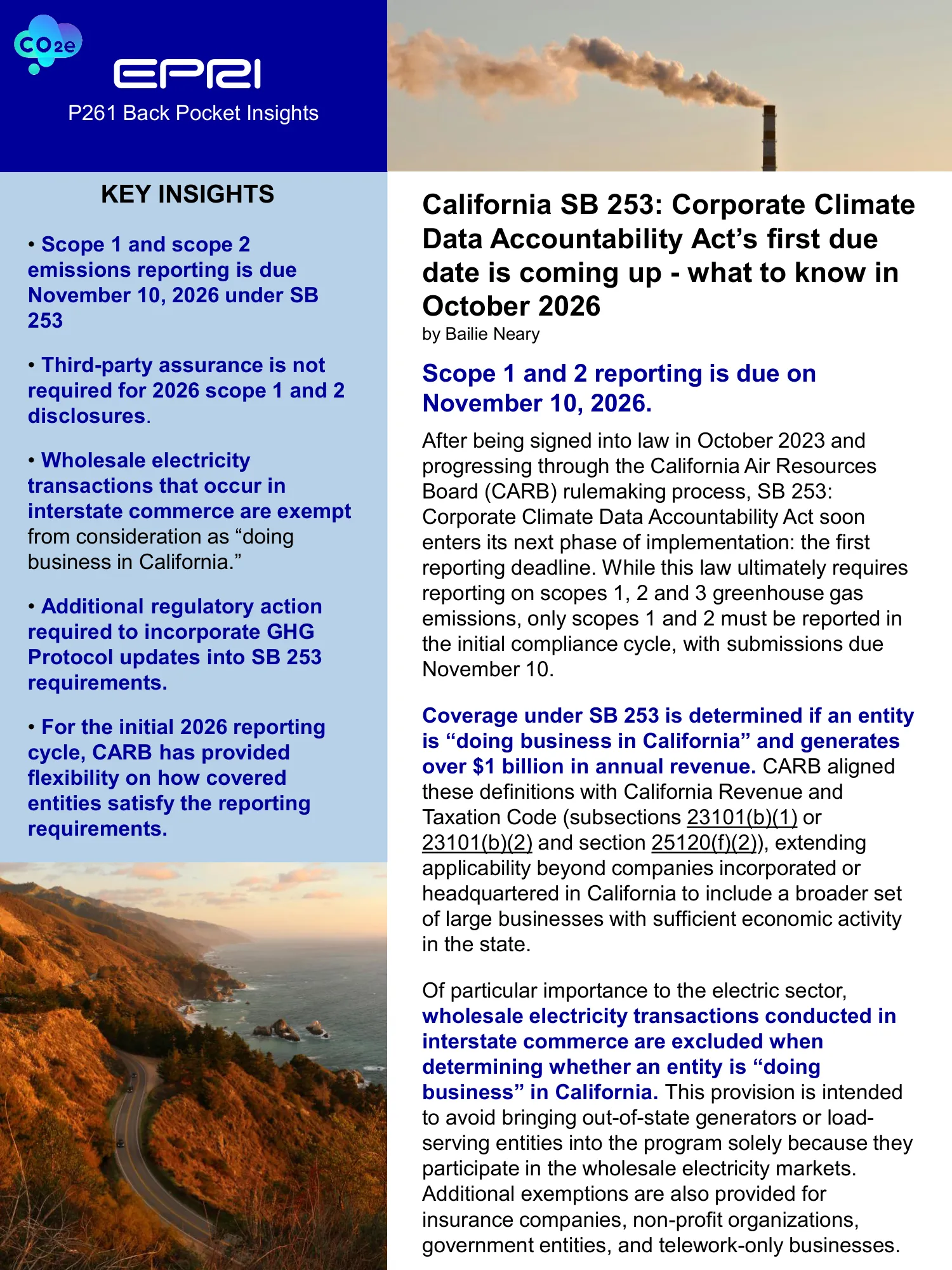
California SB 253: Corporate Climate Data Accountability Act’s first due date is coming up
October 2026
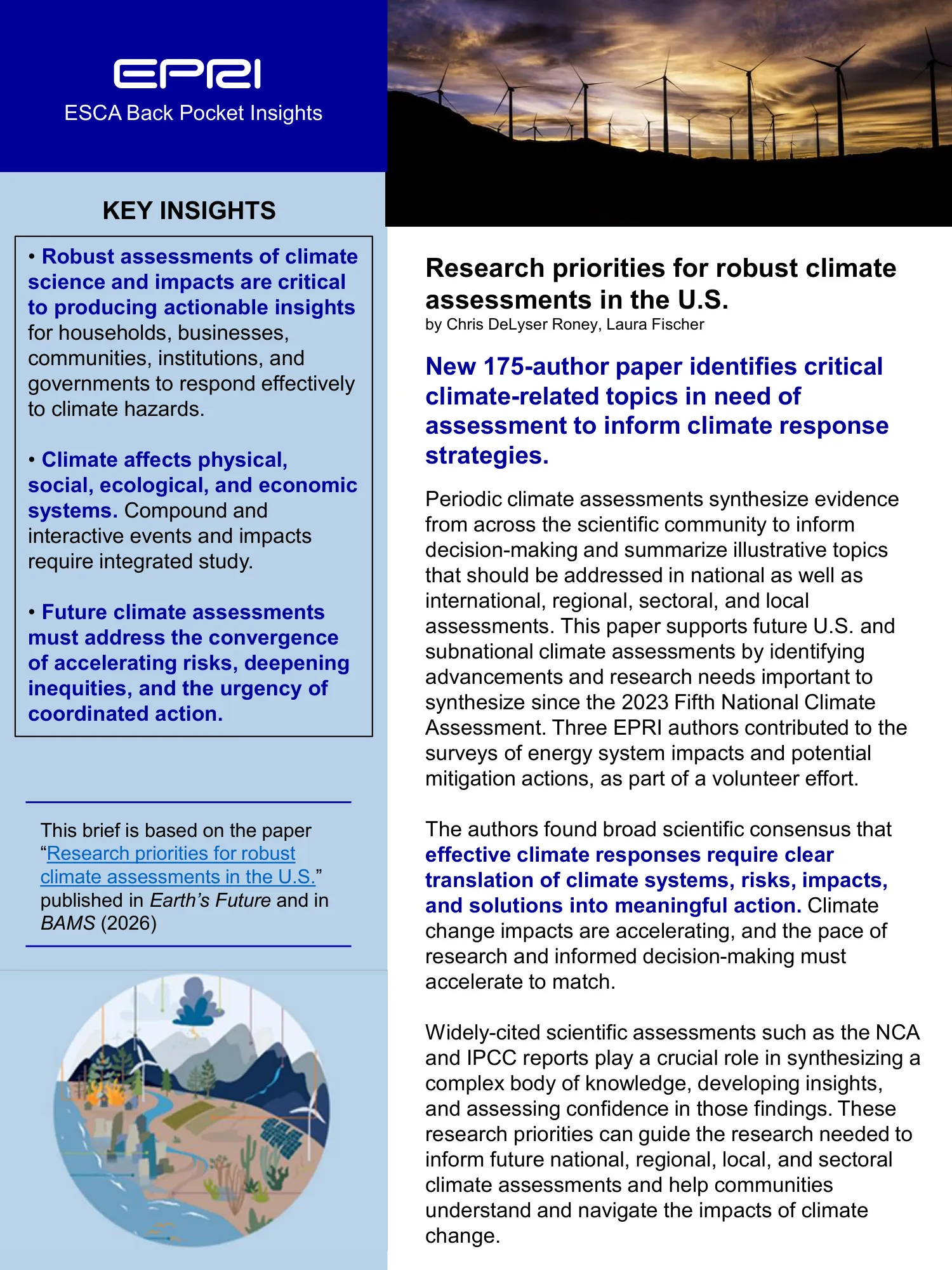
Research Priorities for Robust Climate Assessments in the U.S.
September 2026
Have Data Centers Raised Your Electric Bill?
June 2026
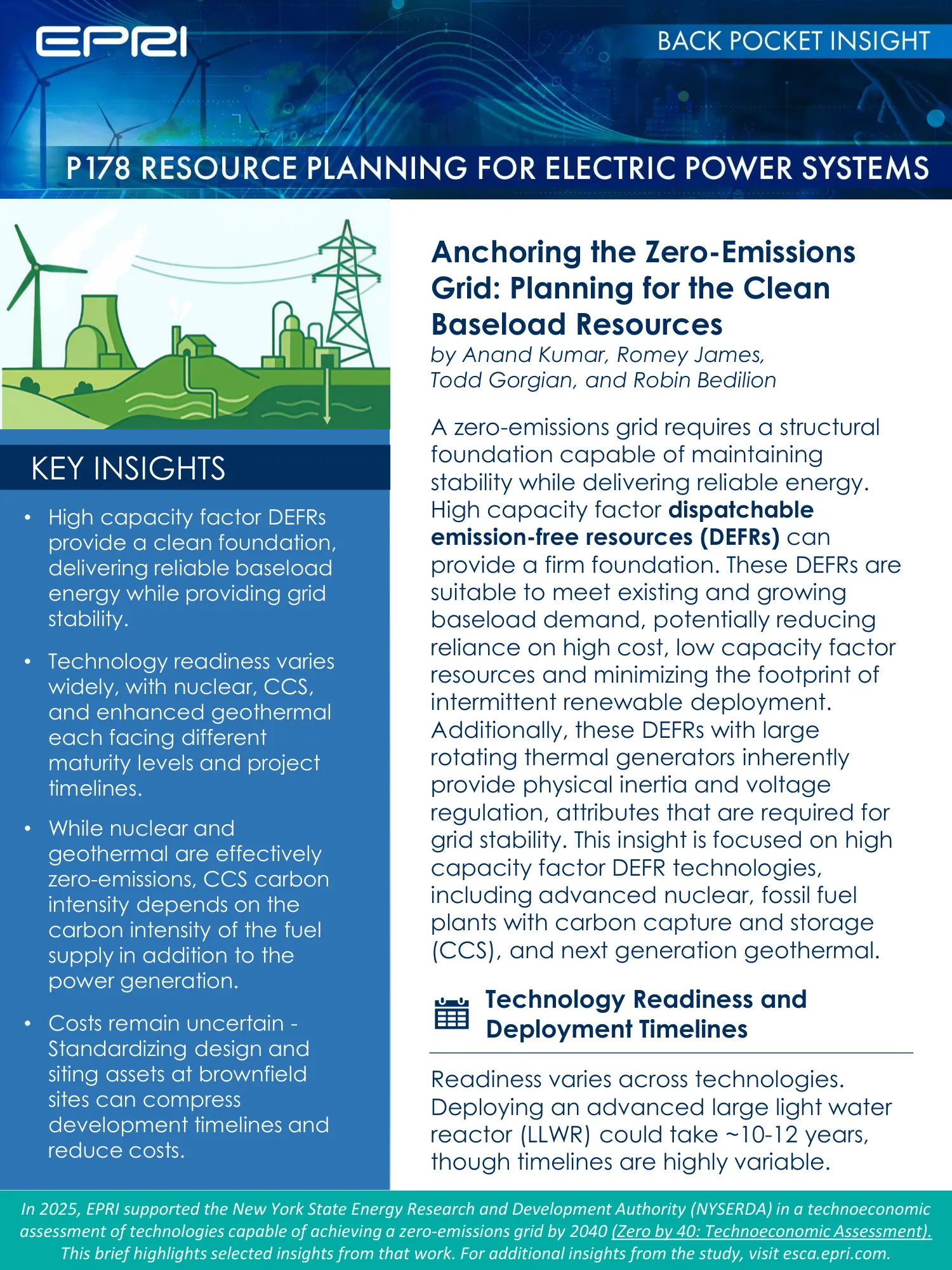
Anchoring the Zero-Emissions Grid - Planning for the Clean Baseload Resources
February 2026
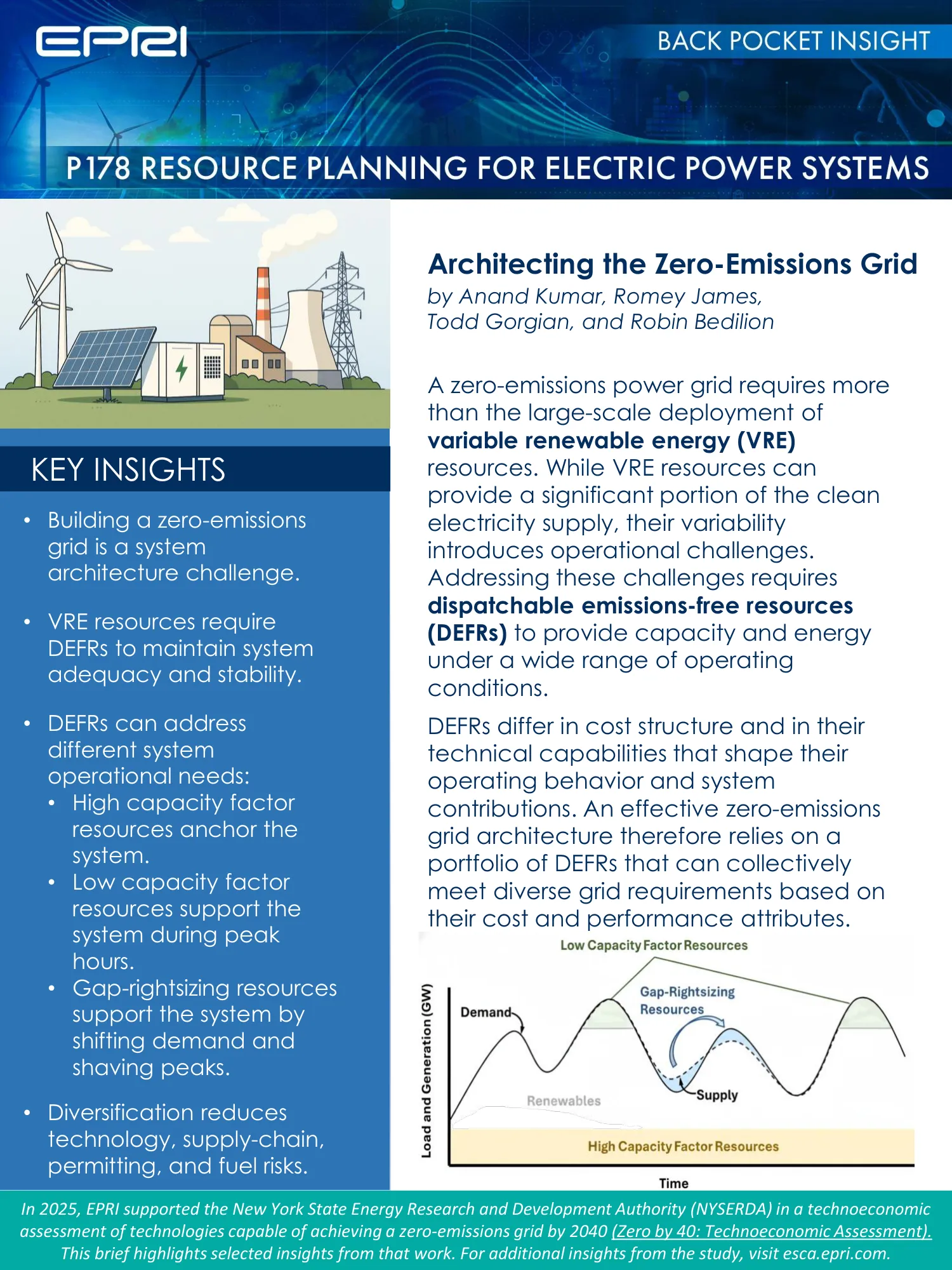
Architecting the Zero-Emissions Grid
February 2026
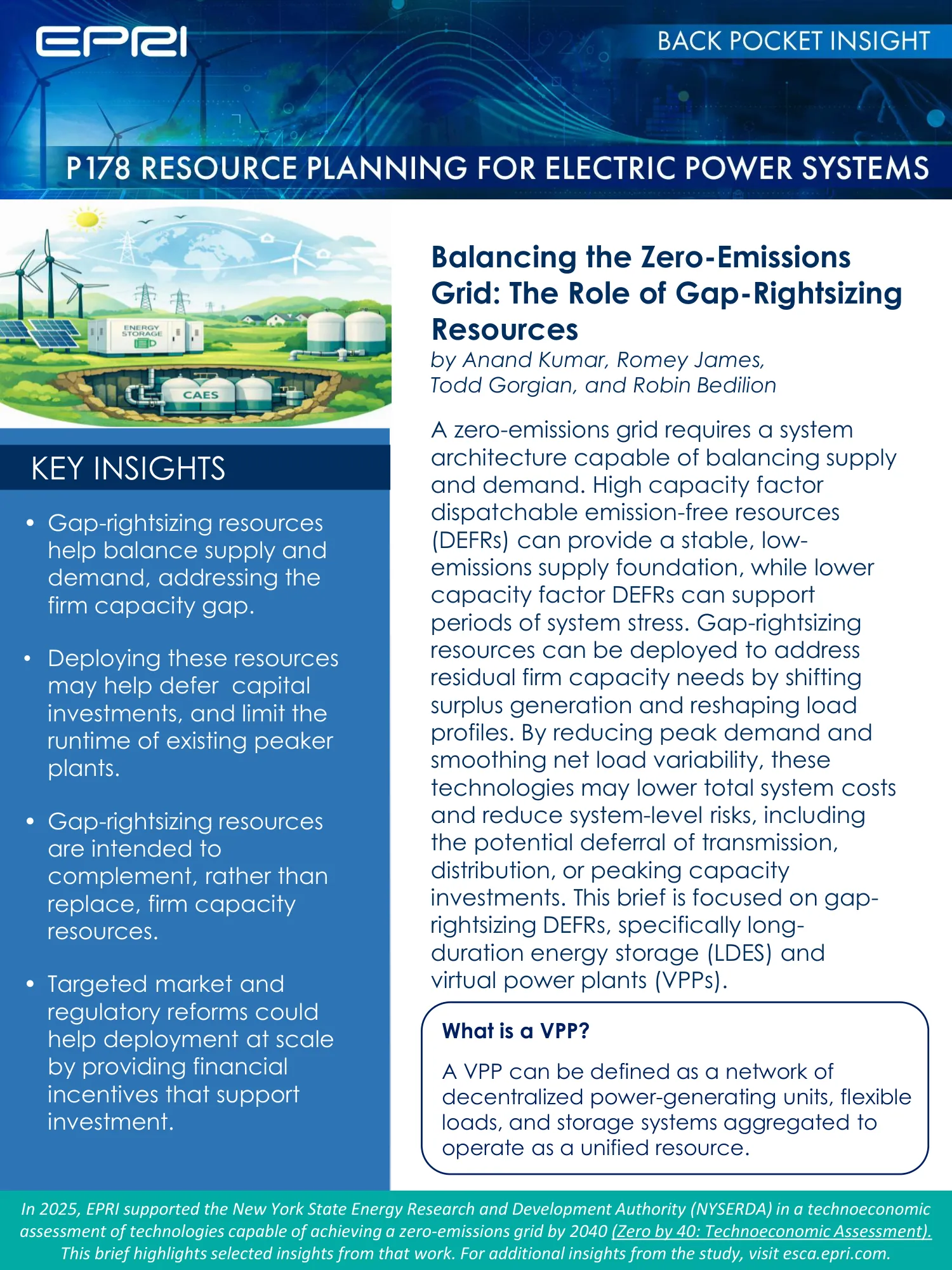
Balancing the Zero-Emissions Grid - The Role of Gap-Rightsizing Resources
February 2026
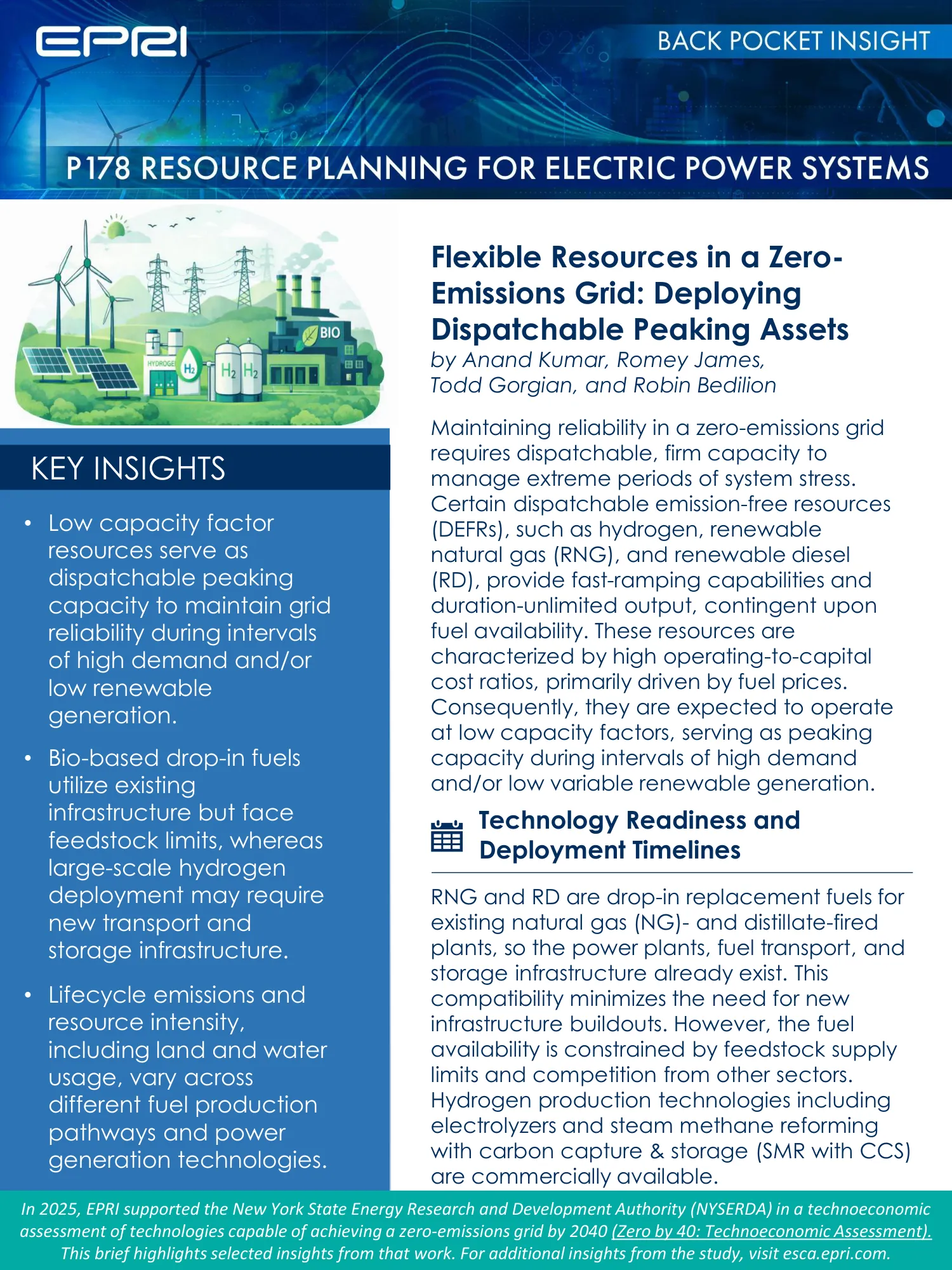
Flexible Resources in a Zero-Emissions Grid - Deploying Dispatchable Peaking Assets
February 2026
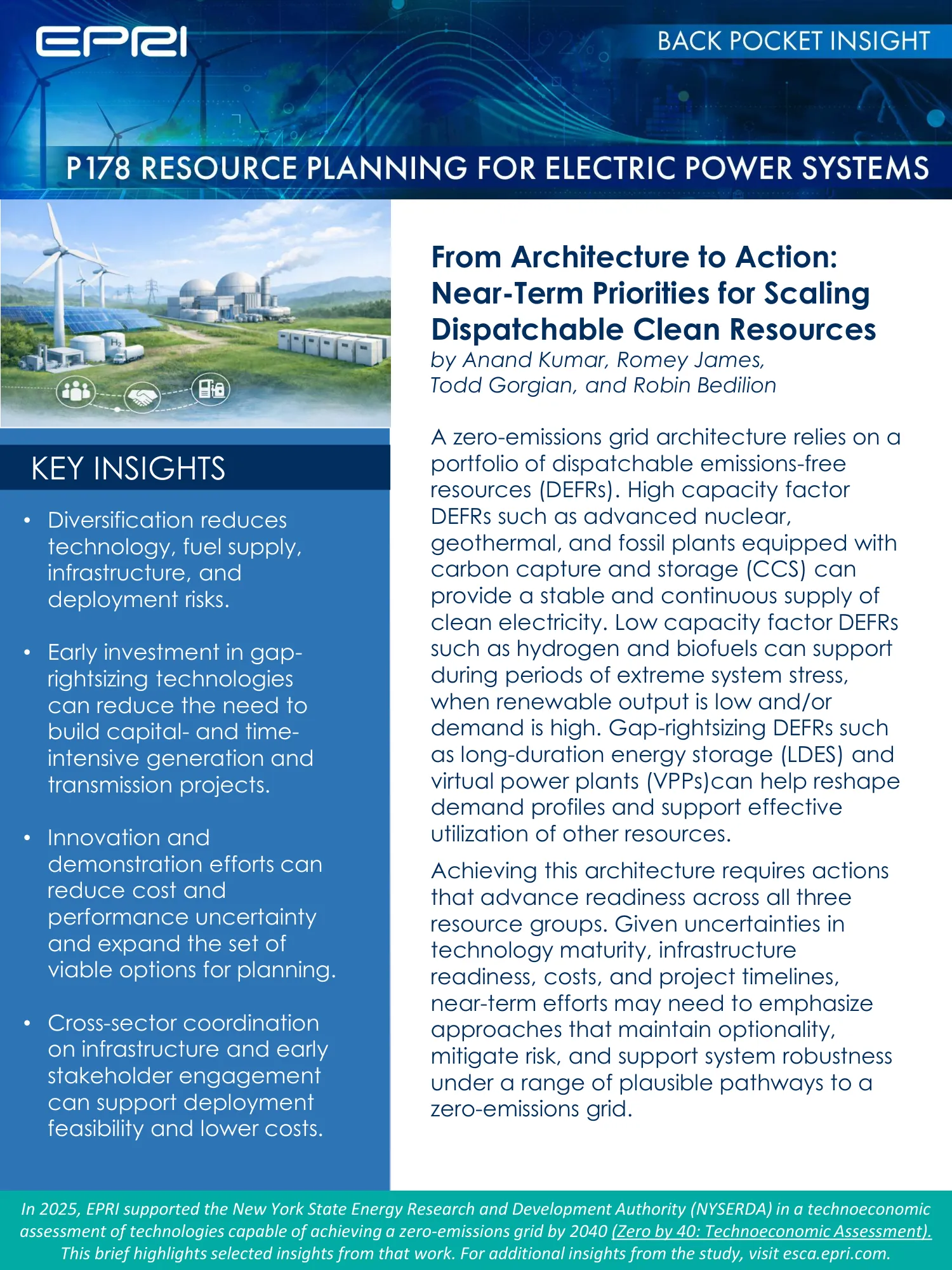
From Architecture to Action - Near-Term Priorities for Scaling Dispatchable Clean Resources
February 2026
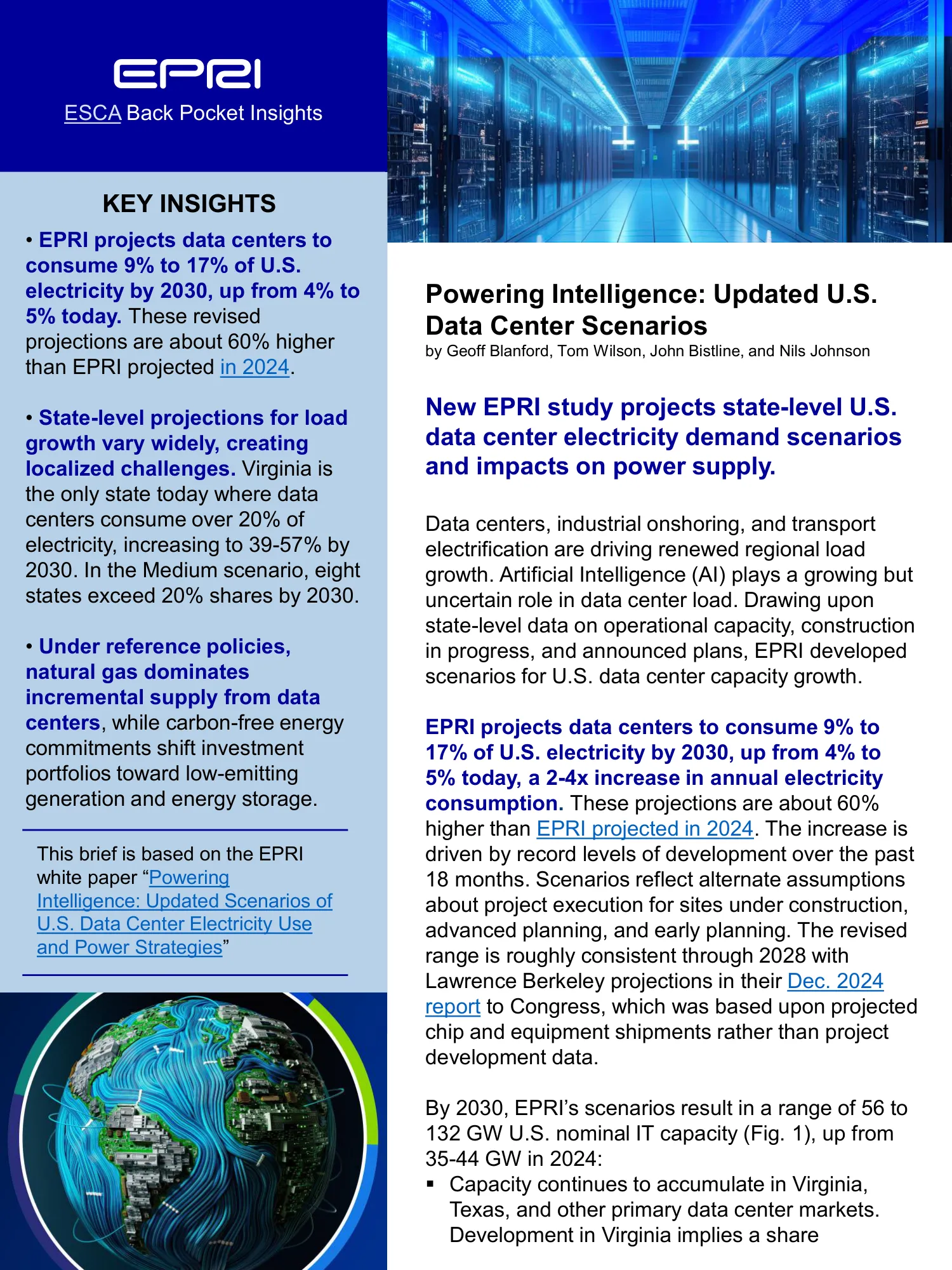
Powering Intelligence - Updated U.S. Data Center Scenarios
February 2026
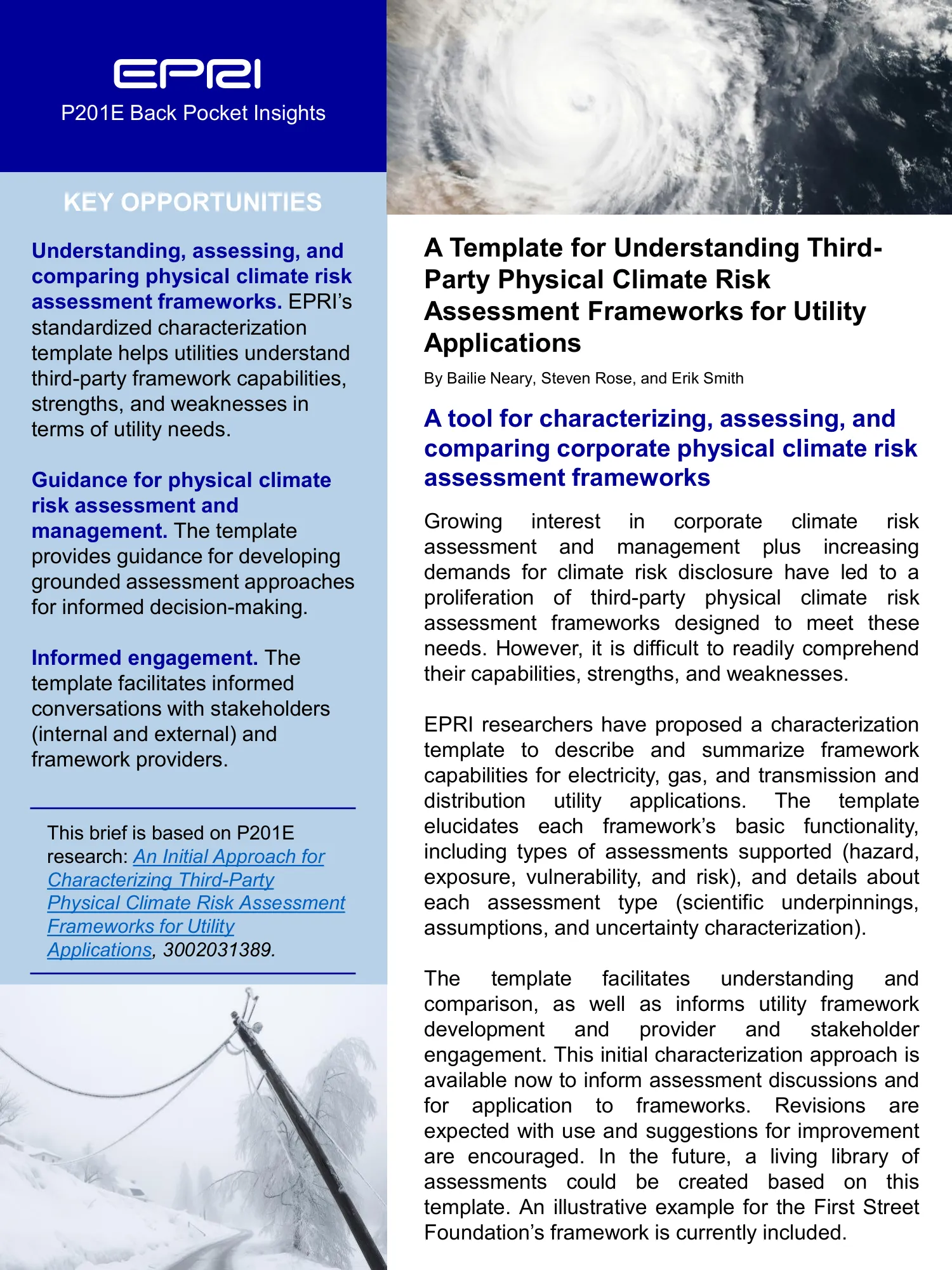
A Template for Understanding Third-Party Physical Climate Risk Assessment Frameworks for Utility
December 2025
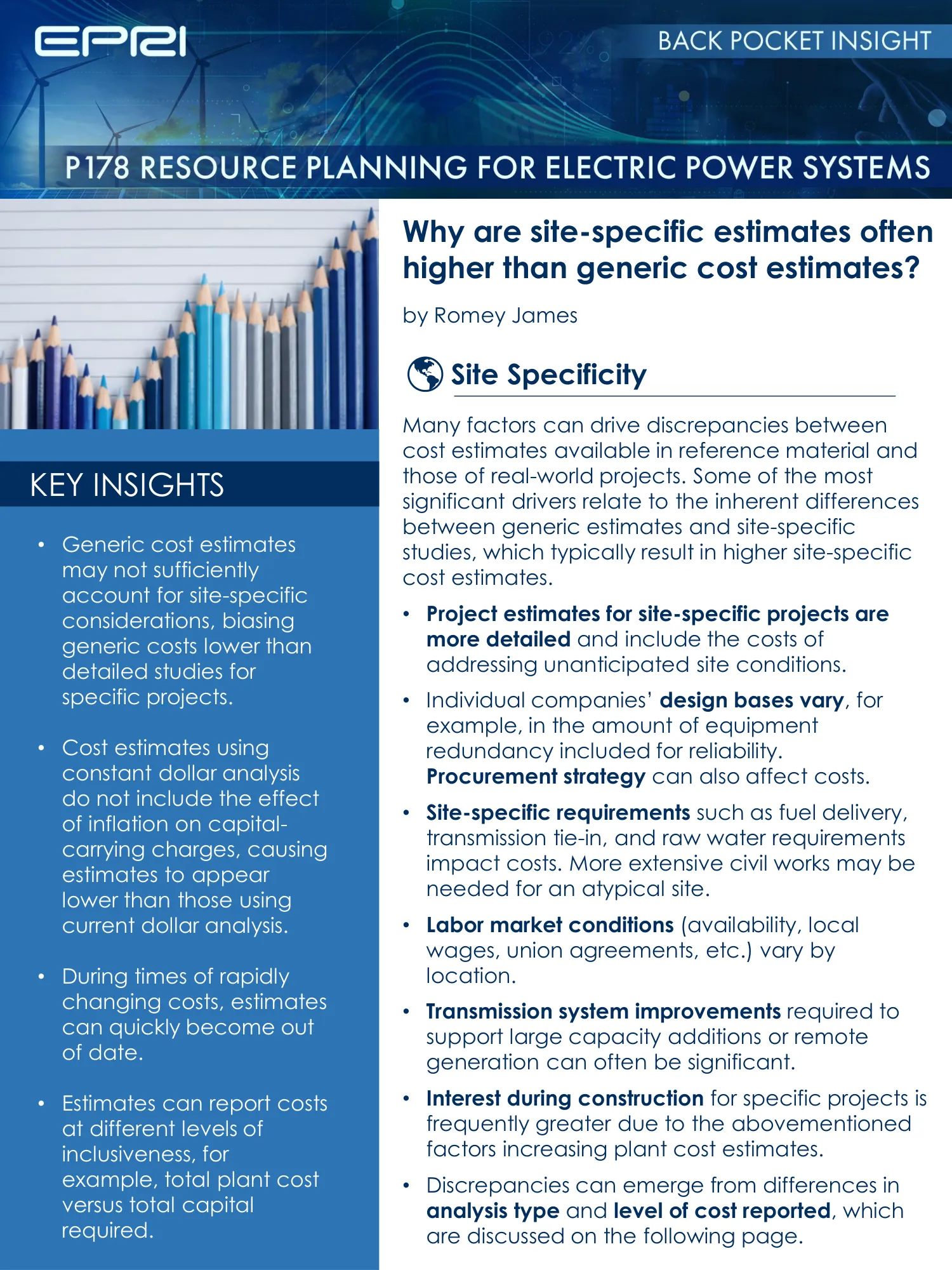
Why are site-specific estimates often higher than generic cost estimates?
December 2025
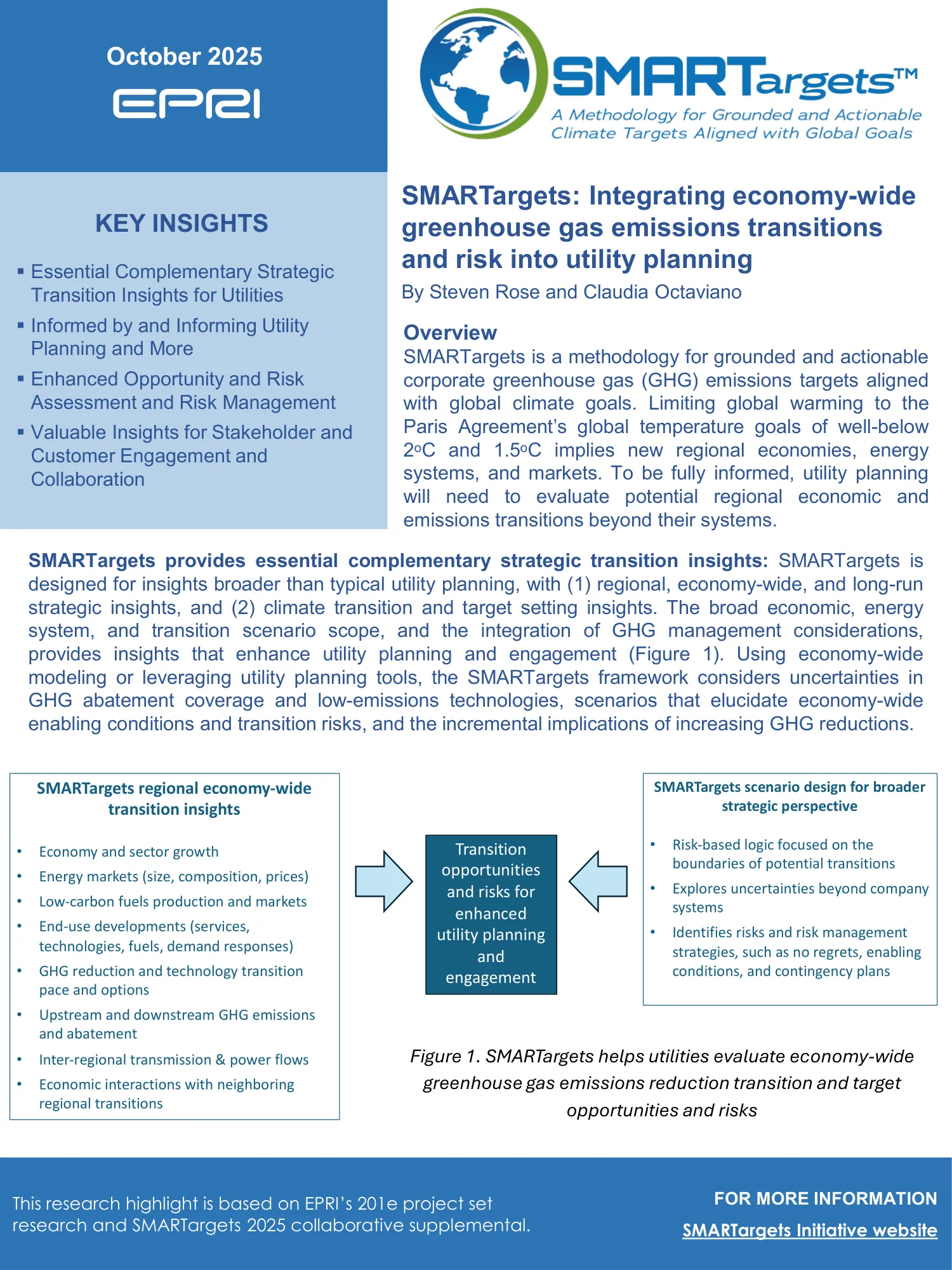
SMARTargets: Integrating economy-wide greenhouse gas emissions transitions and risk into utility planning
October 2025
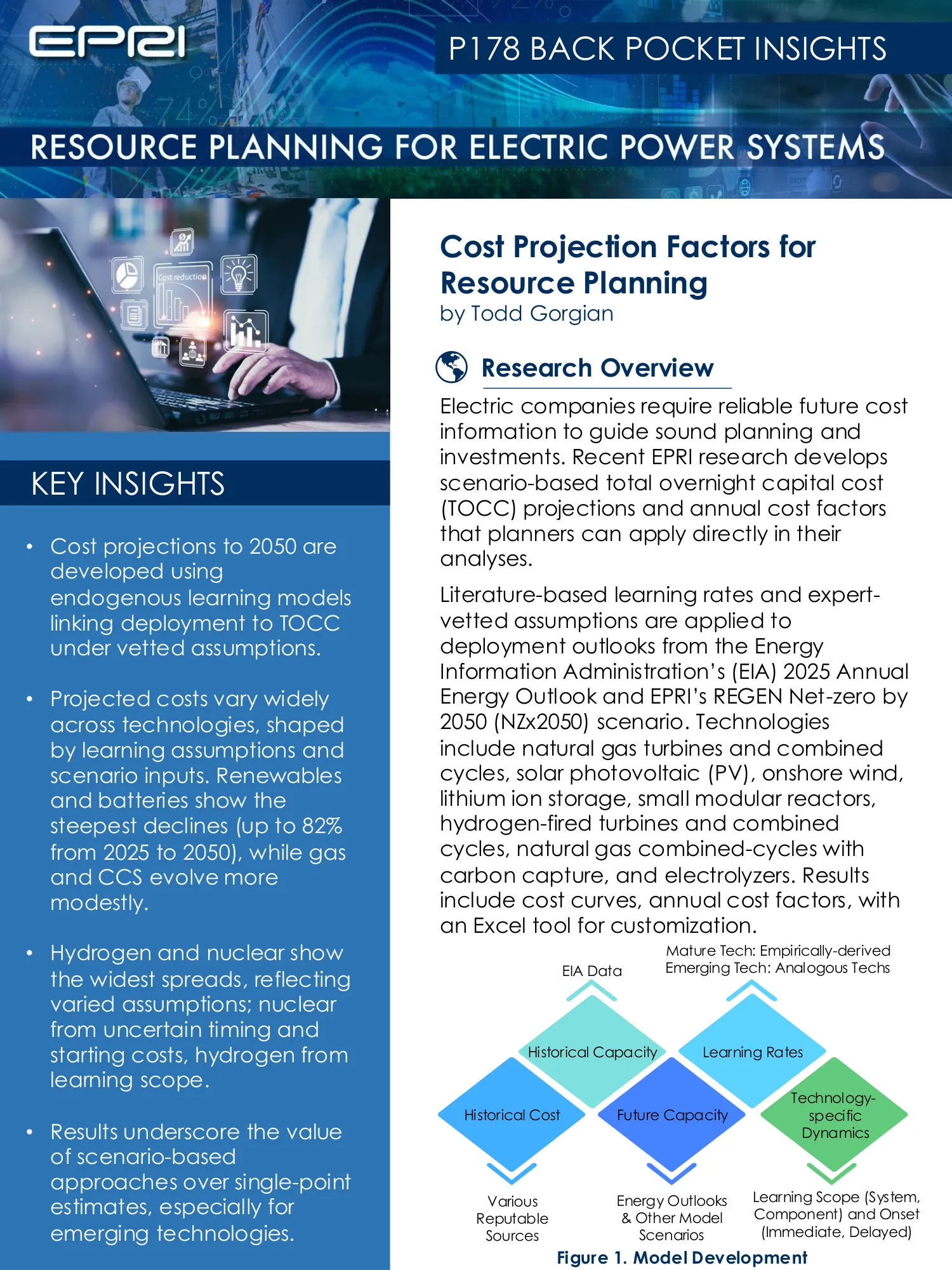
Cost Projection Factors for Resource Planning Insight
September 2025
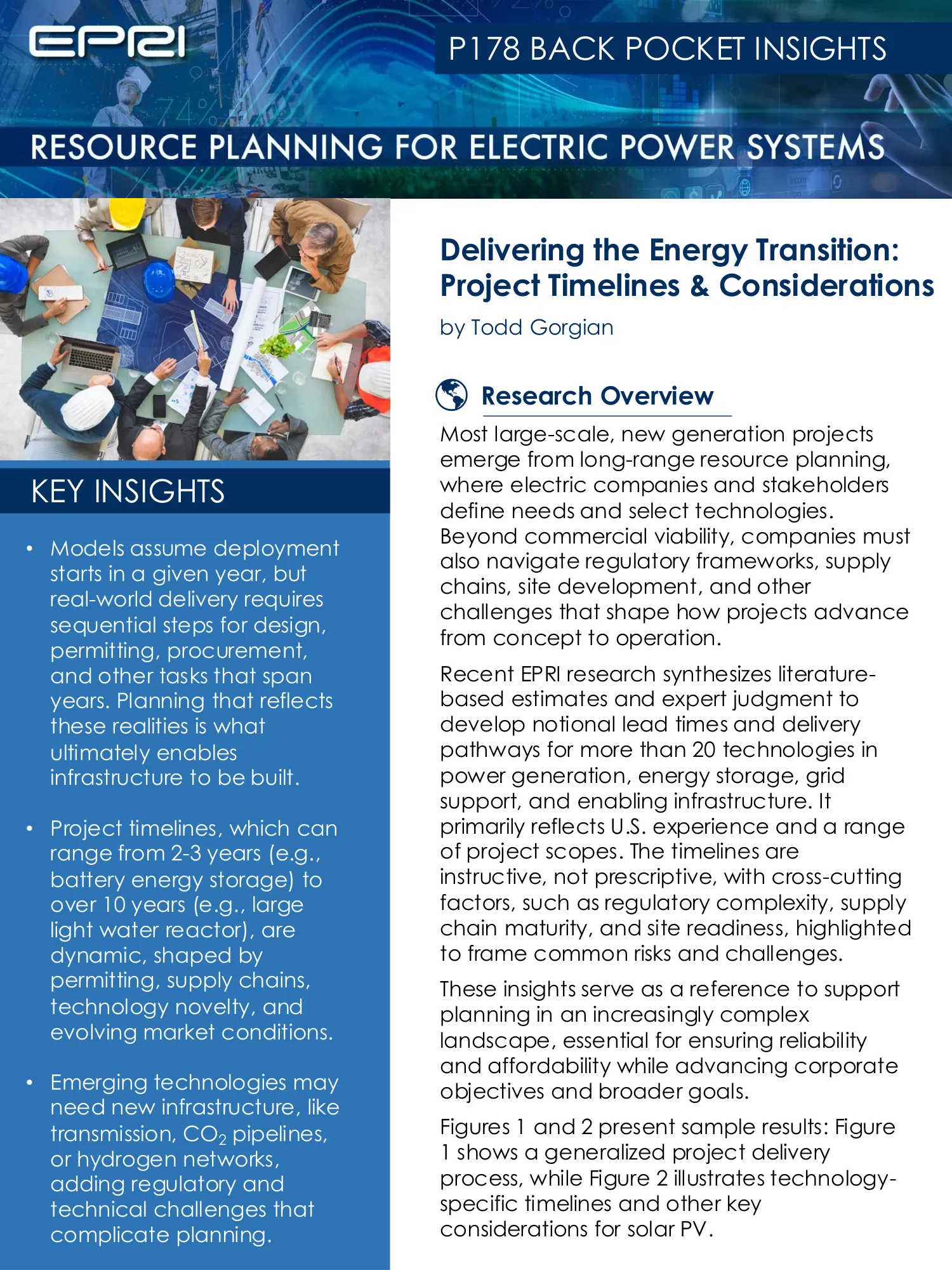
Delivering the Energy Transition: Project Timelines & Considerations
September 2025
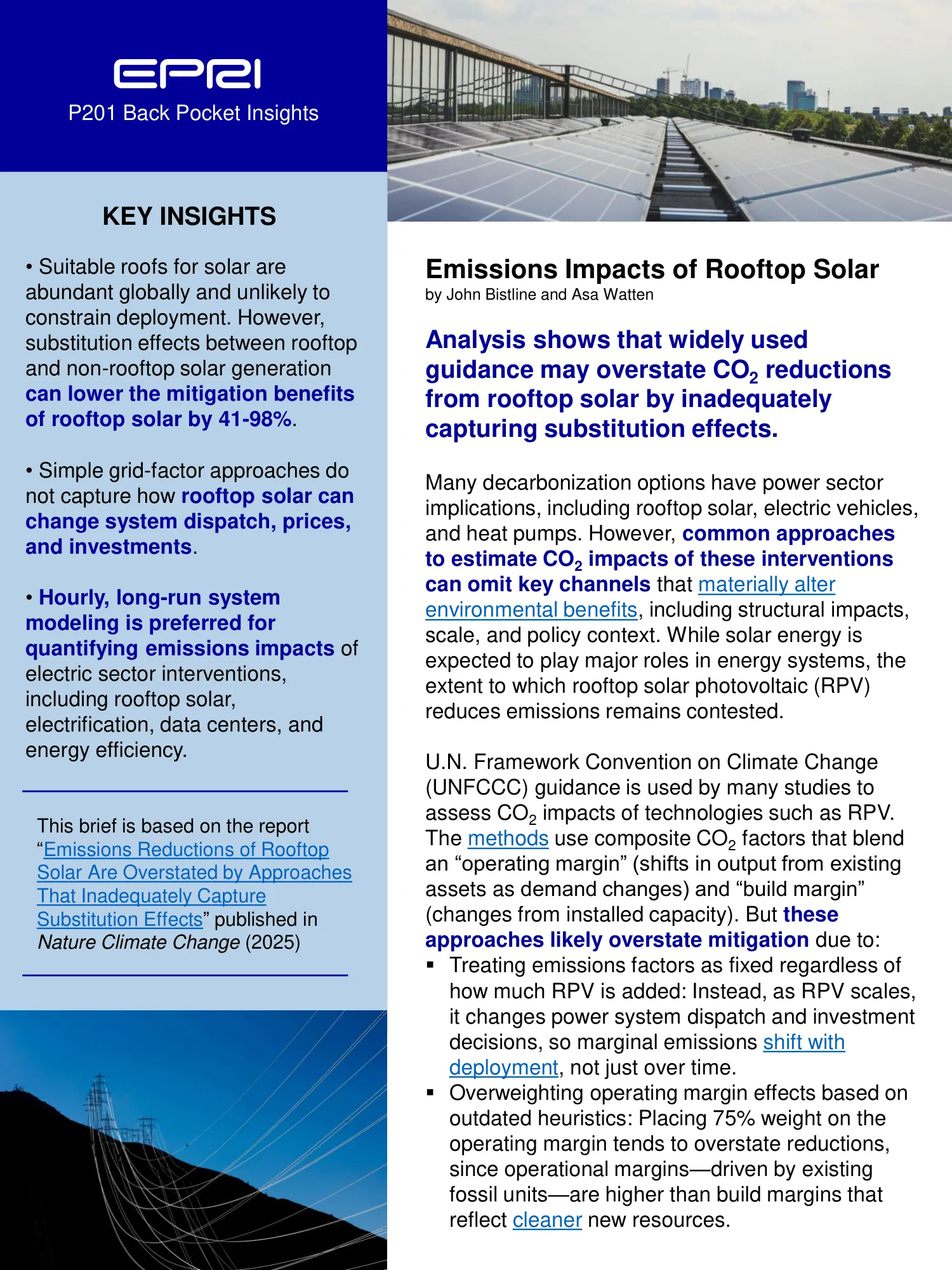
Emissions Impacts of Rooftop Solar
September 2025
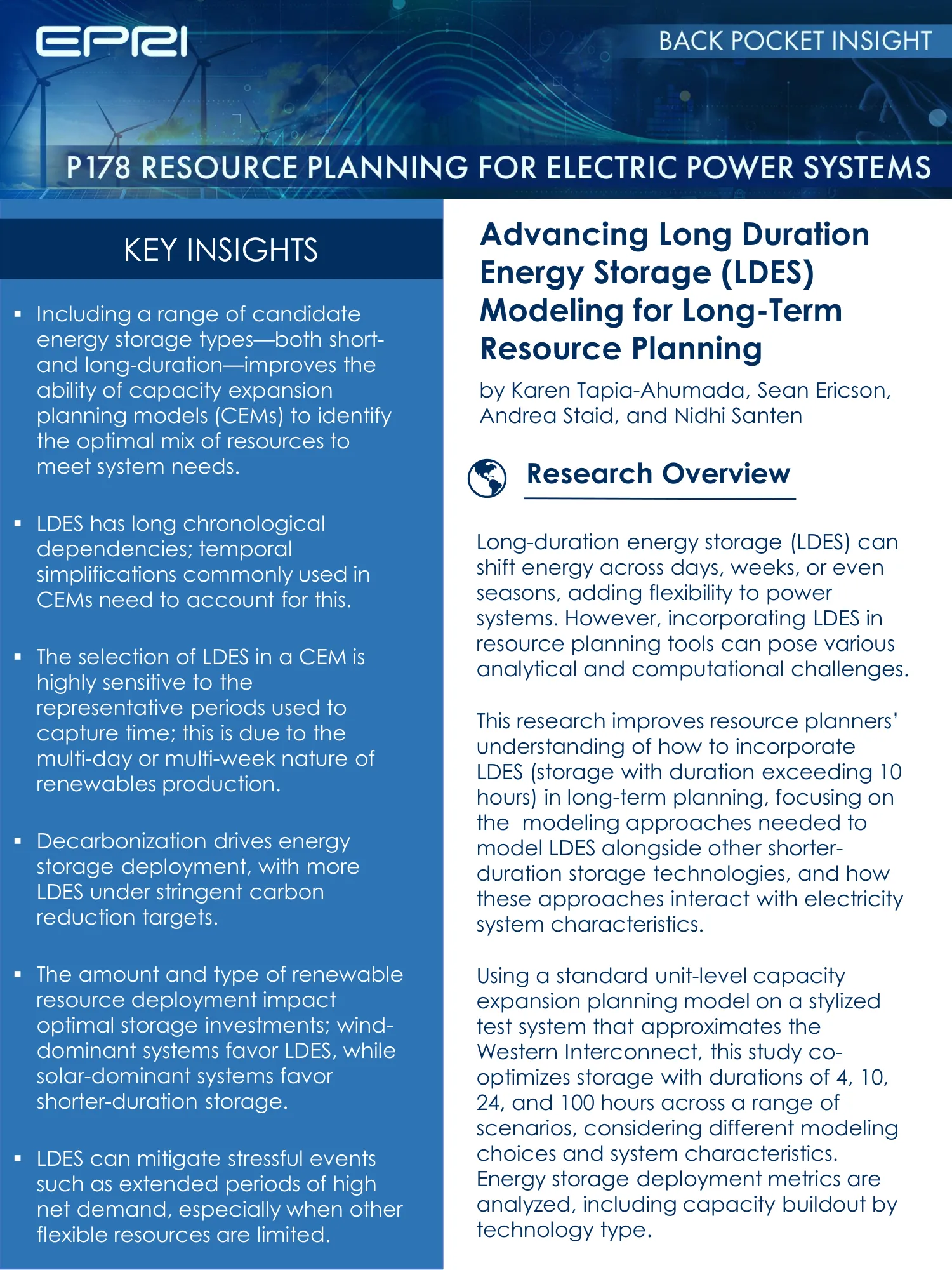
Advancing Long Duration Energy Storage (LDES) Modeling for Long-Term Resource Planning
July 2025
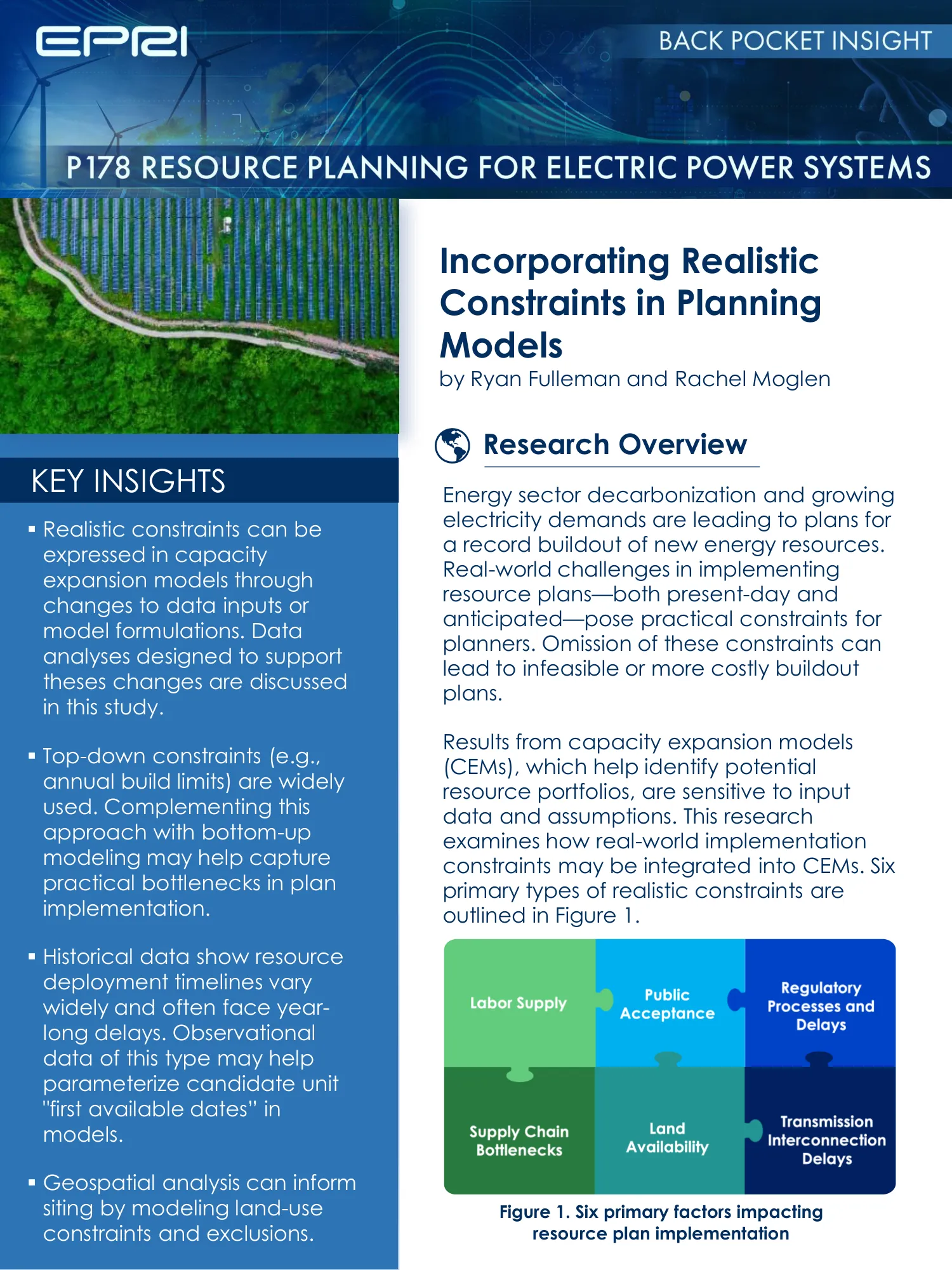
Incorporating Realistic Constraints in Planning Models
July 2025
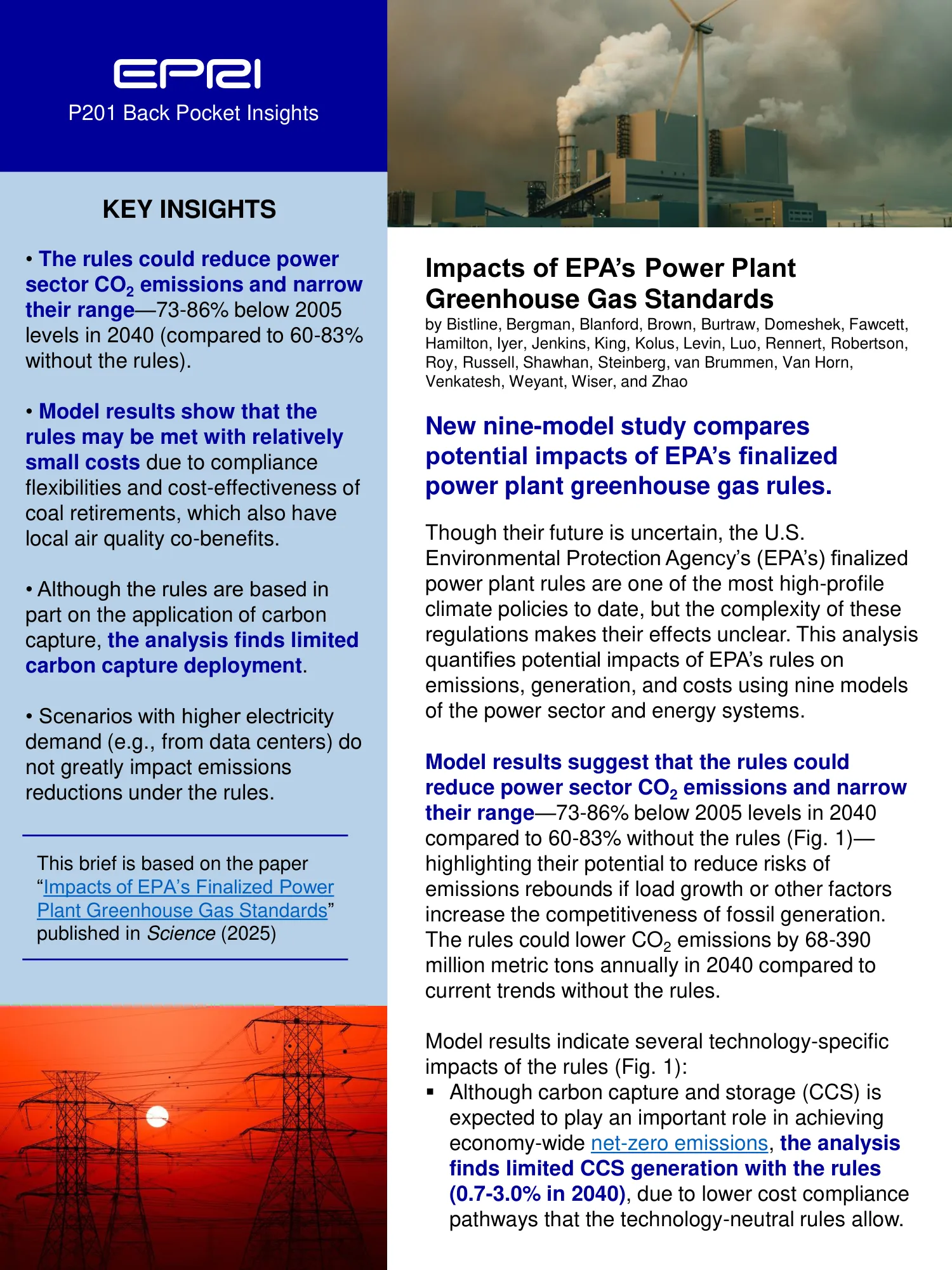
Impacts of EPA's Power Plant Greenhouse Gas Standards
January 2025
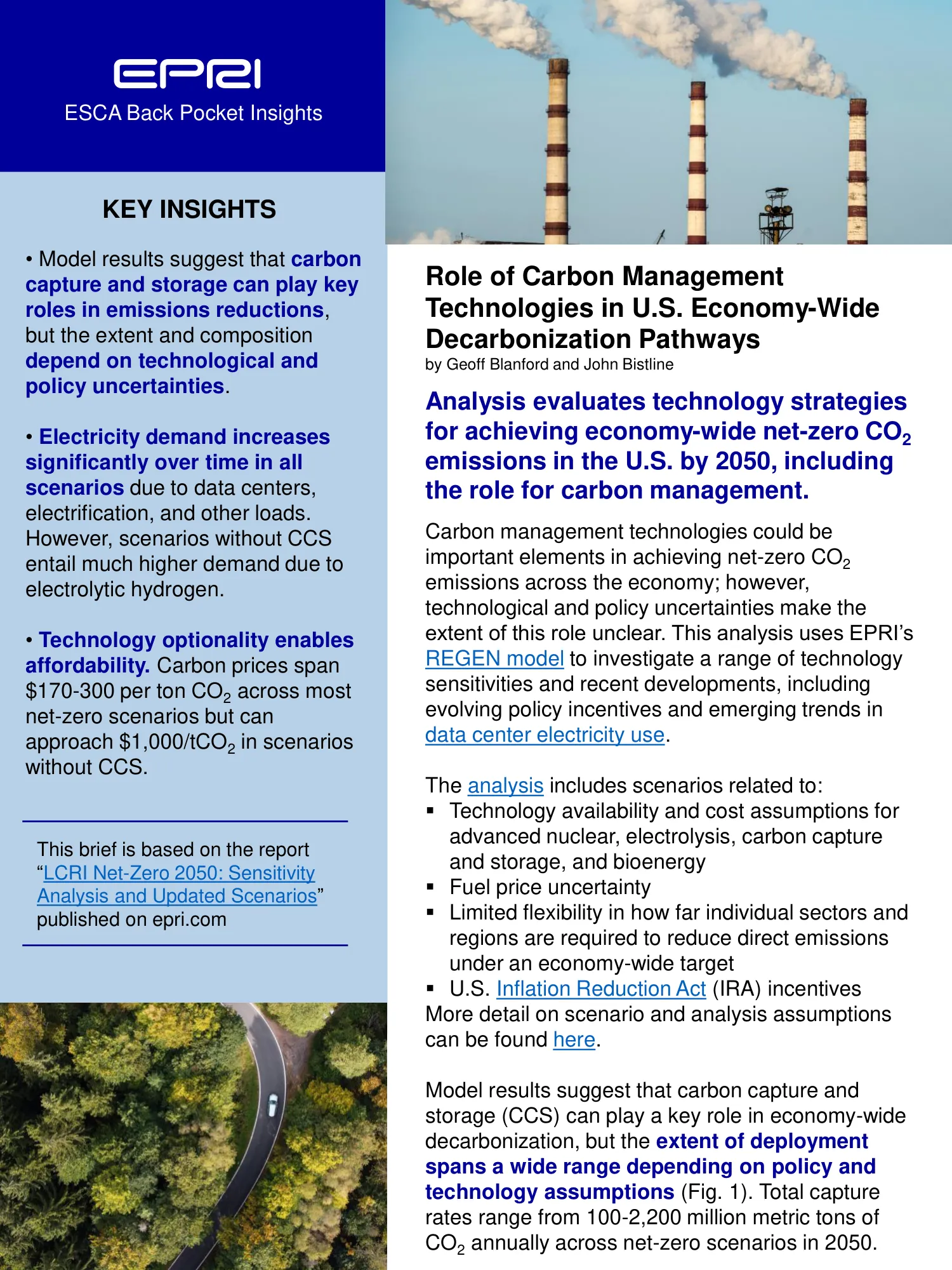
Role of Carbon Management Technologies in U.S. Economy-Wide Decarbonization Pathways
January 2025
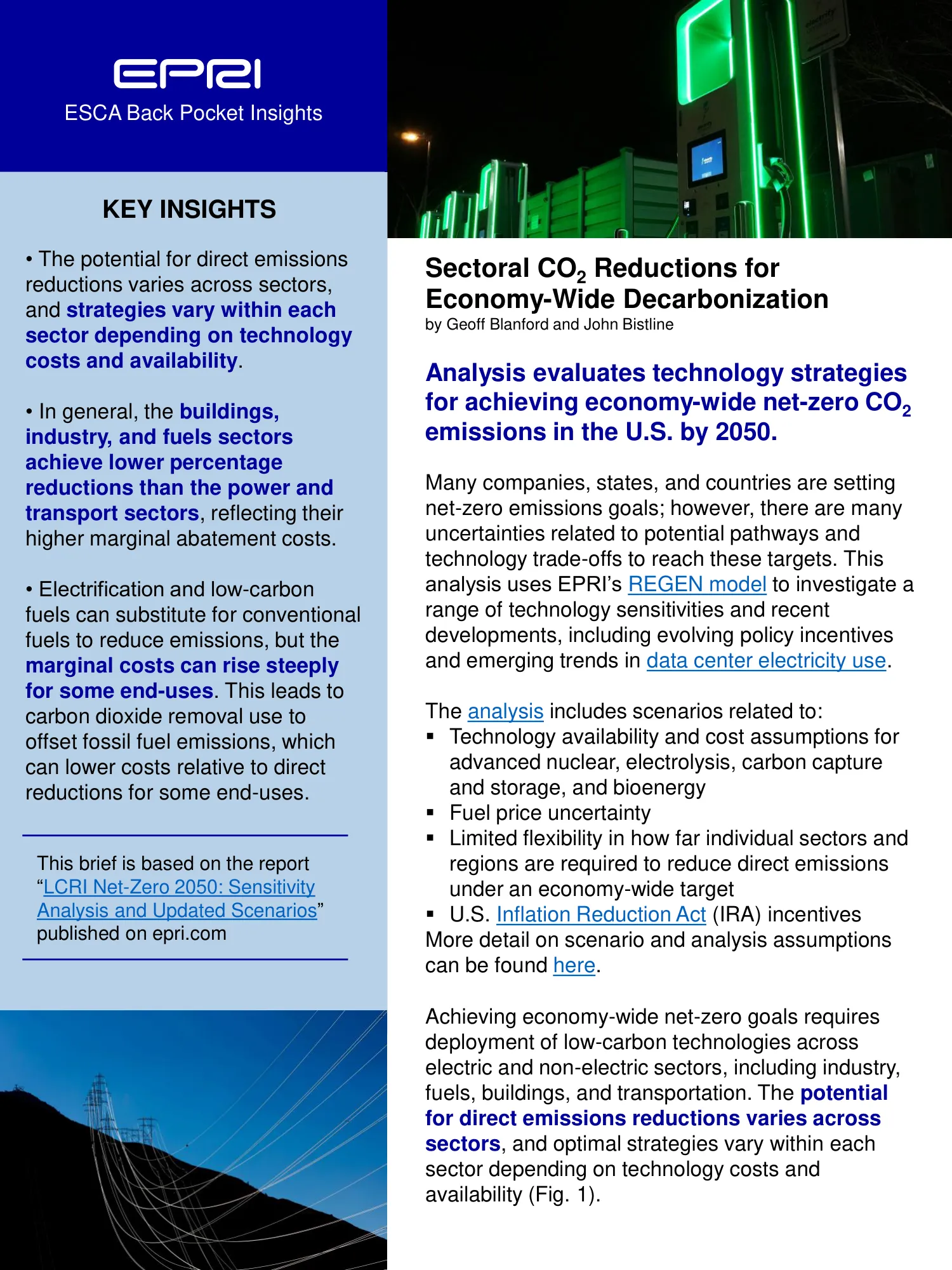
Sectoral CO2 Reductions for Economy-Wide Decarbonization
January 2025
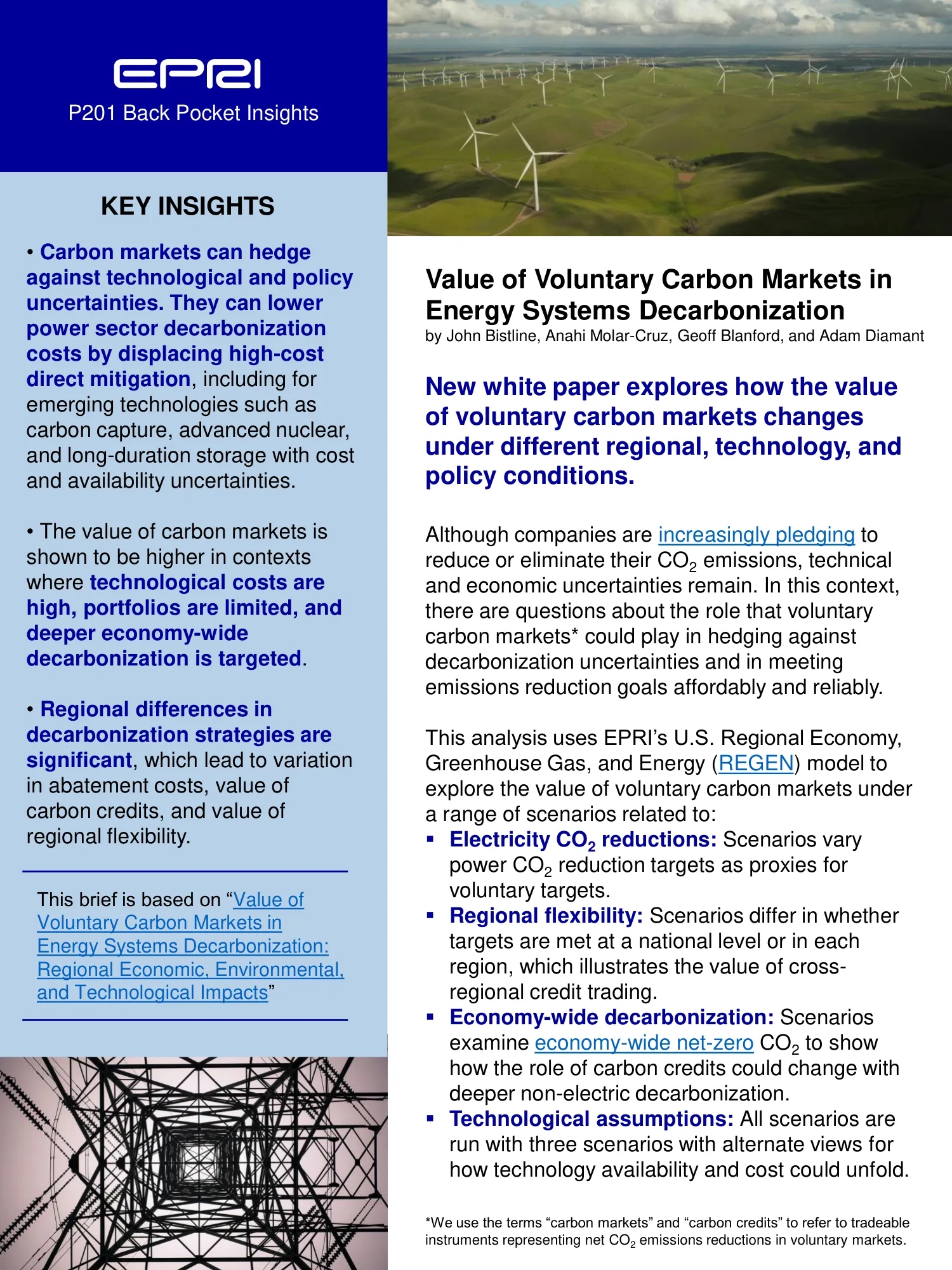
Value of Voluntary Carbon Markets in Energy Systems Decarbonization
December 2024
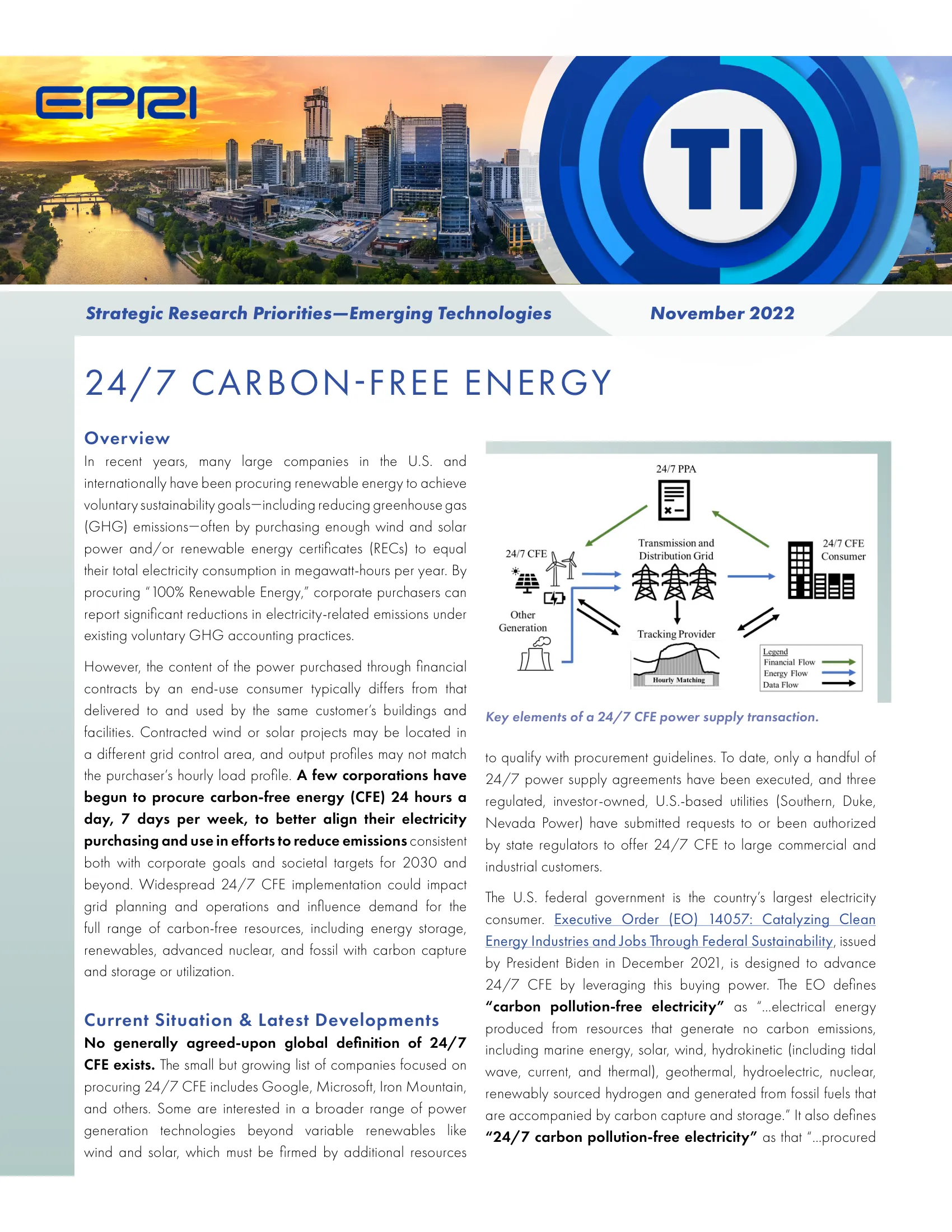
24/7 Carbon-Free Energy
November 2024
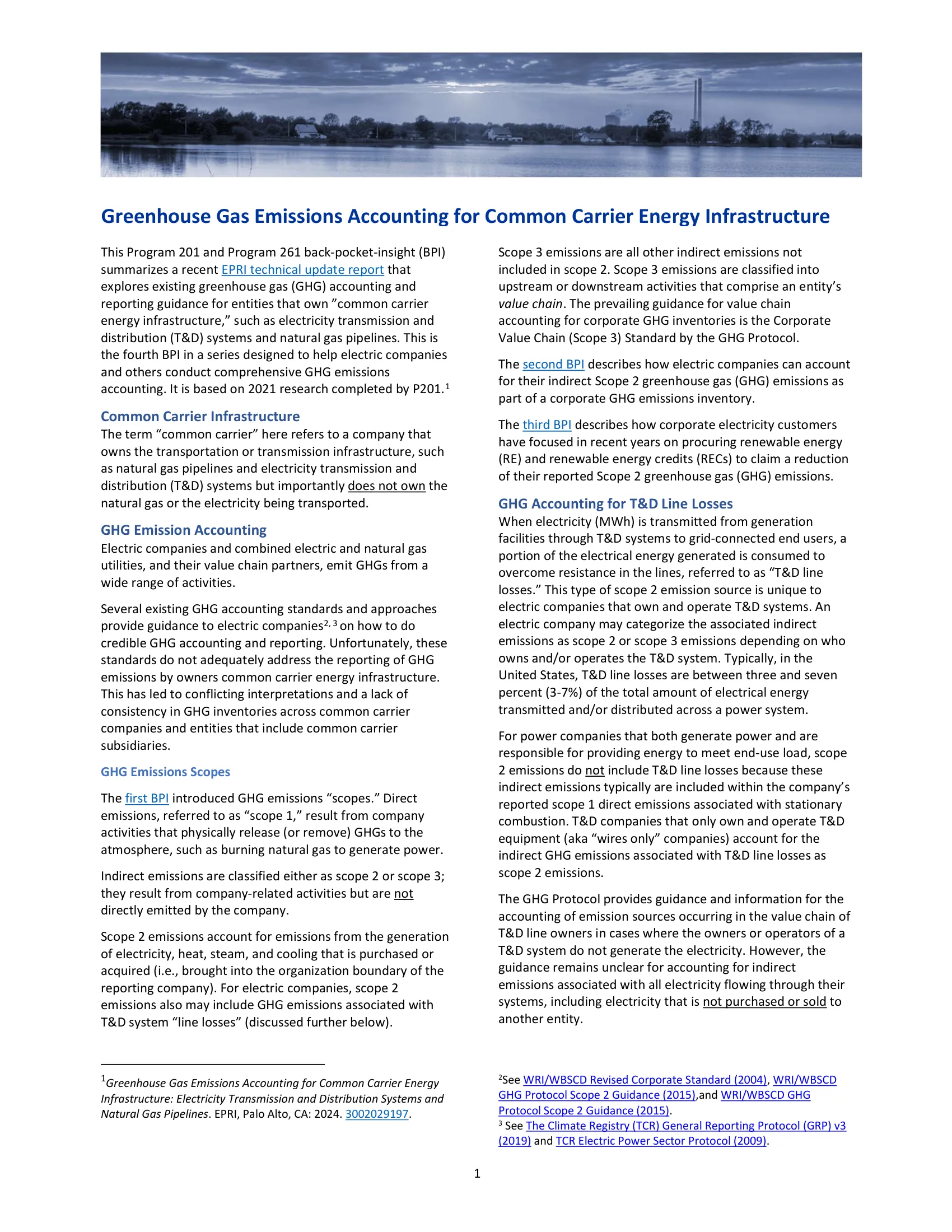
Greenhouse Gas Emissions Accounting for Common Carrier Energy Infrastructure
November 2024
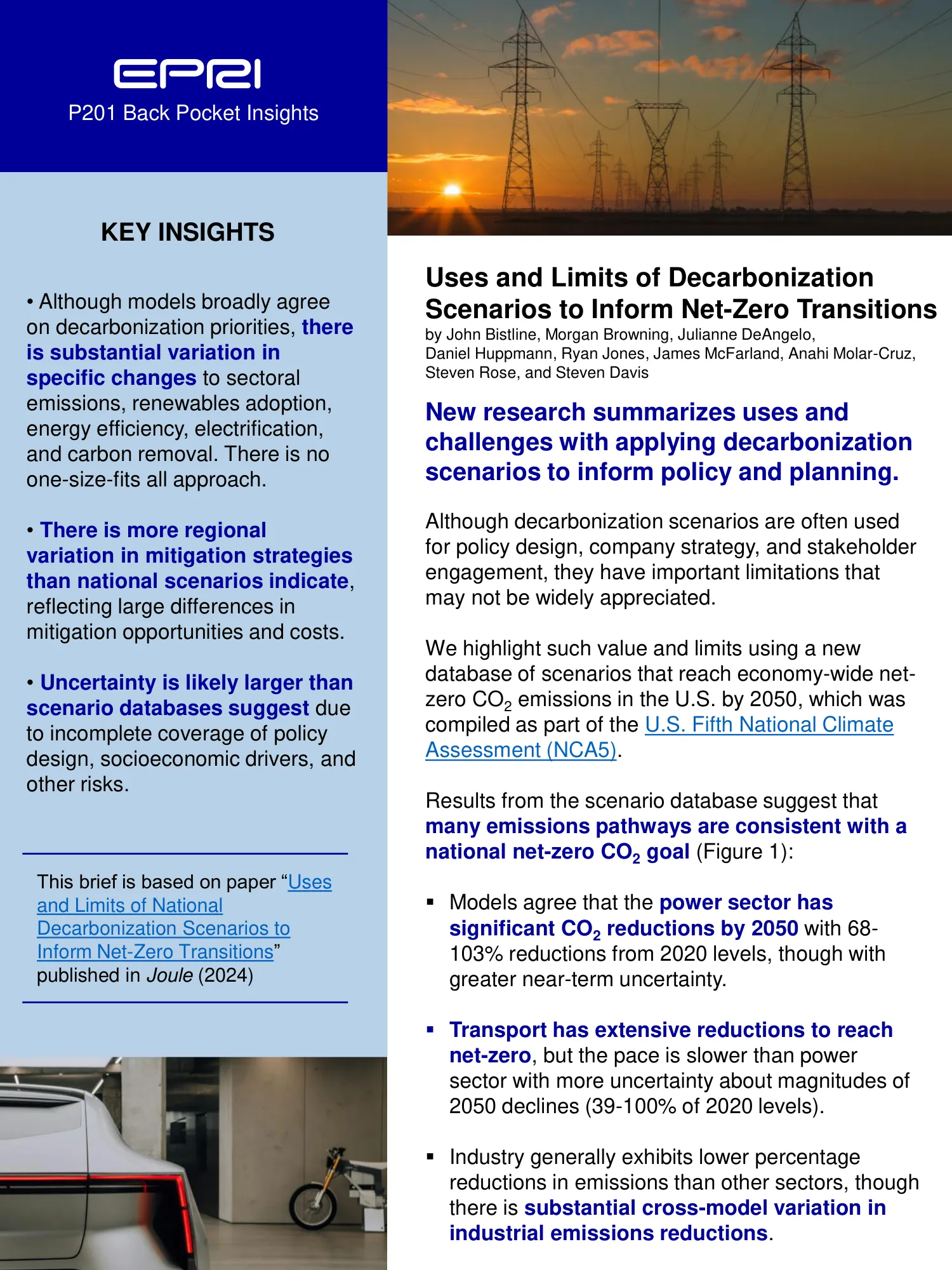
Uses and Limits of Decarbonization Scenarios to Inform Net-Zero Transitions
October 2024
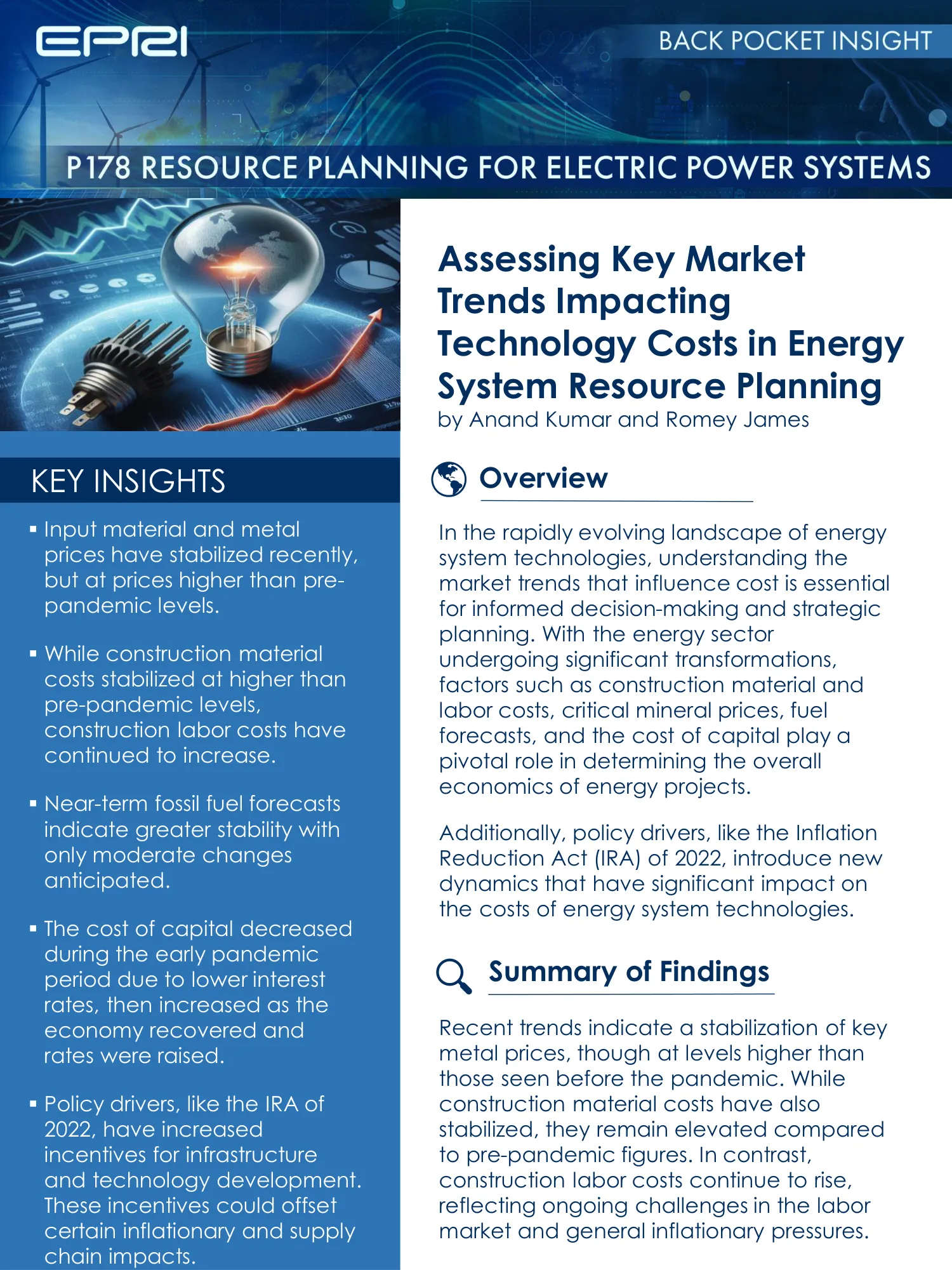
Assessing Key Market Trends Impacting Technology Costs in Energy System Resource Planning
August 2024
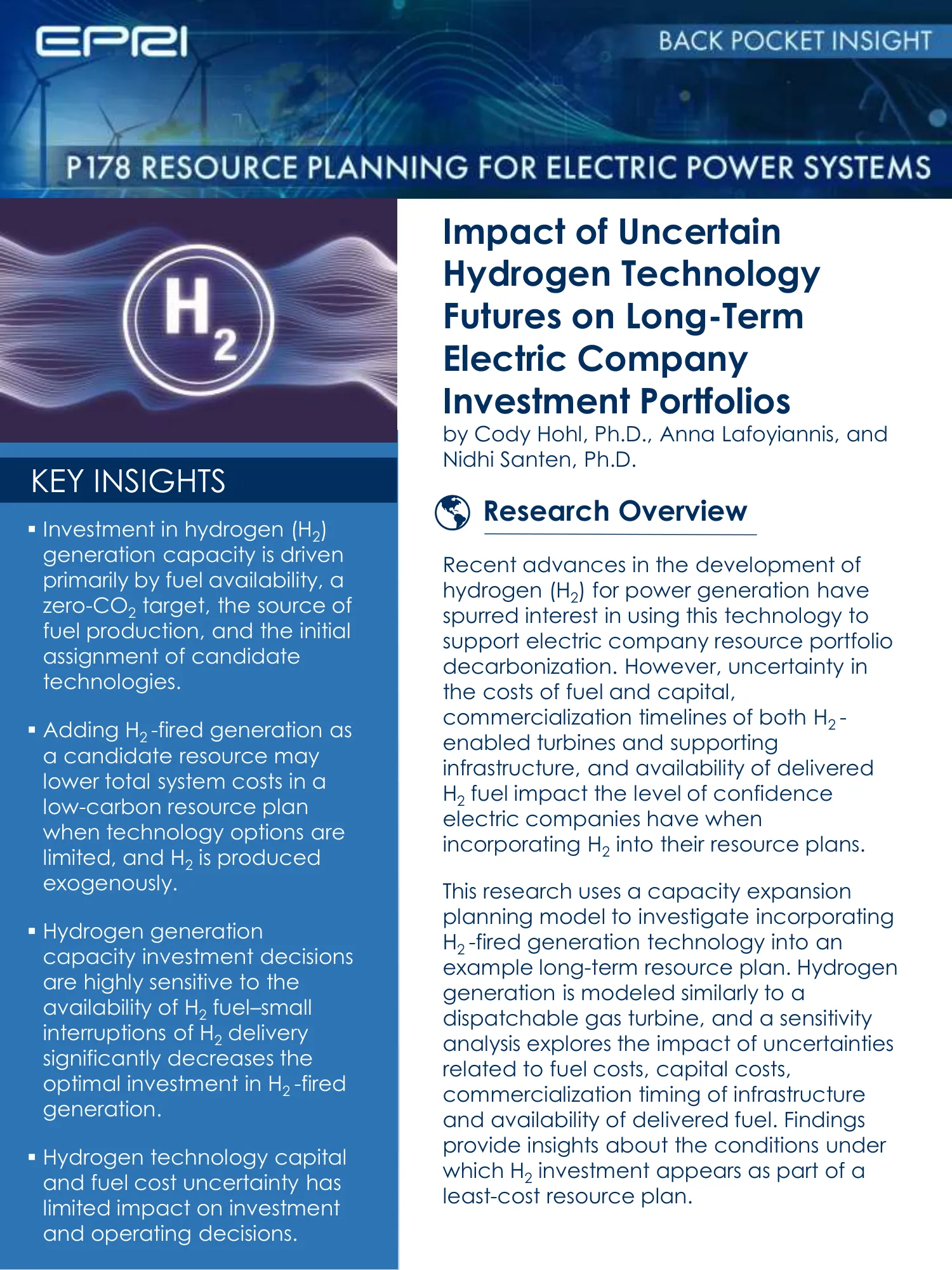
Impact of Uncertain Hydrogen Technology Futures on Long-Term Electric Company Investment Portfolios
August 2024
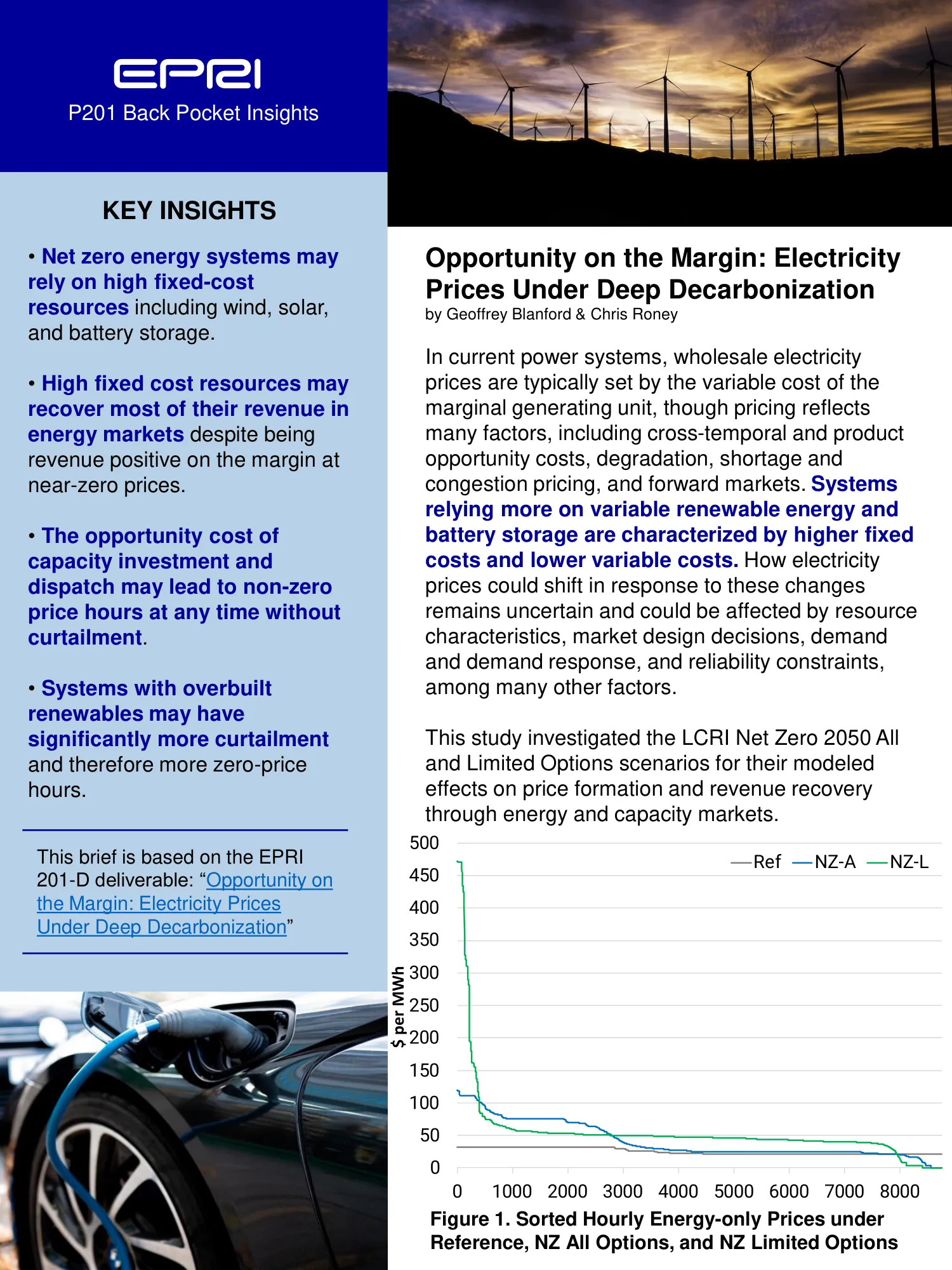
Opportunity on the Margin: Electricity Prices Under Deep Decarbonization
August 2024
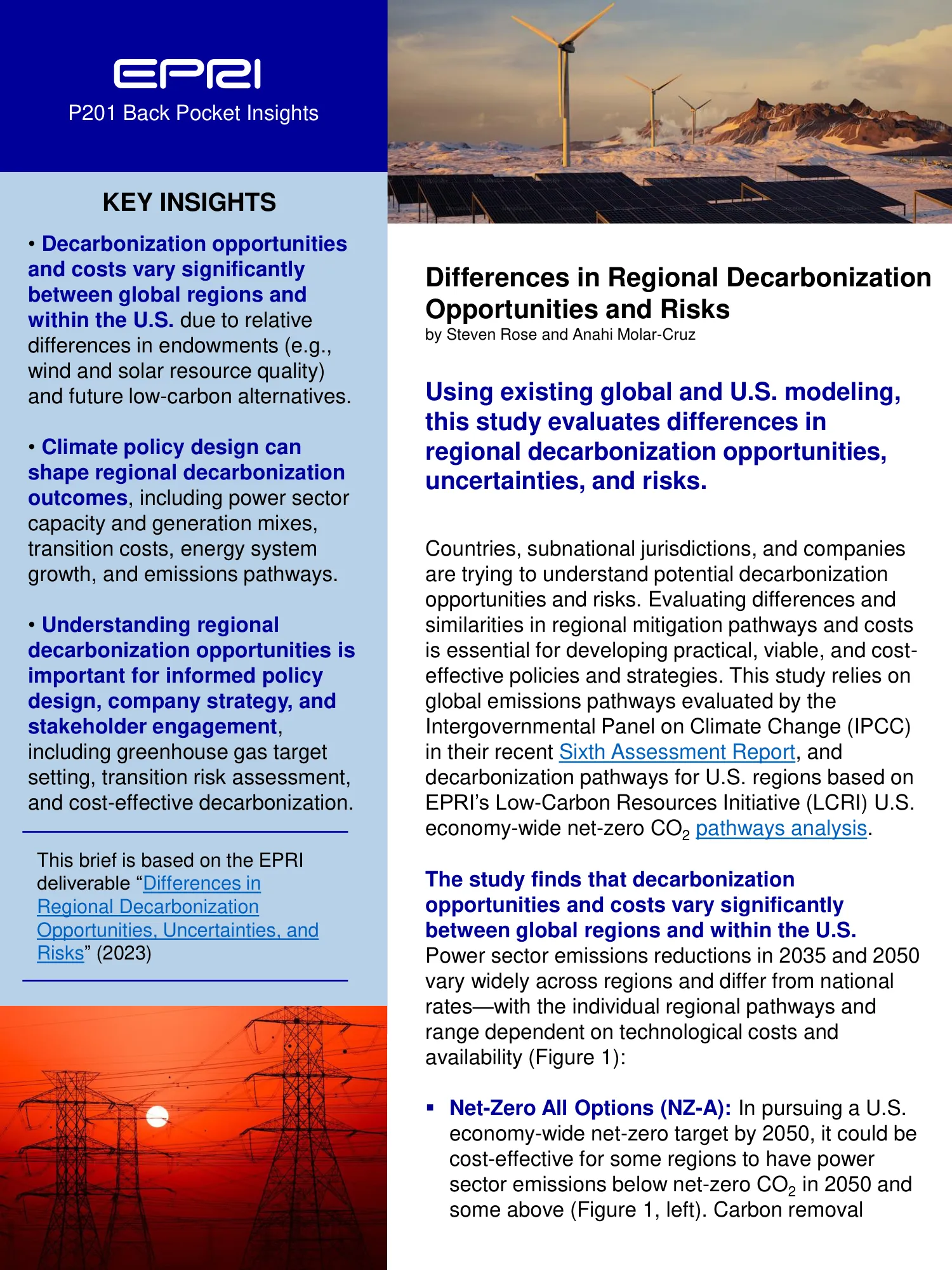
Regional Decarbonization Summary
June 2024
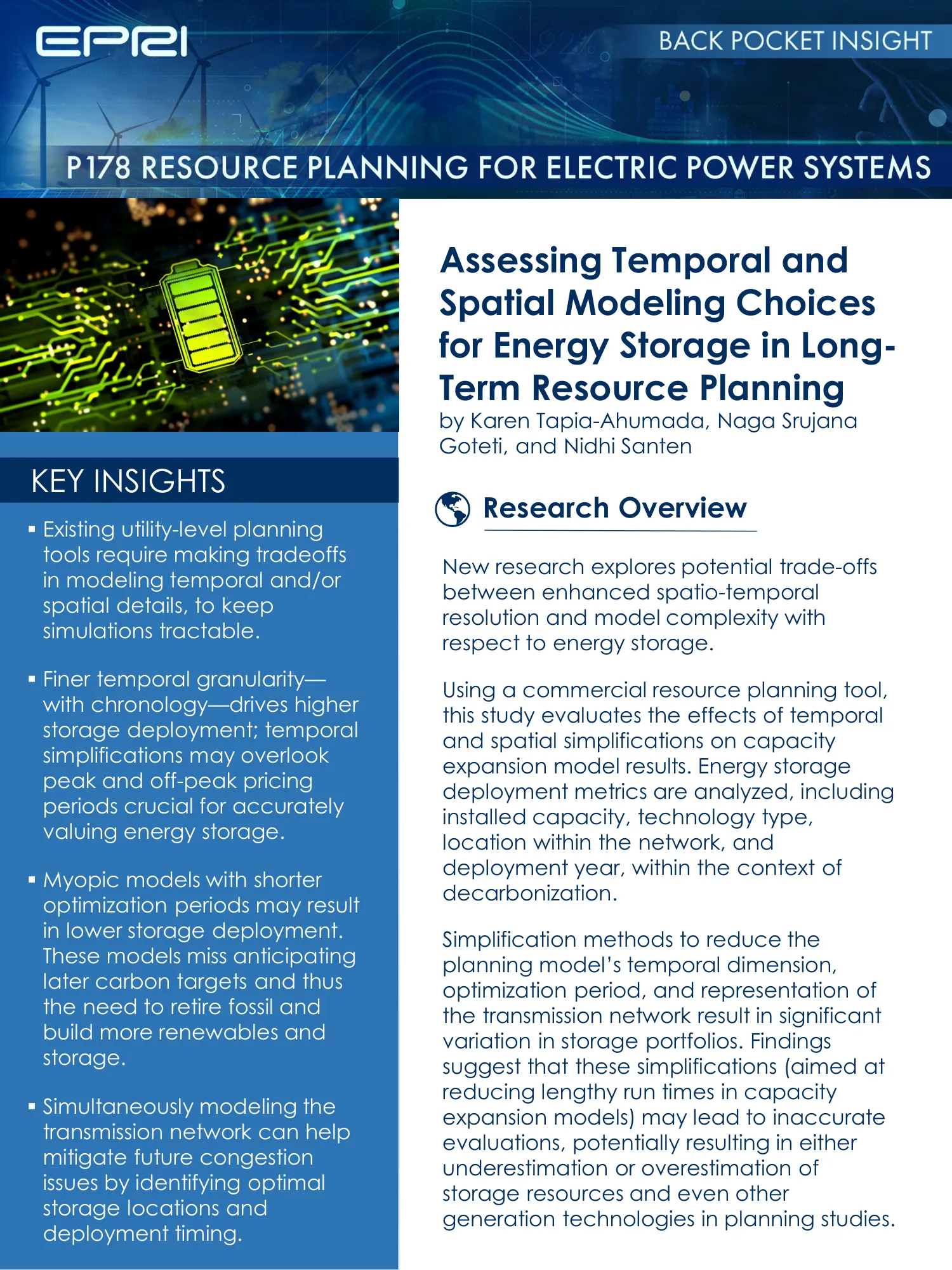
Assessing Temporal and Spatial Modeling Choices for Energy Storage in Long-Term Resource Planning
May 2024
Assessing the Impacts of Dark Doldrums Events on Electric System Resource Portfolios
May 2024
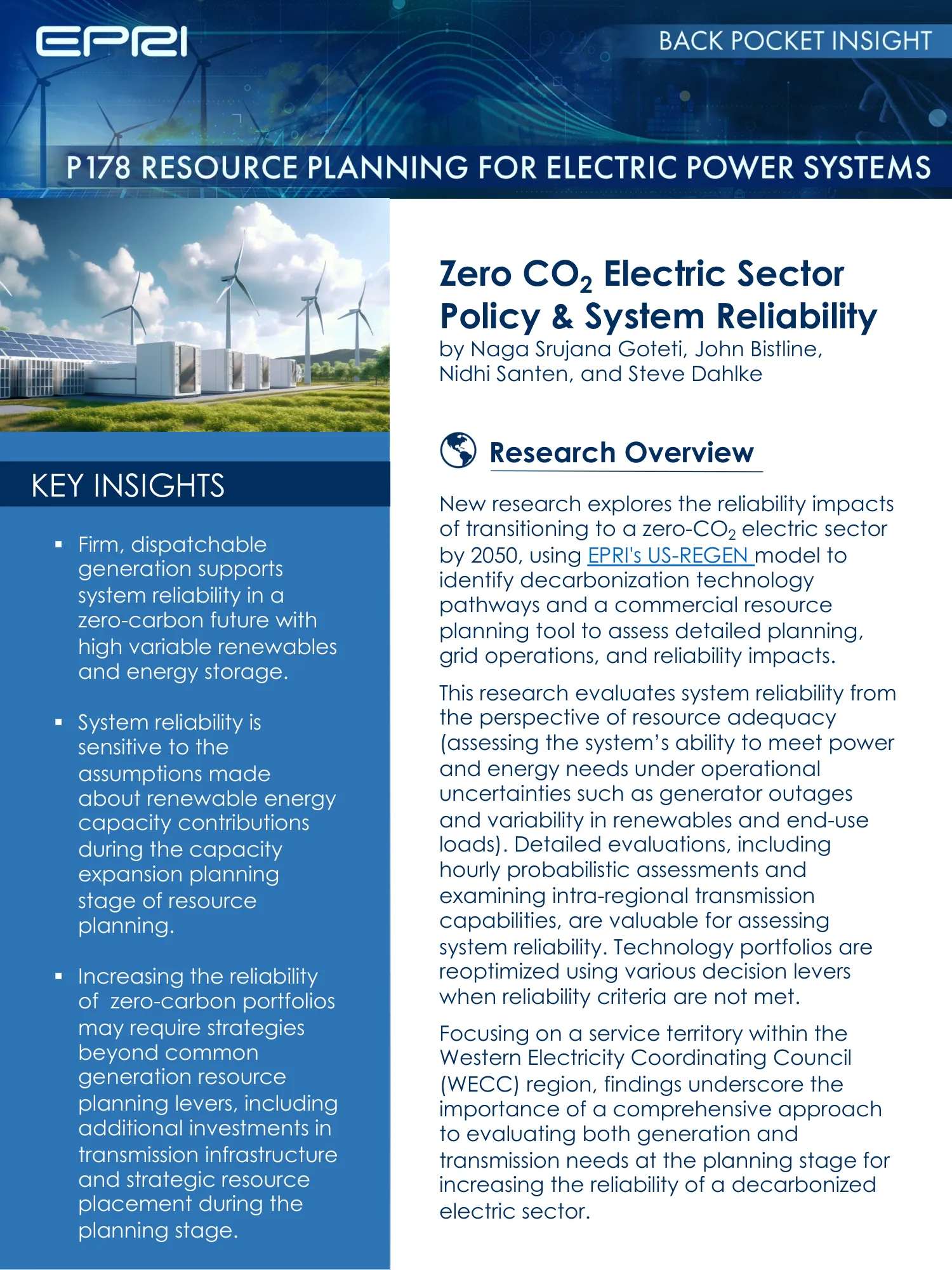
Zero CO2 Electric Sector Policy & System Reliability
May 2024
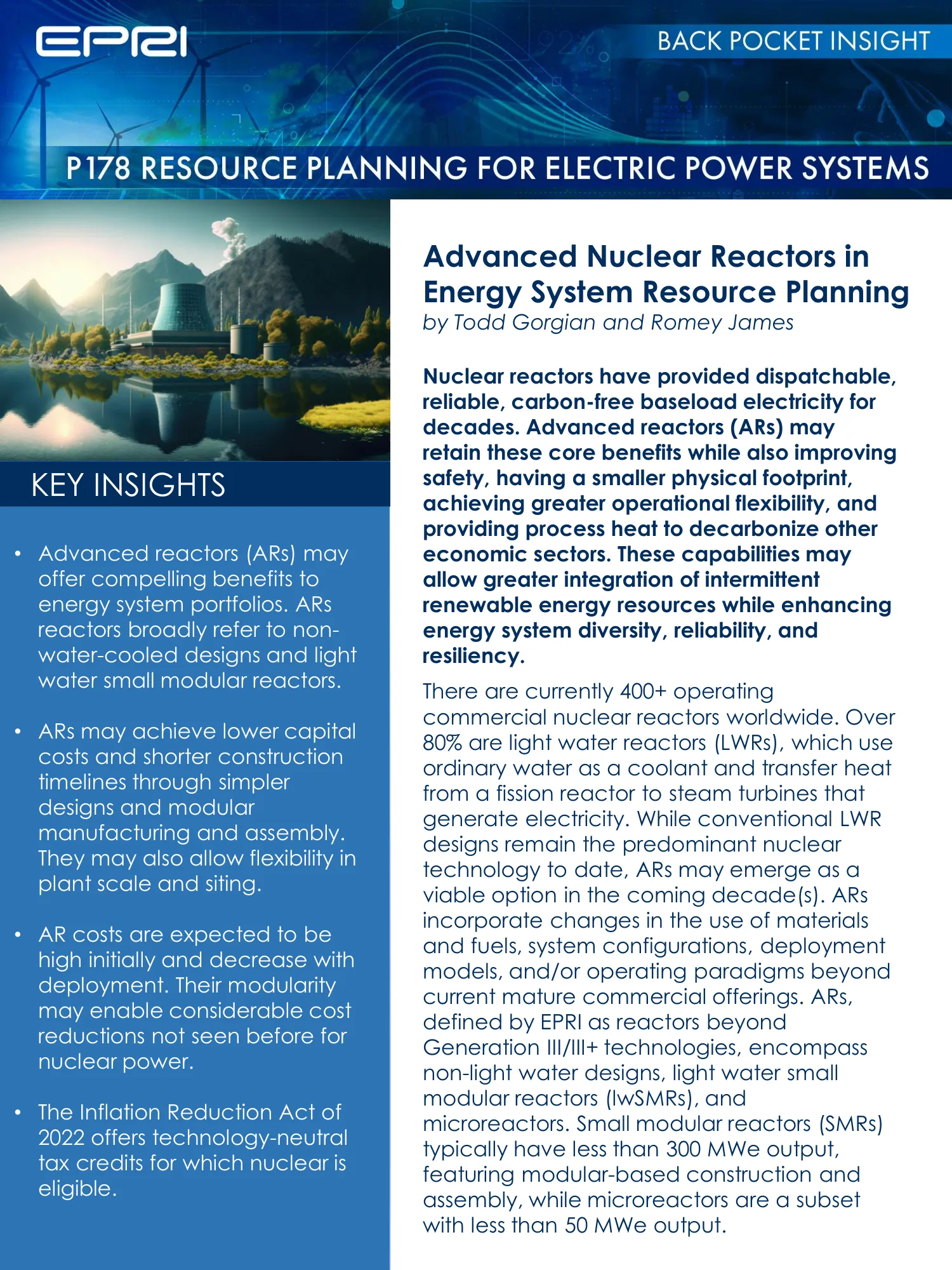
Advanced Nuclear Reactors in Energy System Resource Planning
March 2024
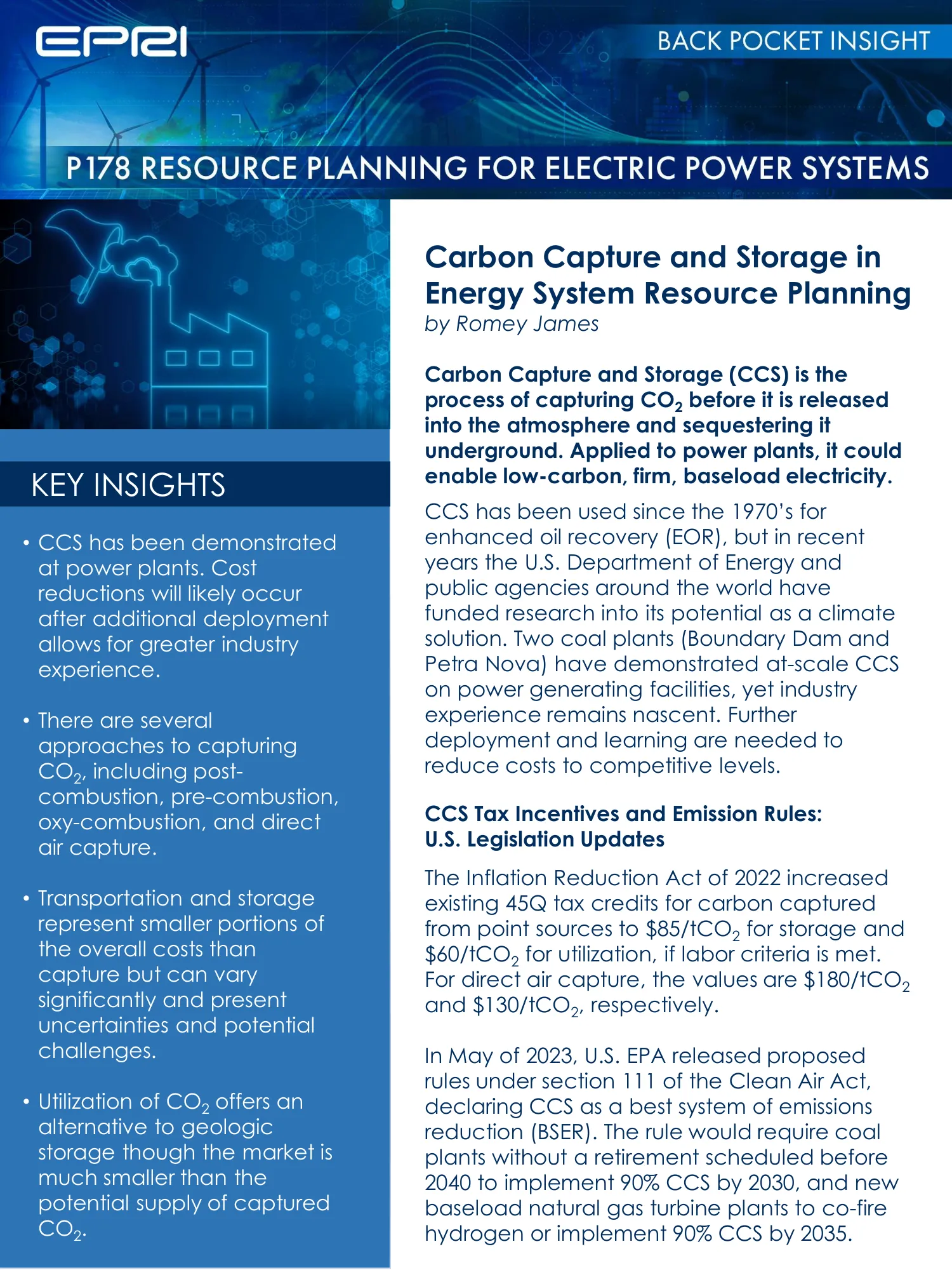
Carbon Capture and Storage in Energy System Resource Planning
March 2024
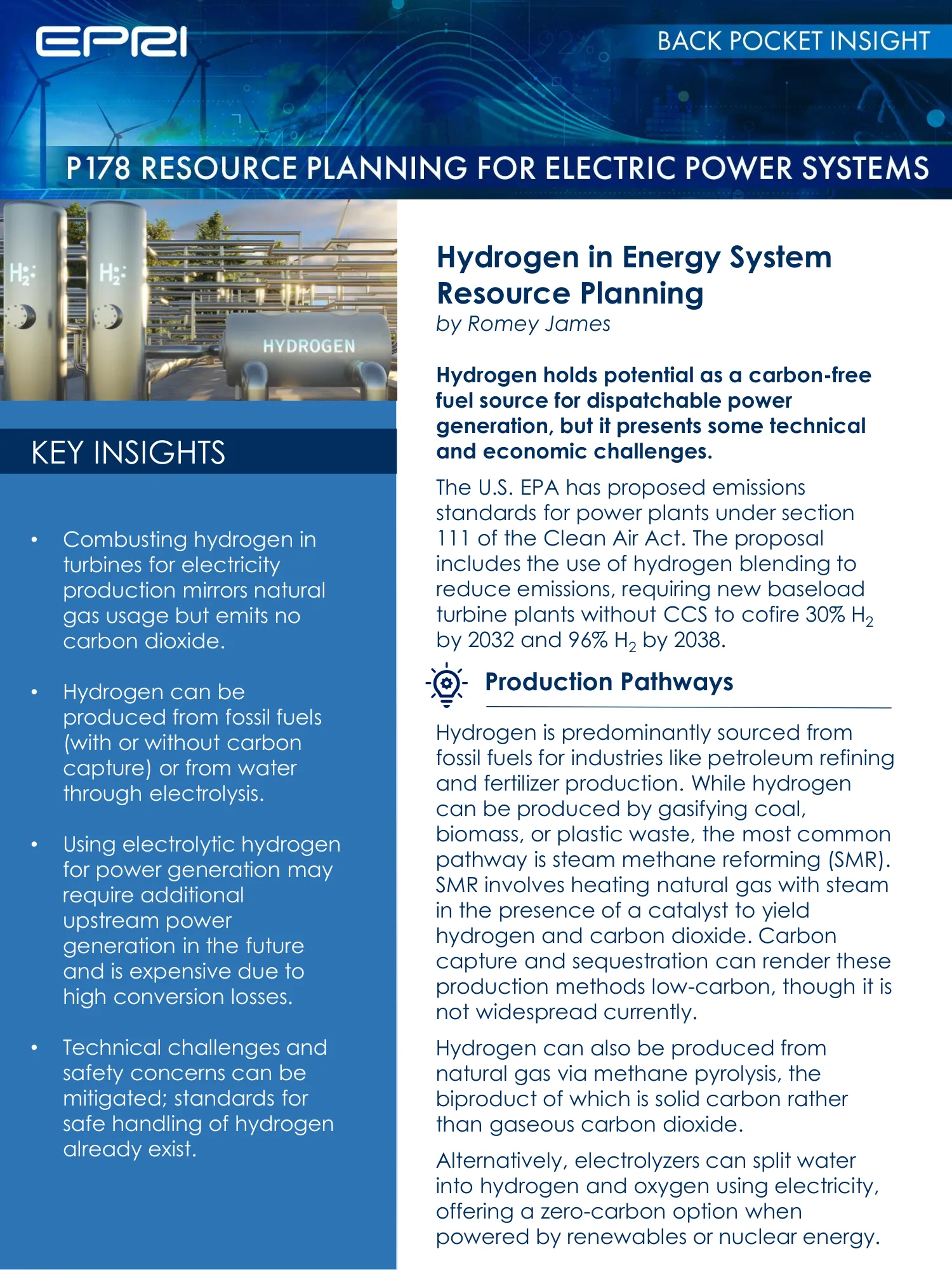
Hydrogen in Energy System Resource Planning
March 2024
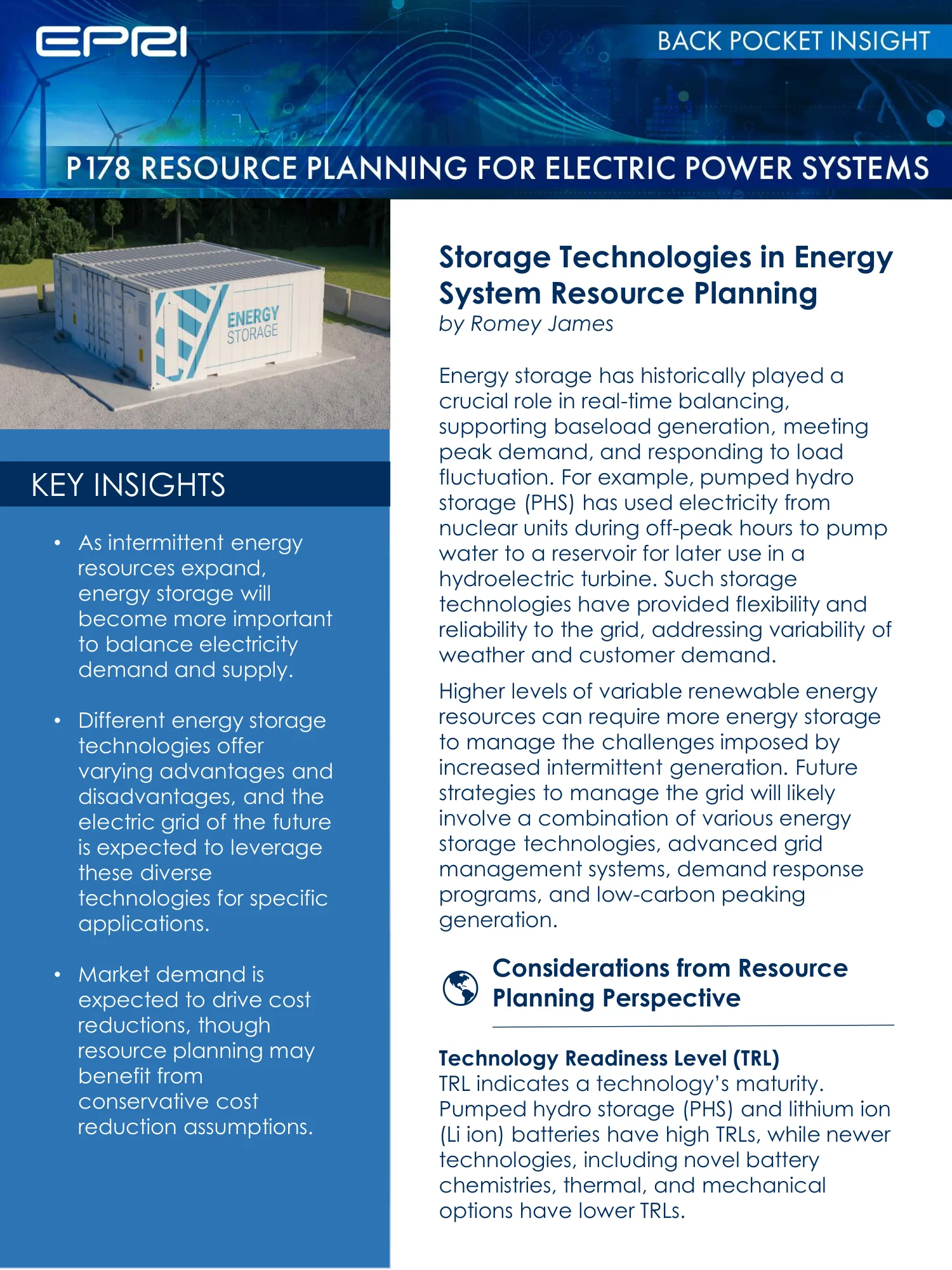
Storage Technologies in Energy System Resource Planning
March 2024
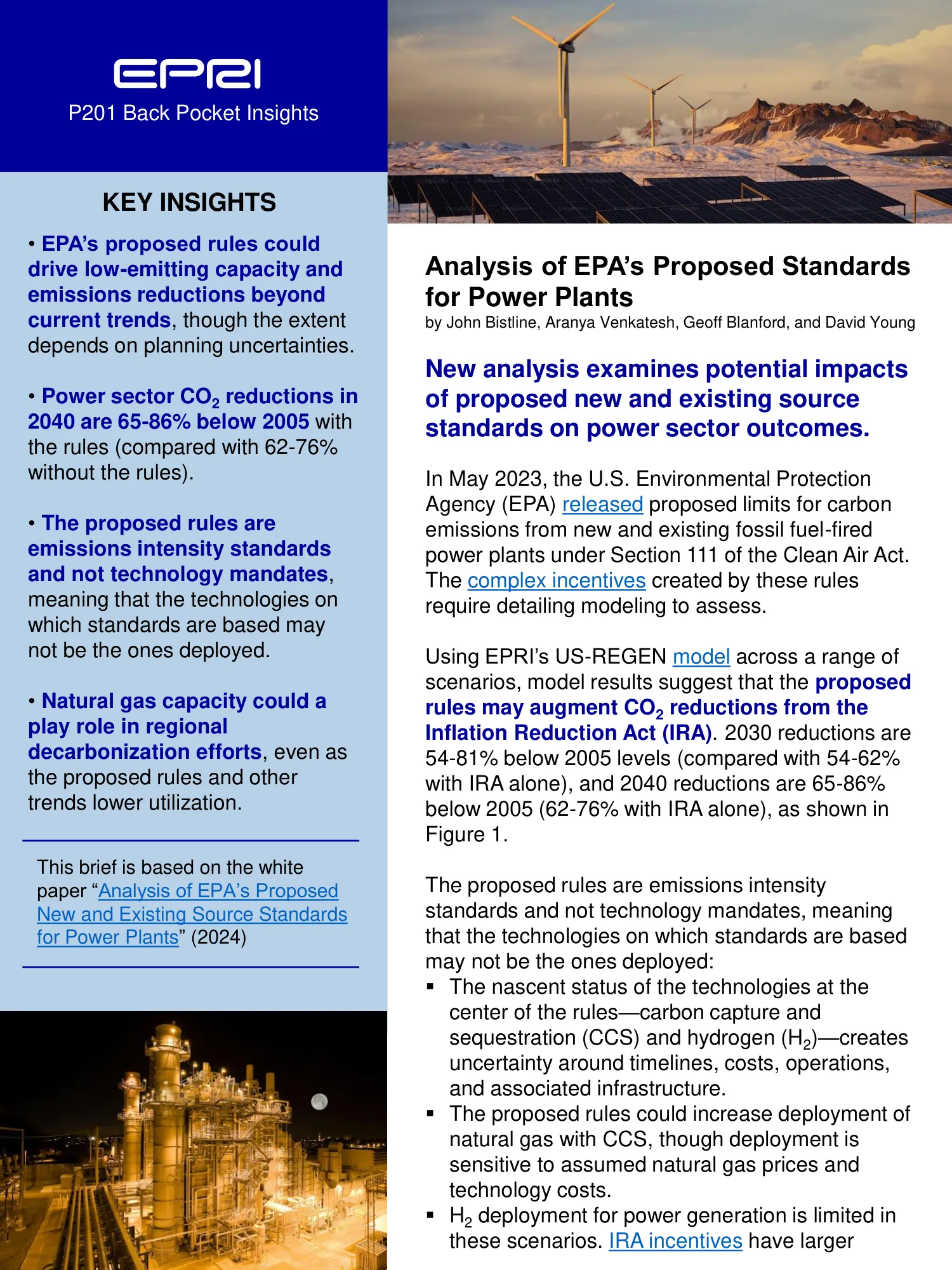
Analysis of EPA's Proposed Standards for Power Plants
January 2024
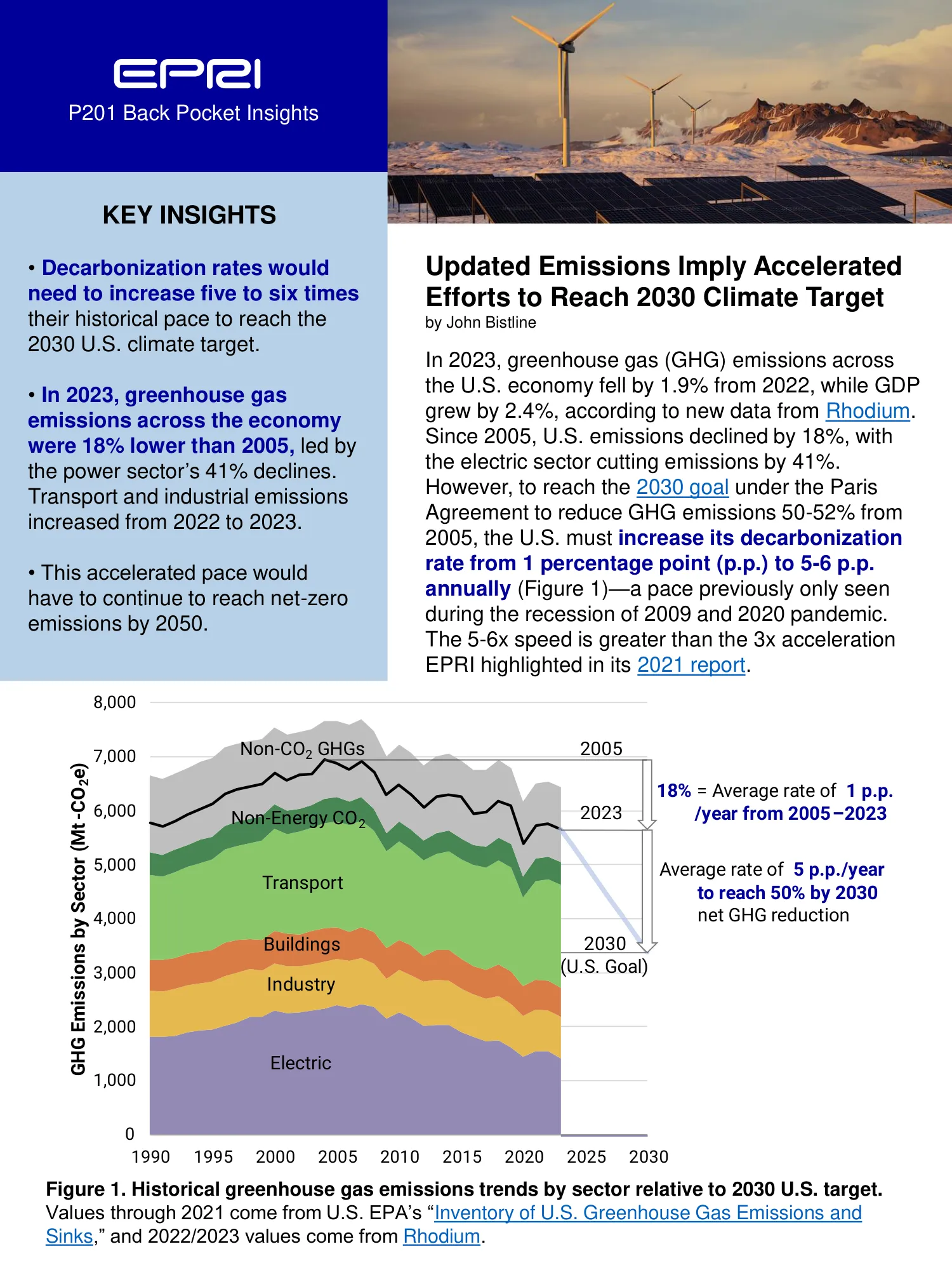
Updated Emissions Imply Accelerated Efforts to Reach 2030 Climate Target
January 2024
IRA MIP Power Summary
December 2023
The Role of GHG Emission Offsets in Achieving Corporate Decarbonization Objectives
December 2023
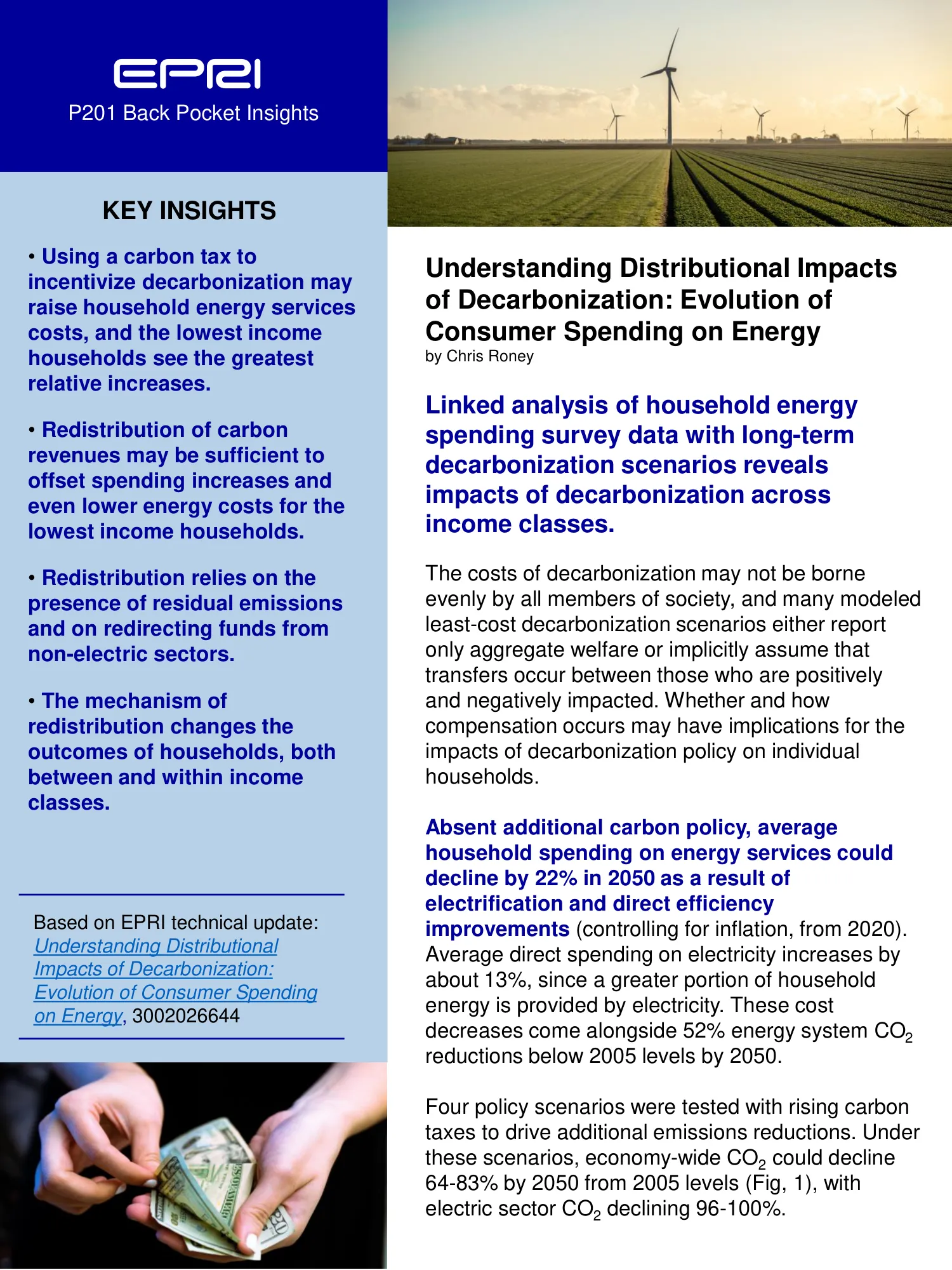
Understanding Distributional Impacts of Decarbonization: Evolution of Consumer Spending on Energy
December 2023
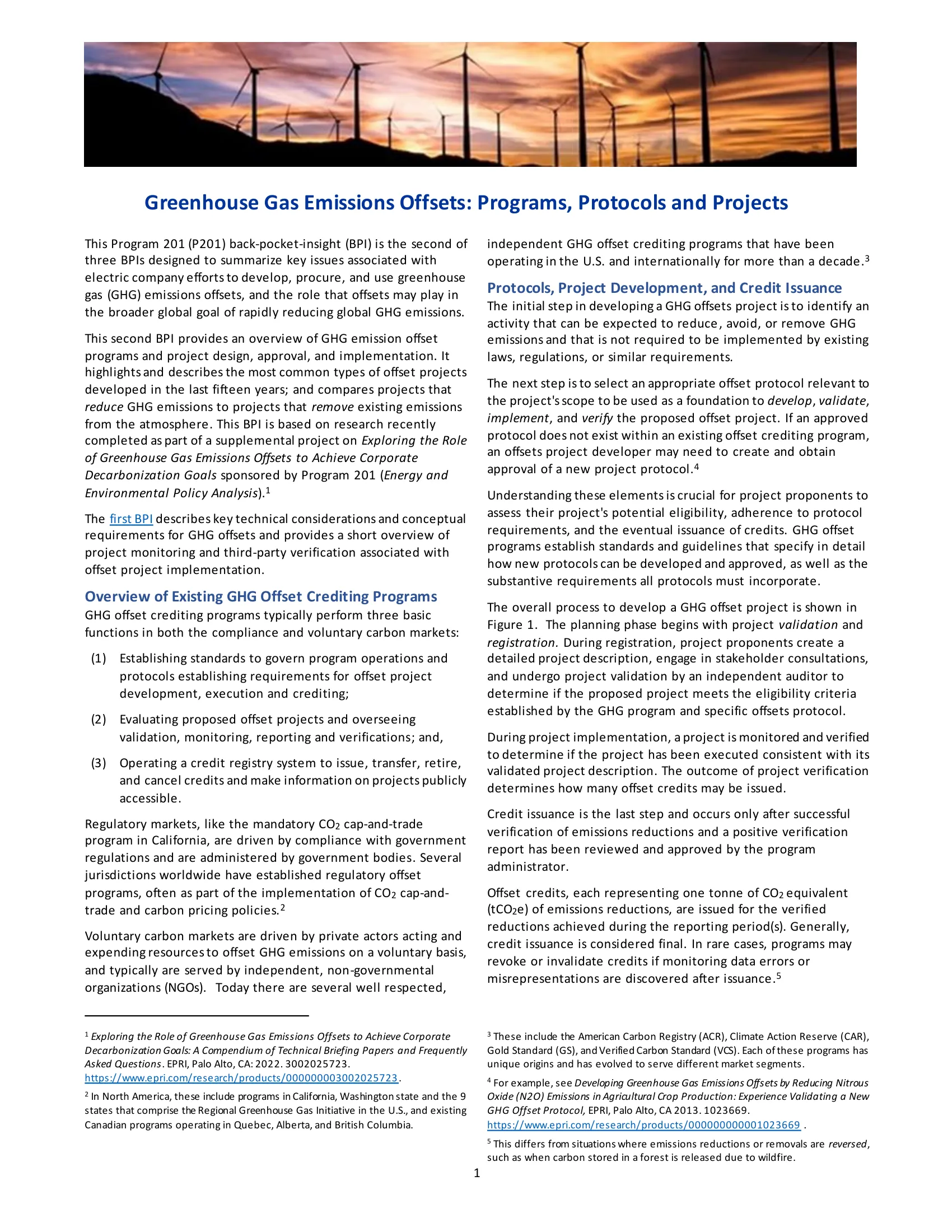
Greenhouse Gas Emissions Offsets: Programs, Protocols and Projects
November 2023
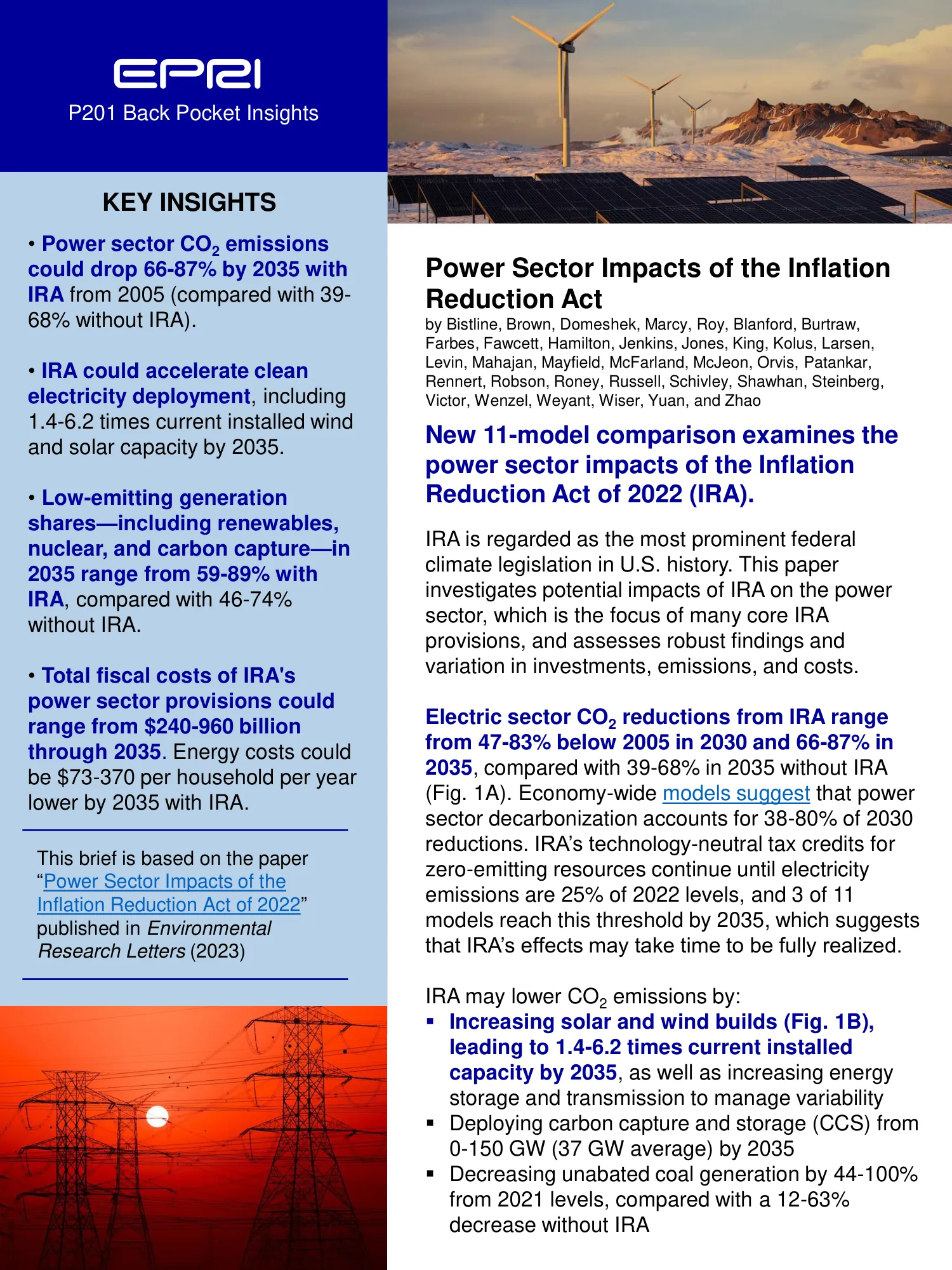
Power Sector Impacts of the Inflation Reduction Act
November 2023
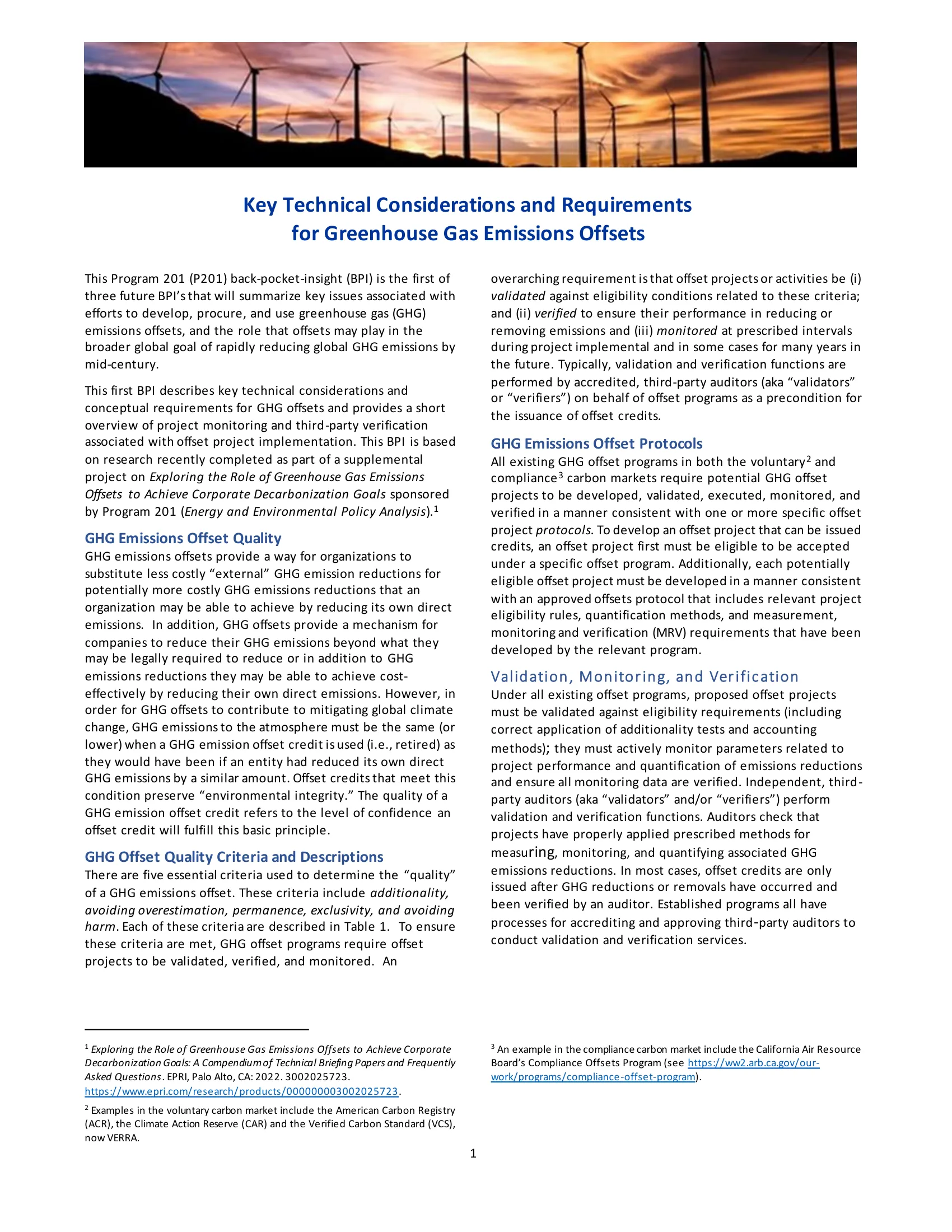
Technical Considerations and Requirements for Greenhouse Gas Emissions Offsets
November 2023
Scope 3 Greenhouse Gas Emissions Accounting for Electric Power Companies
October 2023
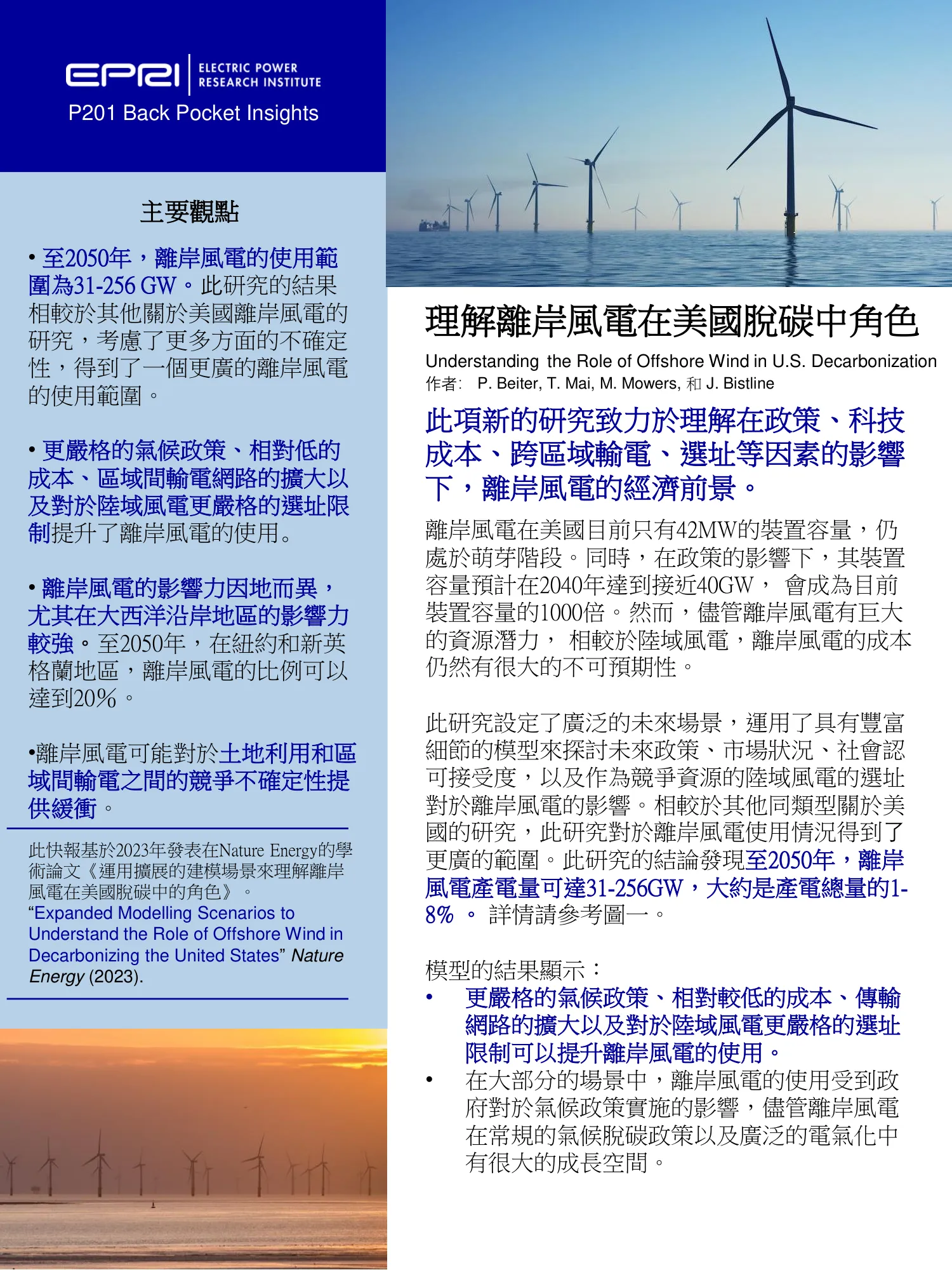
Understanding the Role of Offshore Wind in U.S. Decarbonization (中文)
October 2023
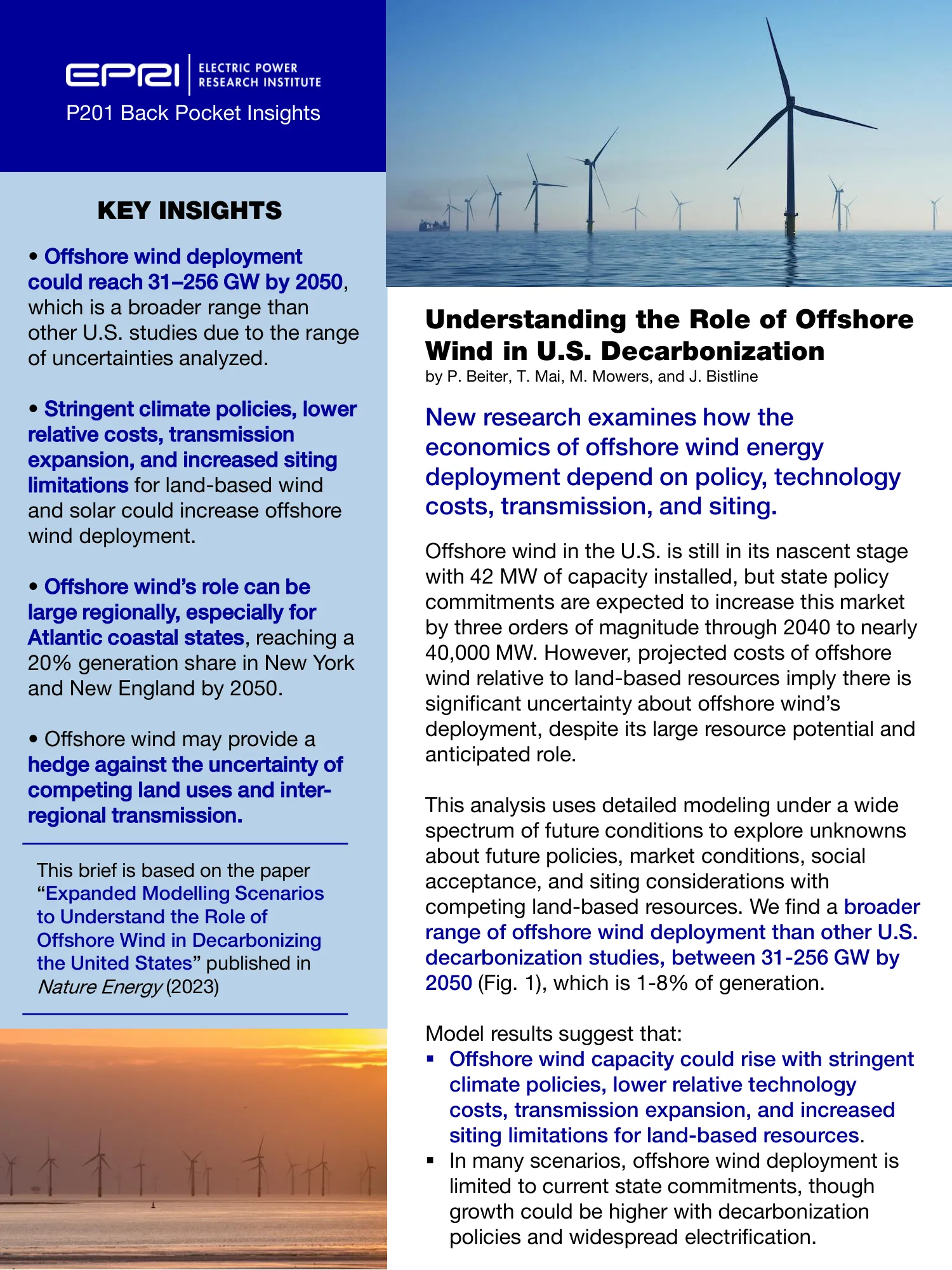
Understanding the Role of Offshore Wind in U.S. Decarbonization (English)
October 2023
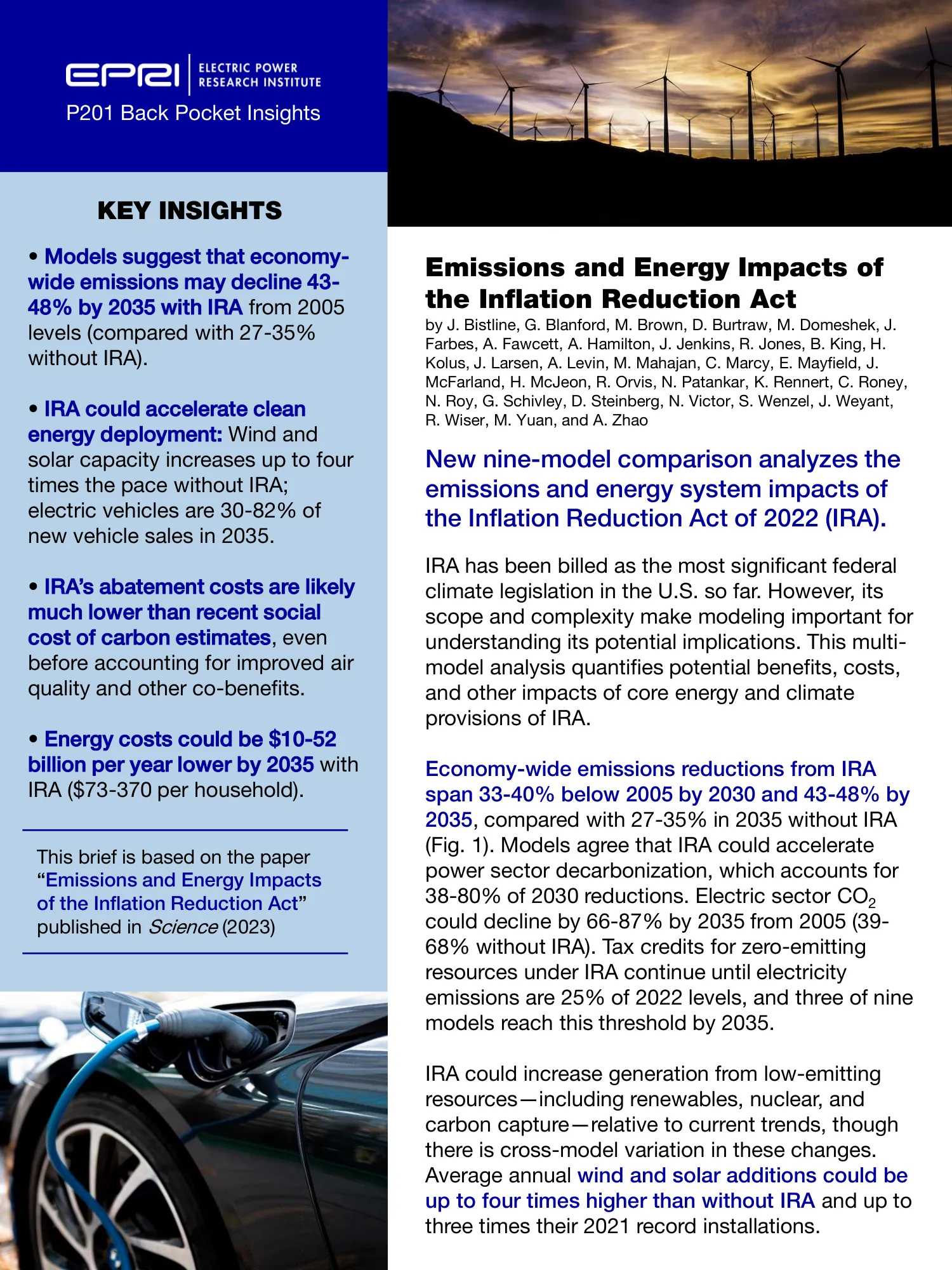
Emissions and Energy Impacts of the Inflation Reduction Act
August 2023
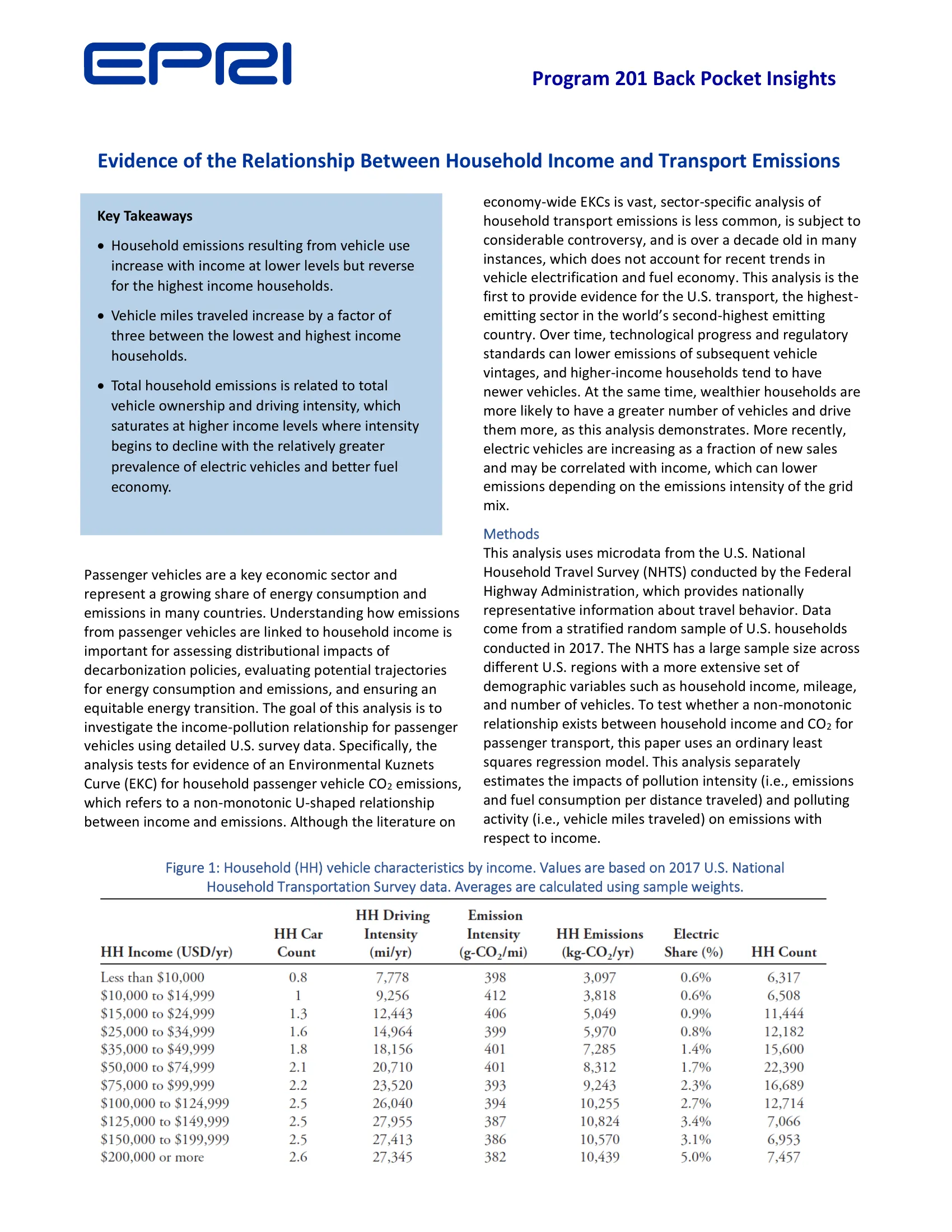
Evidence of the Relationship Between Household Income and Transport Emissions
August 2023
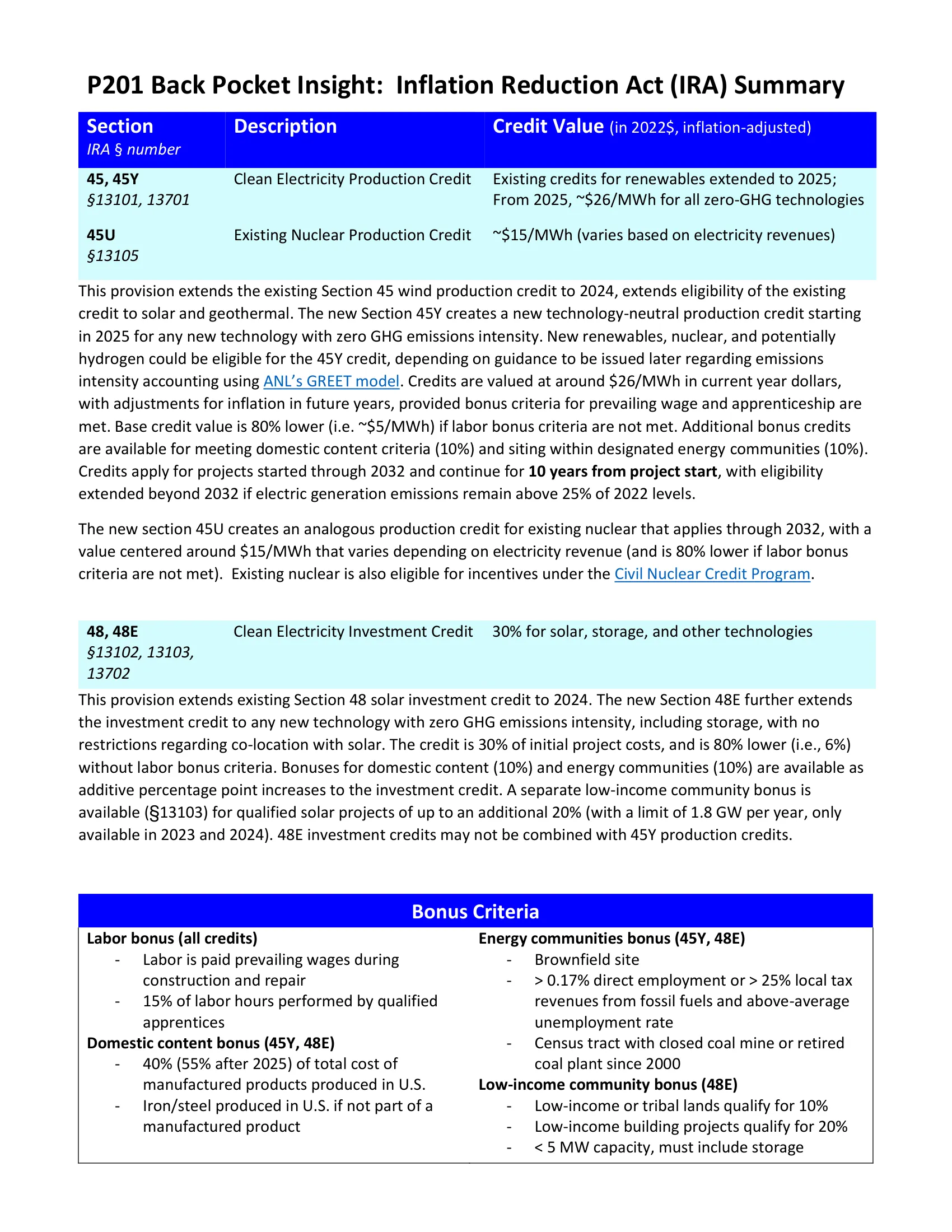
Inflation Reduction Act Two Pager
June 2023
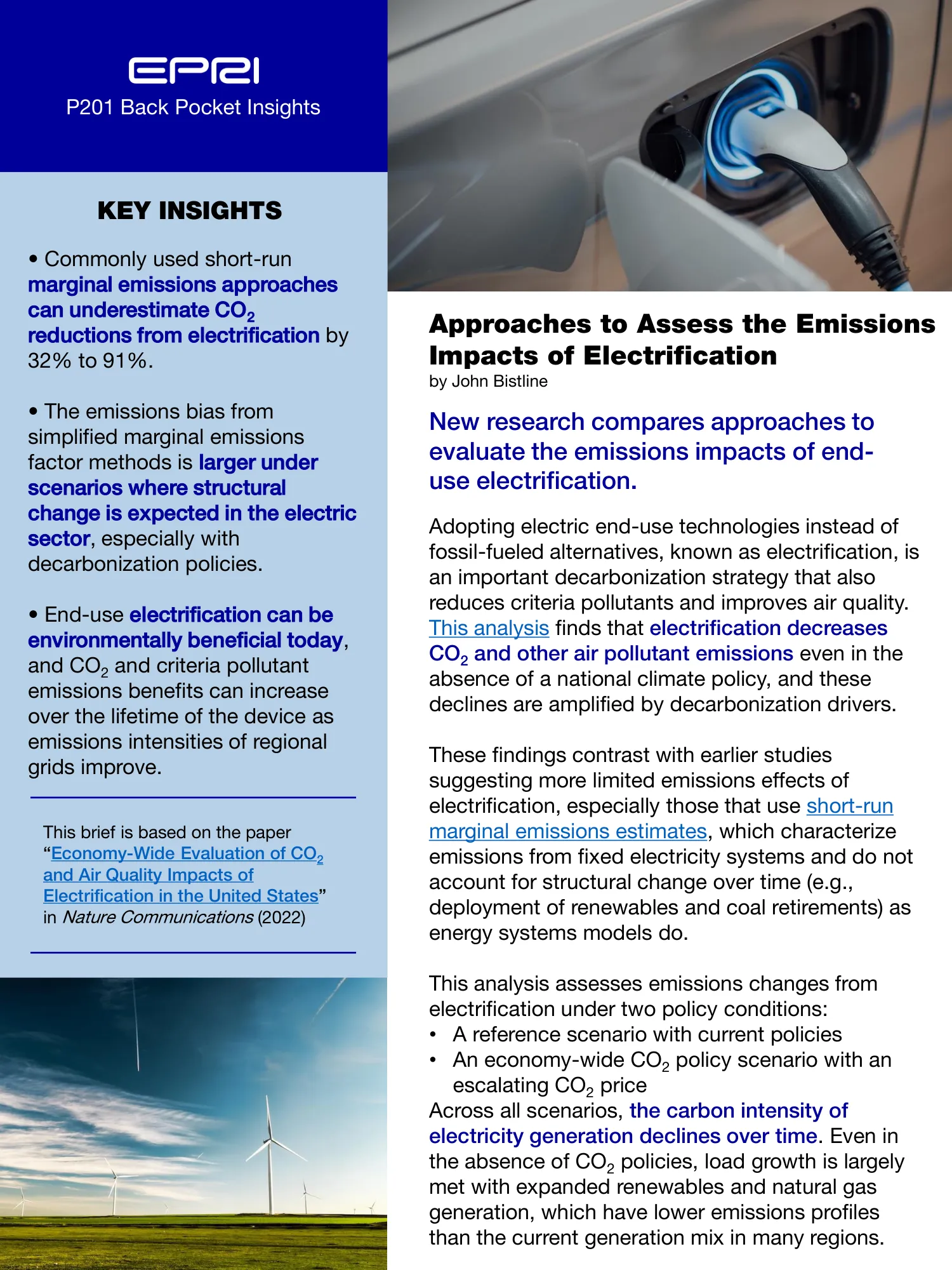
Approaches to Assess the Emissions Impacts of Electrification
November 2022
Electrification and Air Quality
November 2022
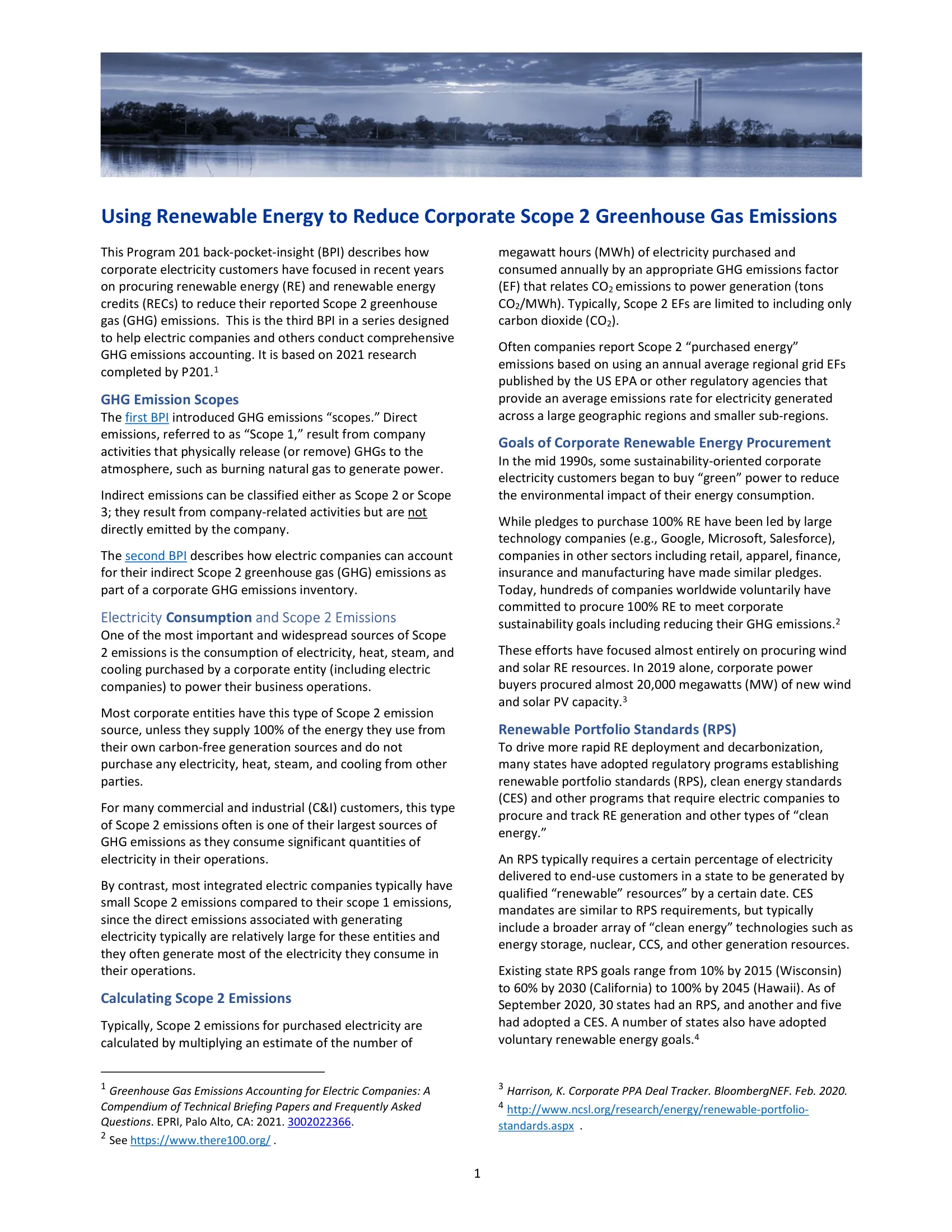
Using Renewable Energy to Reduce Corporate Scope 2 Greenhouse Gas Emissions
September 2022
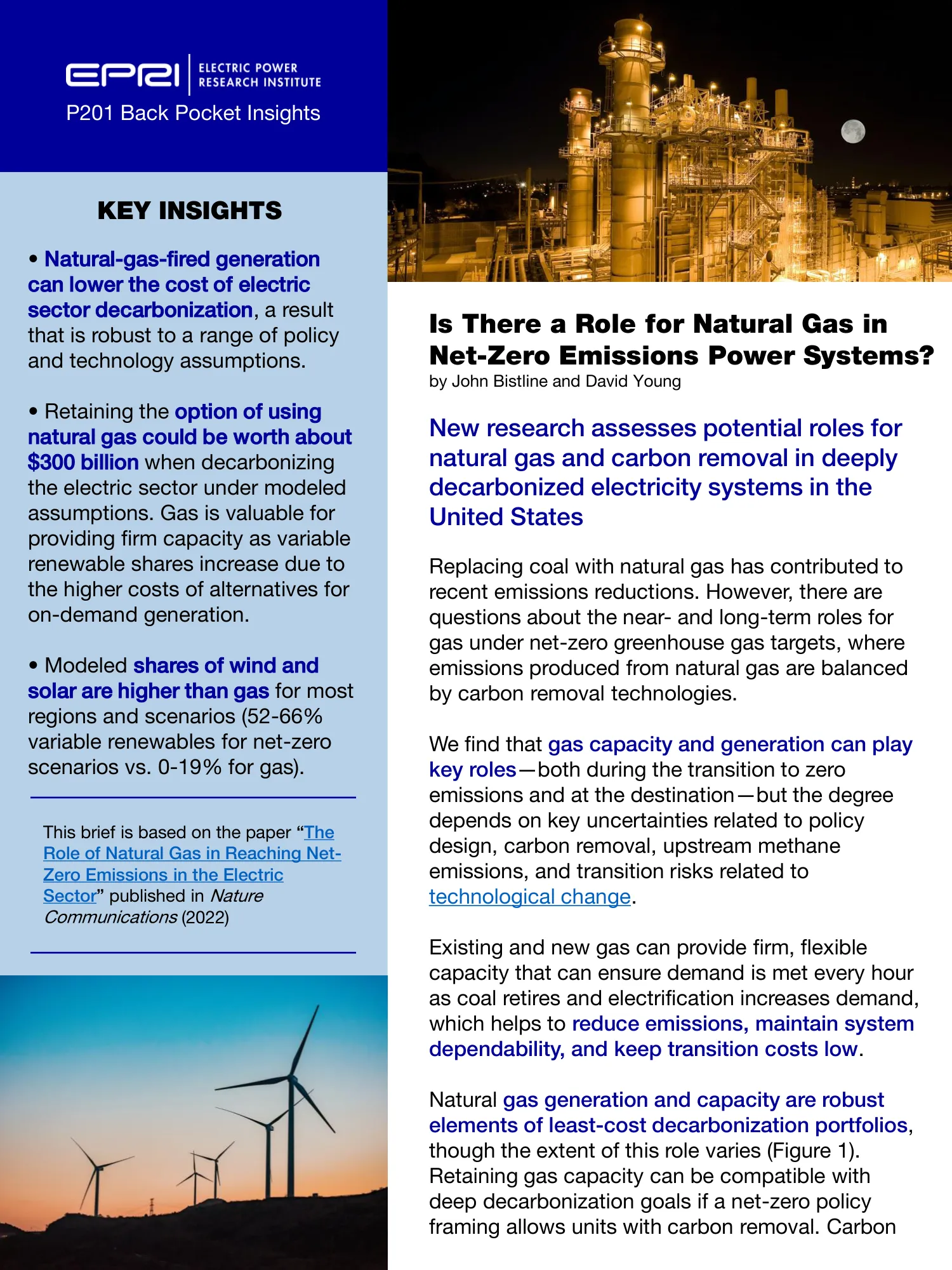
Is There a Role for Natural Gas in Net-Zero Emissions Power Systems?
August 2022
Scope 2 GHG Emissions Accounting for Electric Power Companies
July 2022
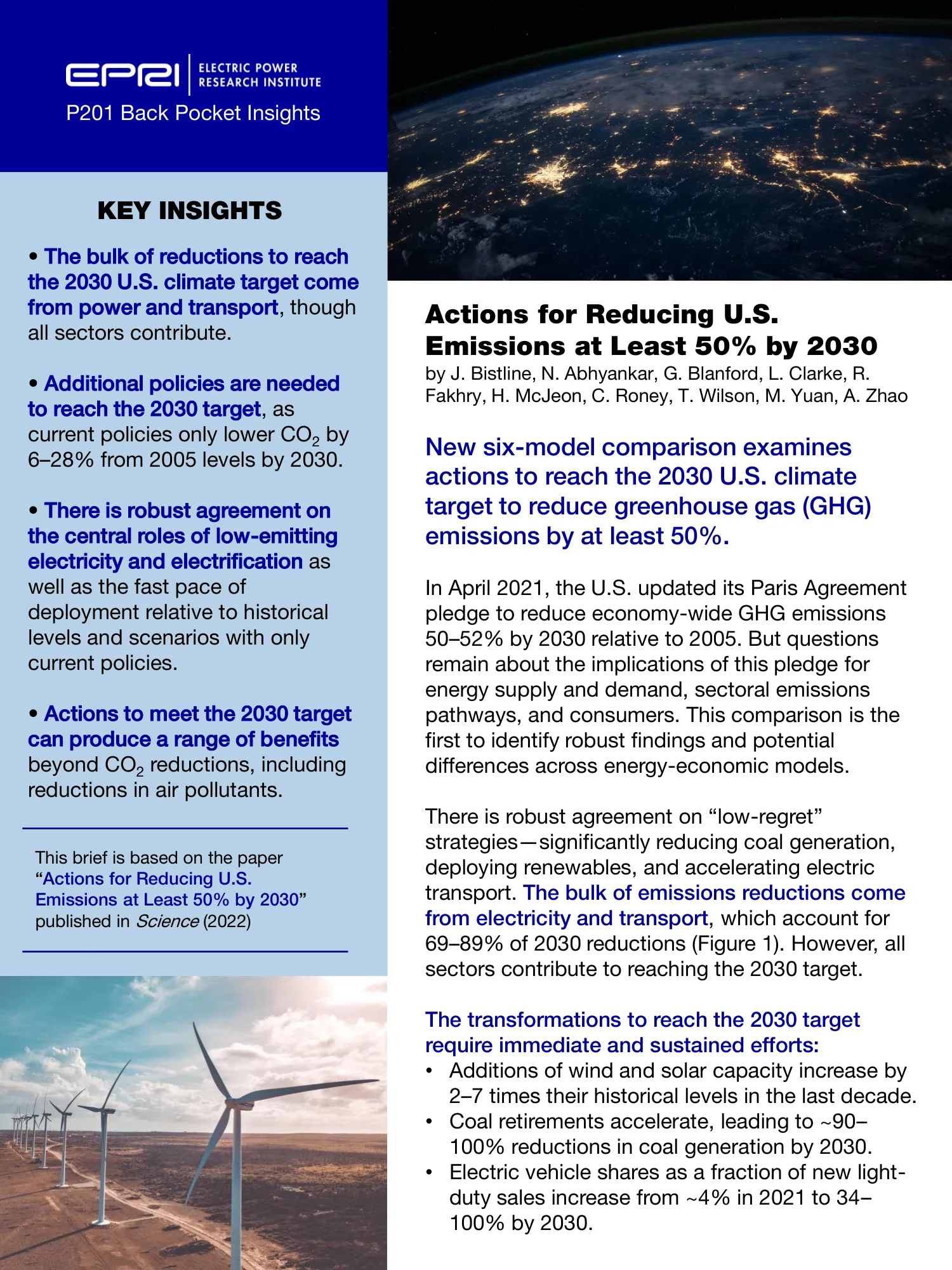
Actions for Reducing U.S. Emissions at Least 50% by 2030
May 2022
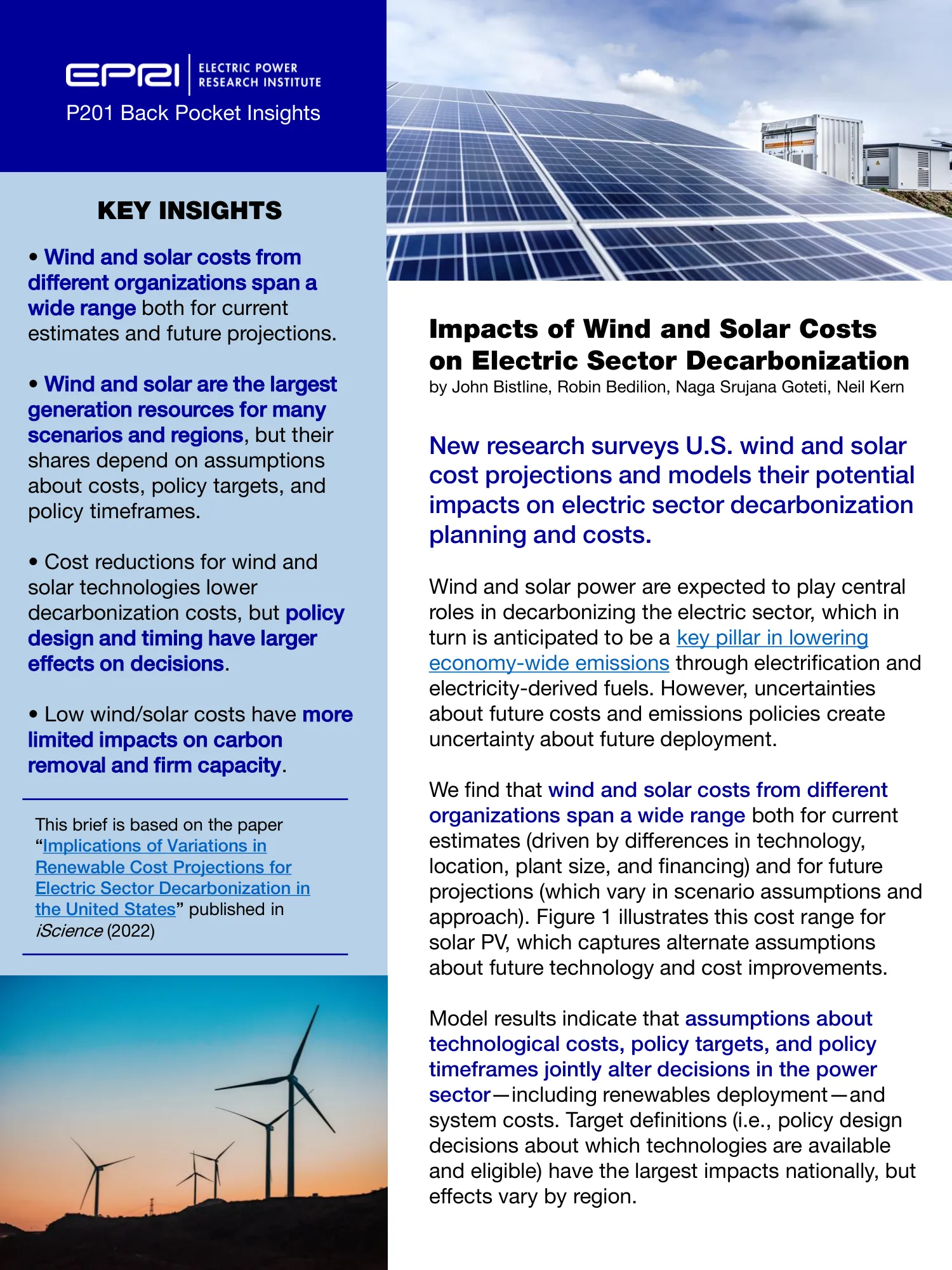
Impacts of Wind and Solar Costs on Electric Sector Decarbonization
May 2022
Overview of GHG Emissions Accounting
May 2022
Overview of GHG Emissions Accounting
January 2022
RECs and GHG Accounting
January 2022
Scope 2 GHG Emissions Accounting for Electric Power Companies
January 2022
The Role of the Electric Sector in Net Zero Emissions Systems
October 2021
Importance of Temporal Resolution in Modeling Deep Decarbonization
July 2021
Impacts of Carbon Dioxide Removal on Power Sector Decarbonization
June 2021
Impacts of Carbon Removal on Power Sector Decarbonization
June 2021
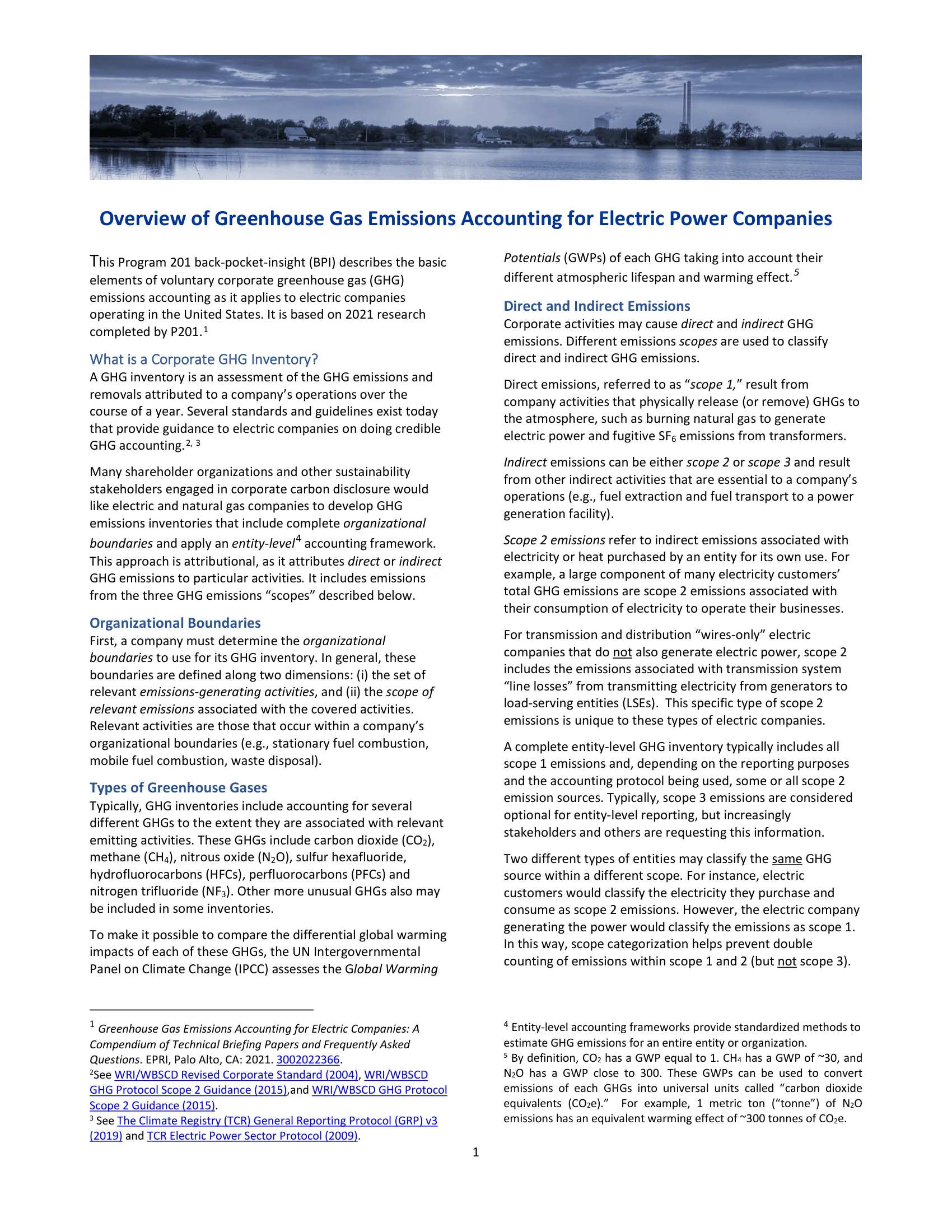
Overview of Greenhouse Gas Emissions Accounting for Electric Power Companies
June 2021
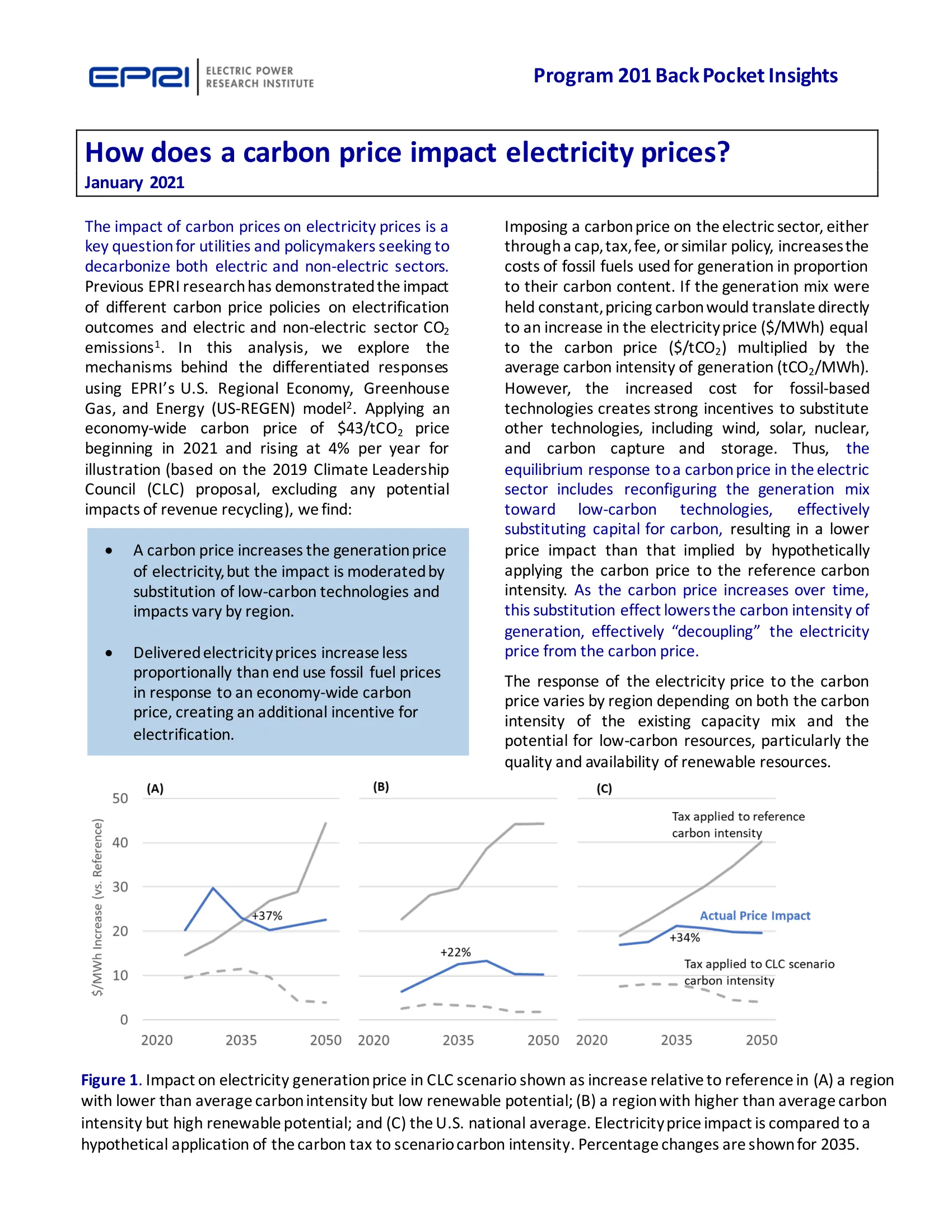
How does a carbon price impact electricity prices?
January 2021
Insights from Natural Gas Fuel Price Scenarios
April 2020
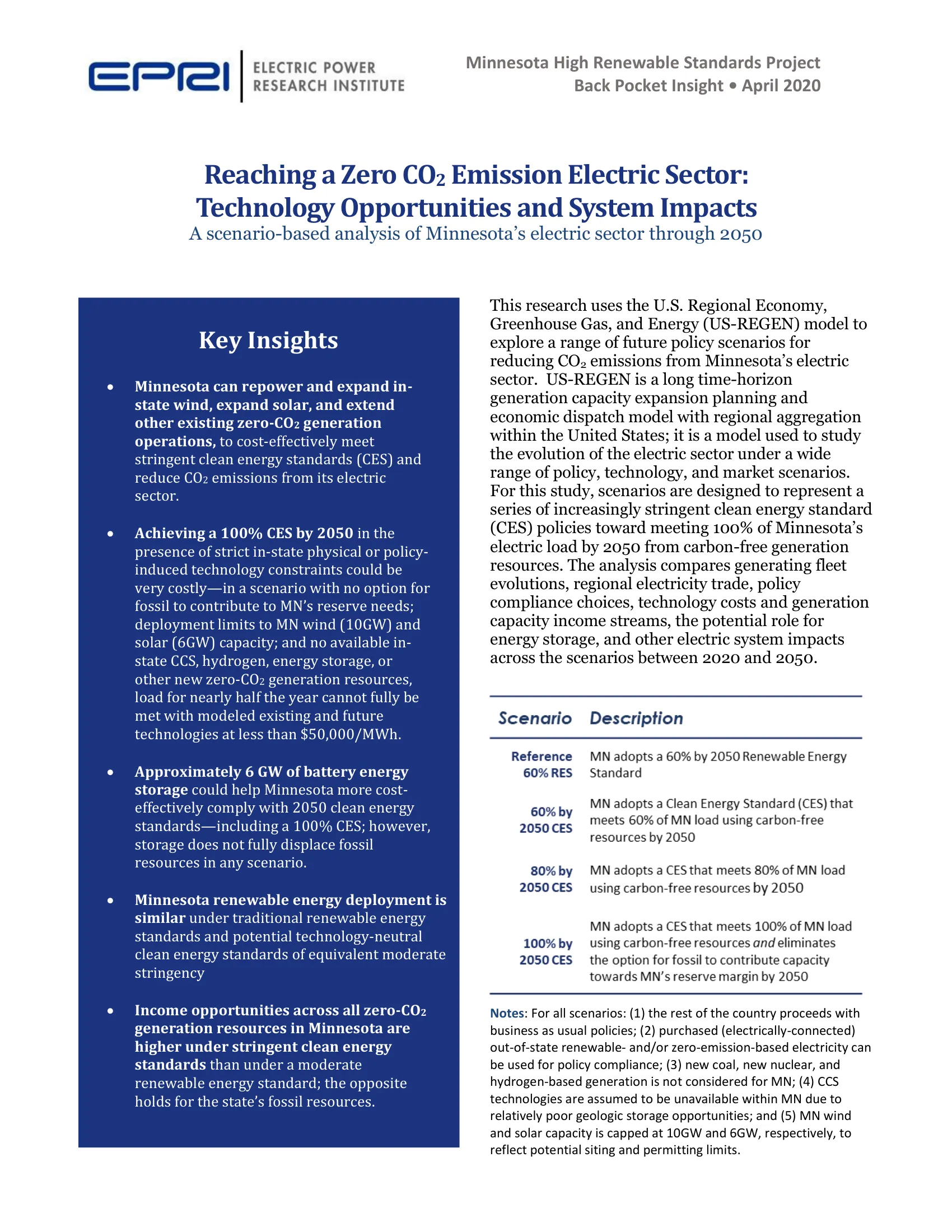
Reaching a Zero CO2 Emission Electric Sector- Technology Opportunities and System Impacts
April 2020
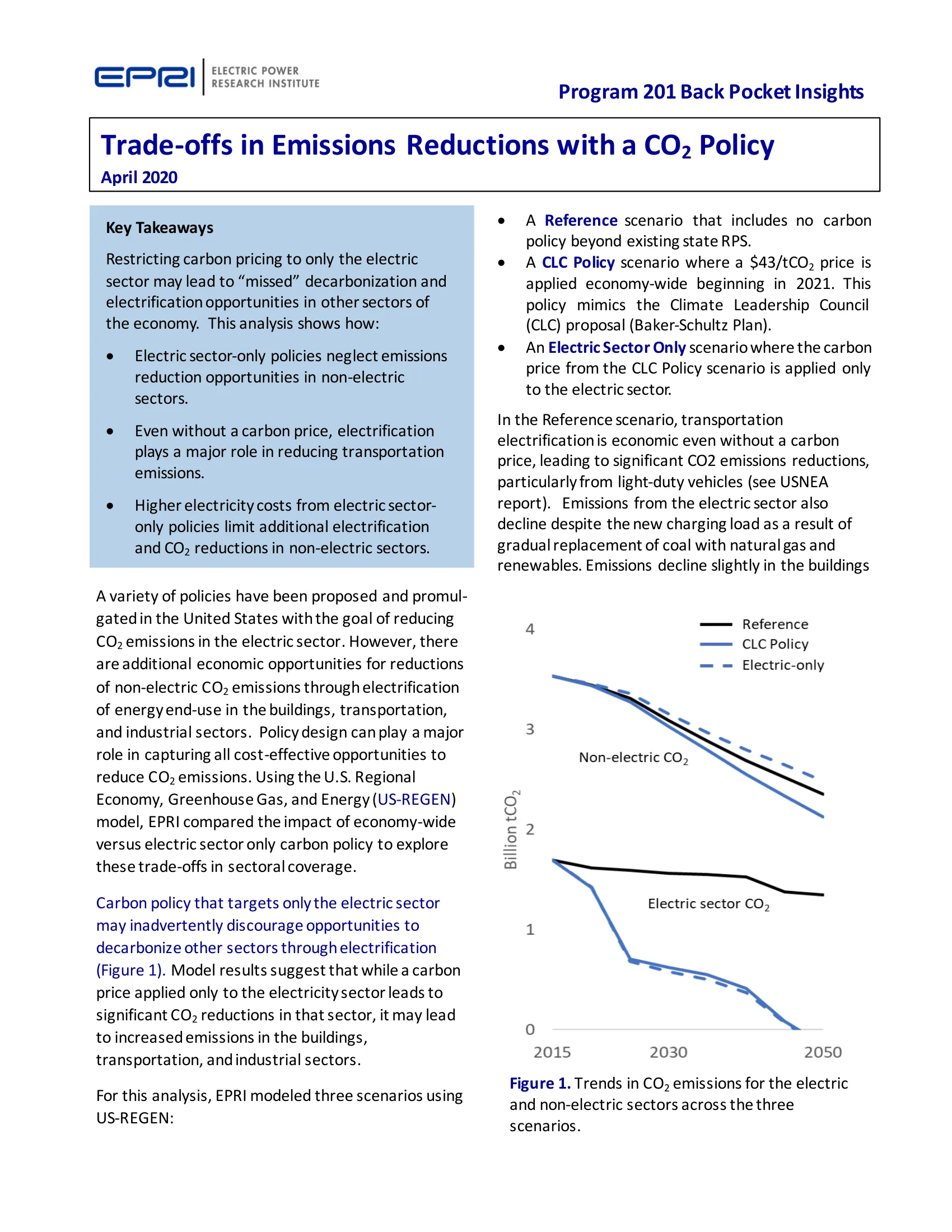
Trade-offs in Emissions Reductions with a CO2 Policy
April 2020
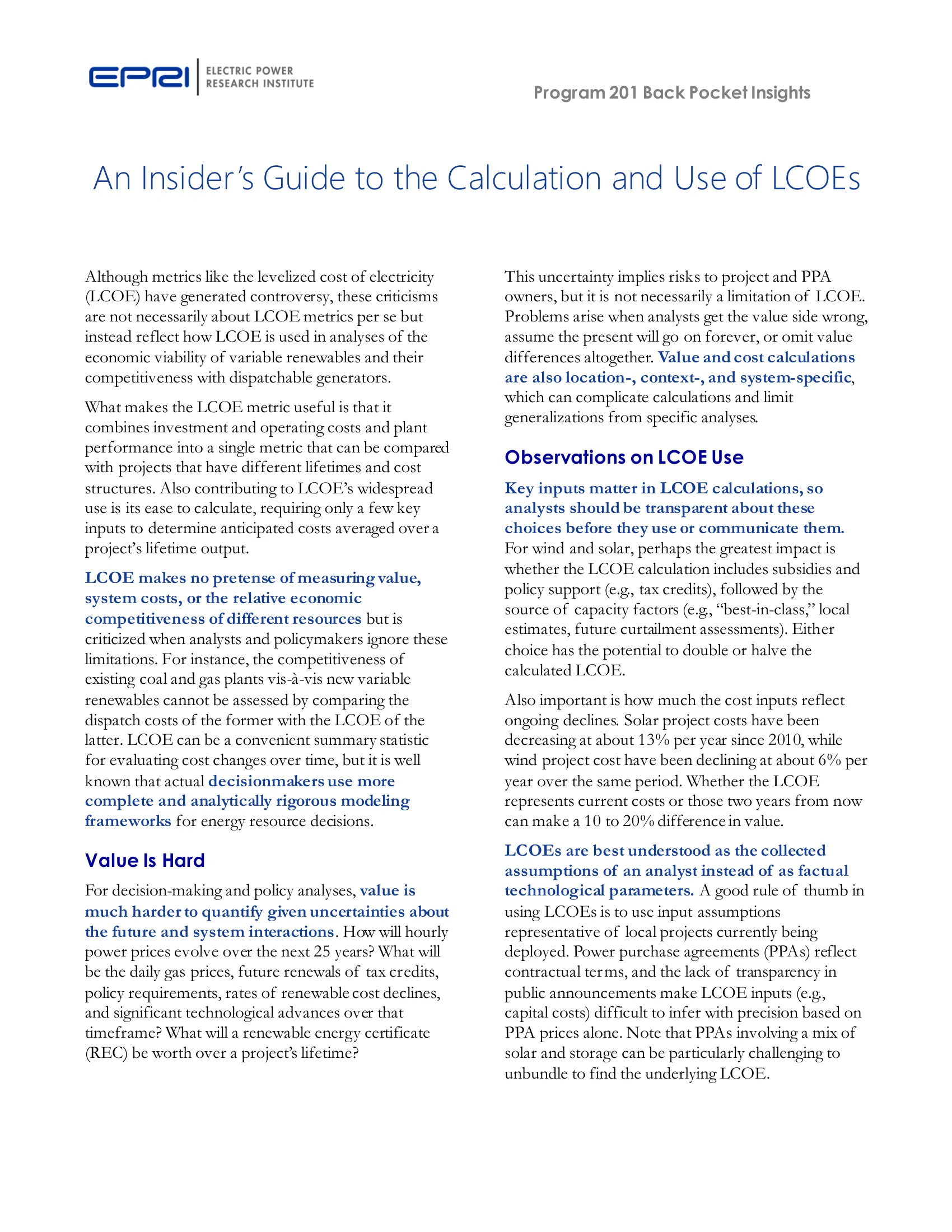
An Insider's Guide to the Calculation and Use of LCOEs
January 2020
Insights from Natural Gas Fuel Price Scenarios: A scenario-based analysis of the US electric sector through 2050
January 2020
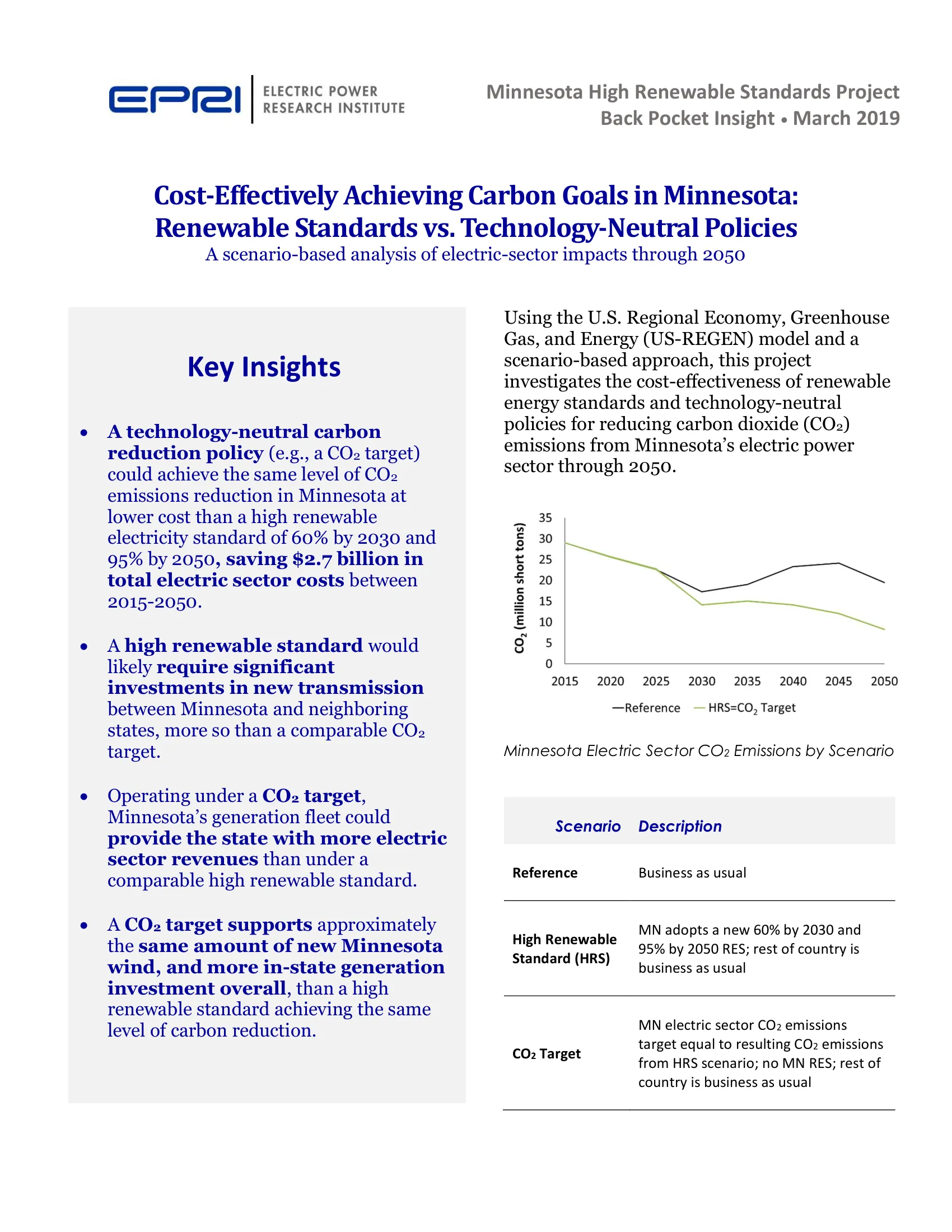
Cost-Effectively Achieving Carbon Goals in Minnesota Renewable Standards vs. Technology-Neutral Policies
December 2019
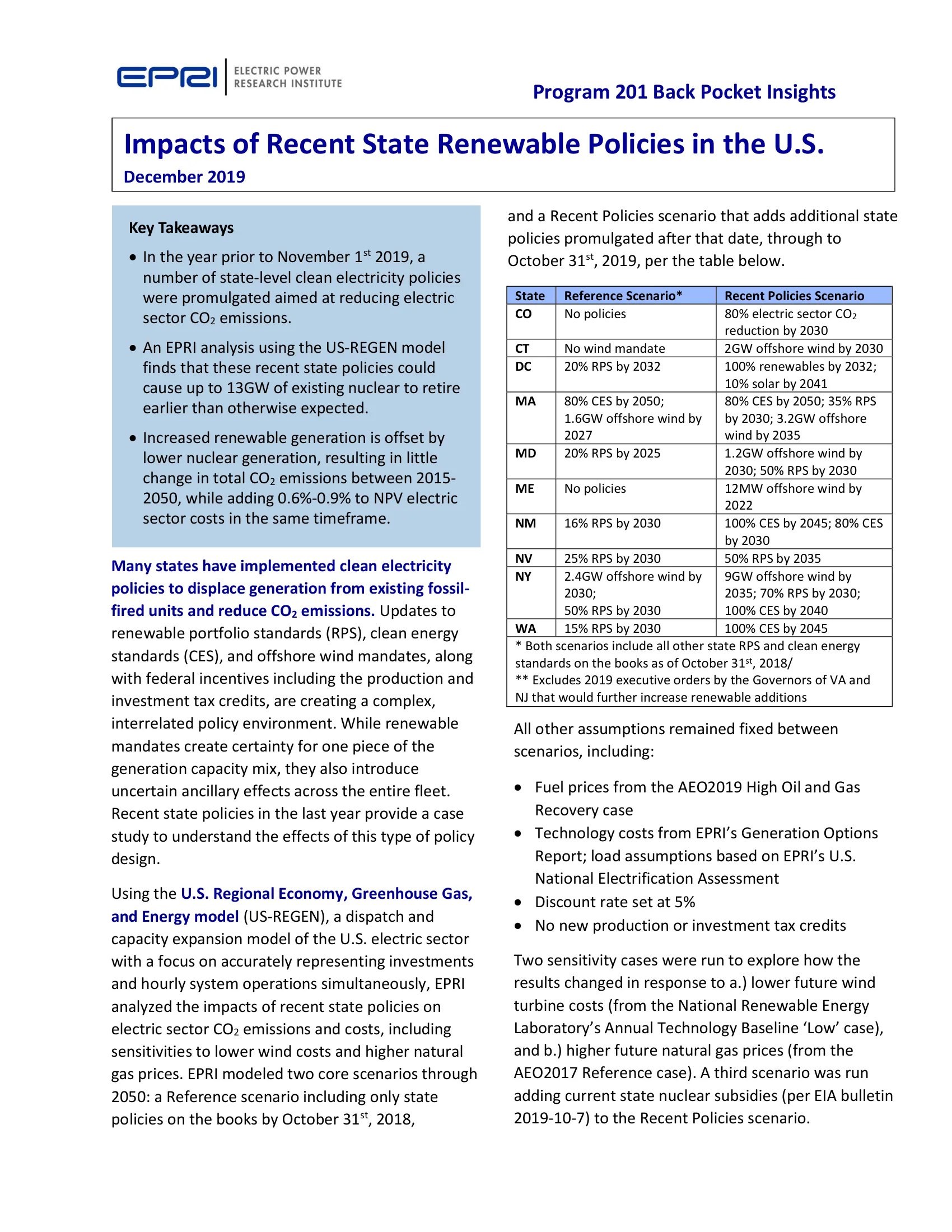
Impacts of Recent State Renewables Policies in the U.S.
December 2019
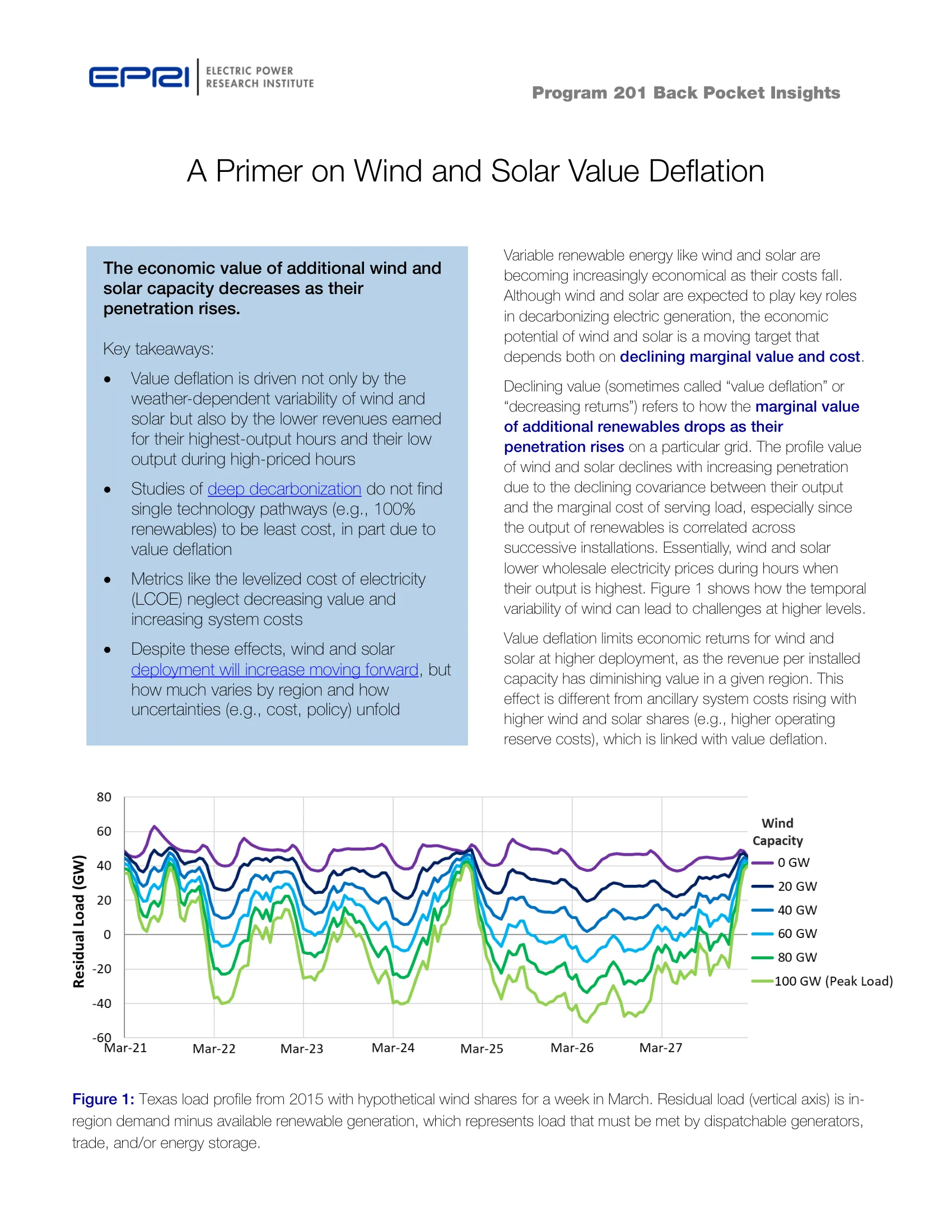
A Primer on Wind and Solar Value Deflation
August 2019
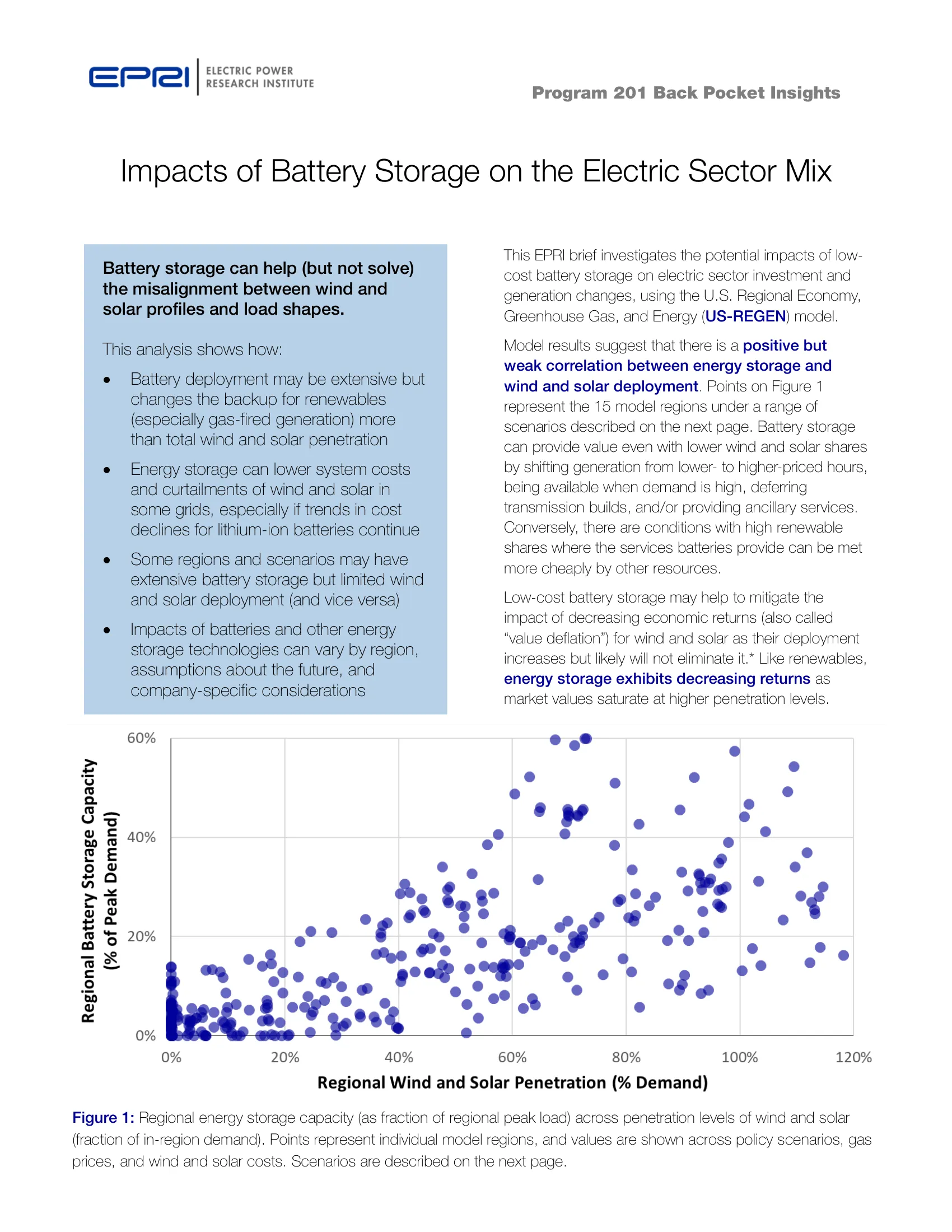
Impacts of Battery Storage on the Electric Sector Mix
March 2019
Minnesota High Renewable Standard Insights
March 2019
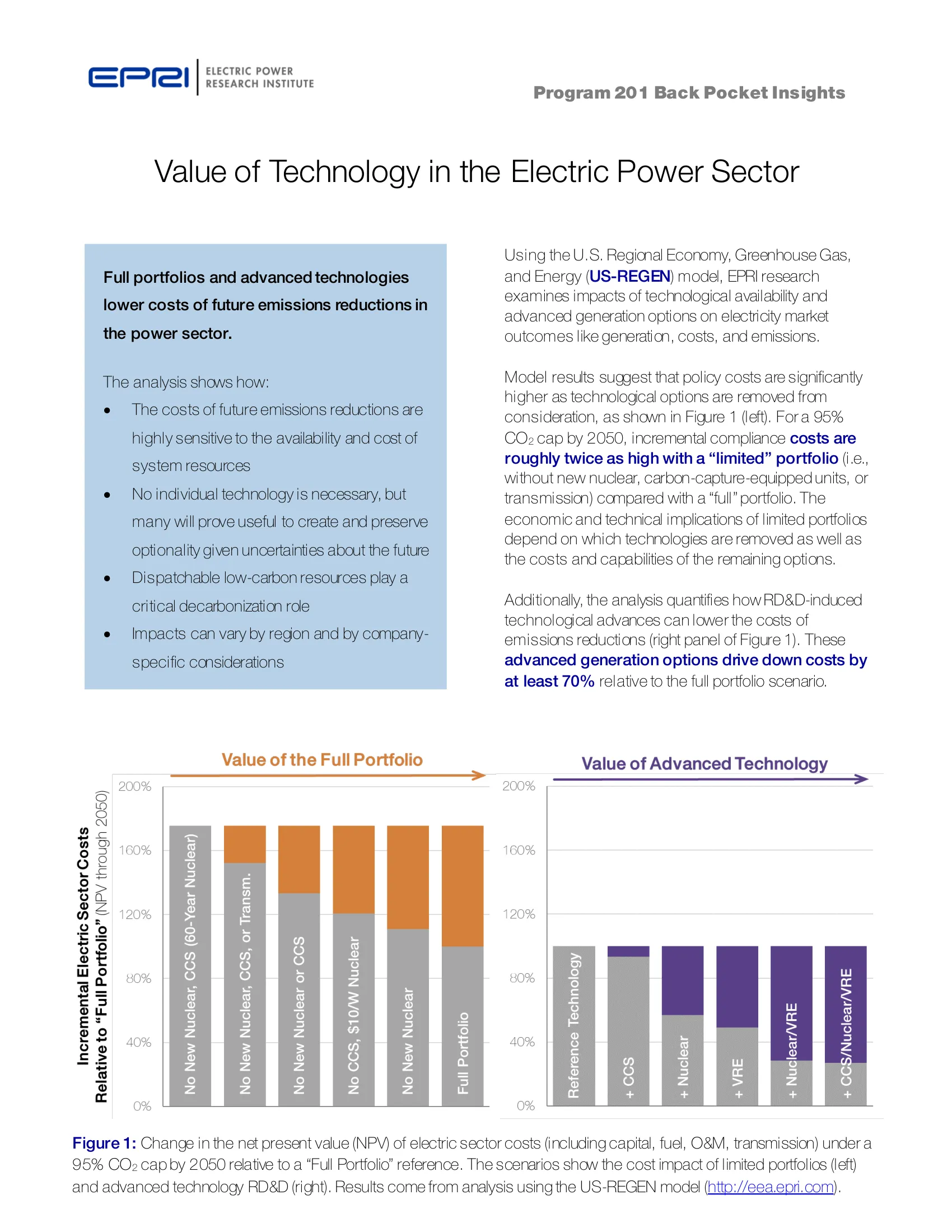
Value of Technology in the Electric Power Sector
August 2018
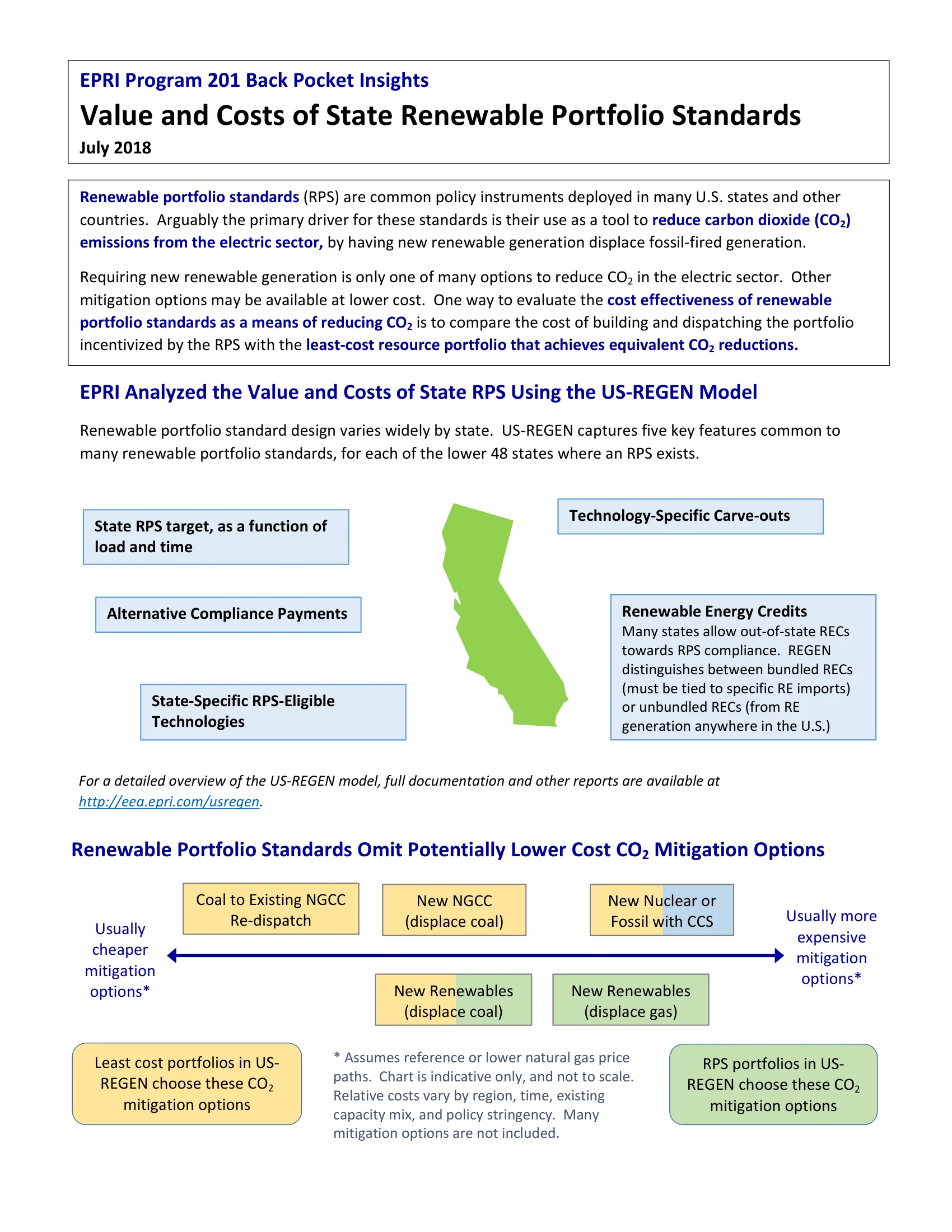
Value and Costs of State Renewable Portfolio Standards
July 2018
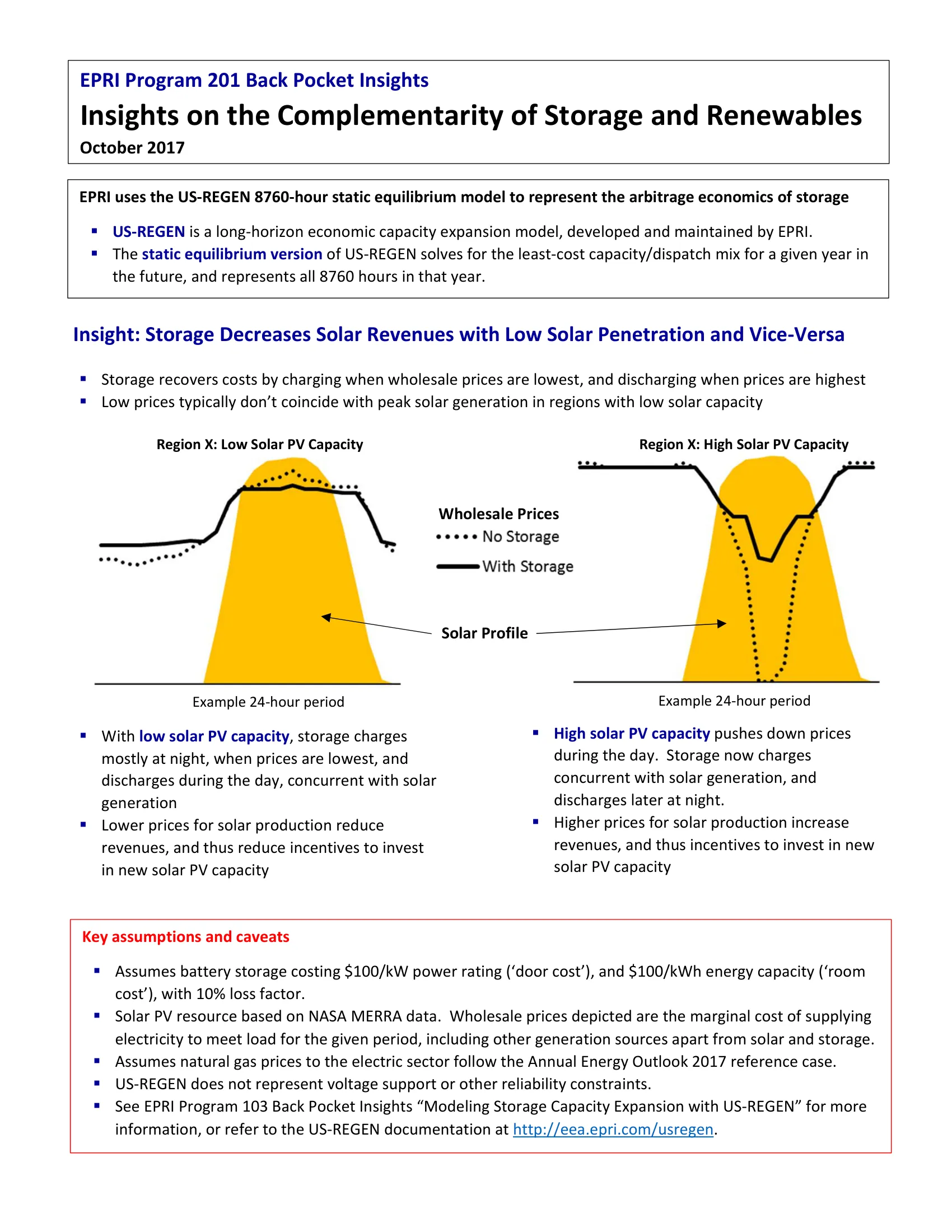
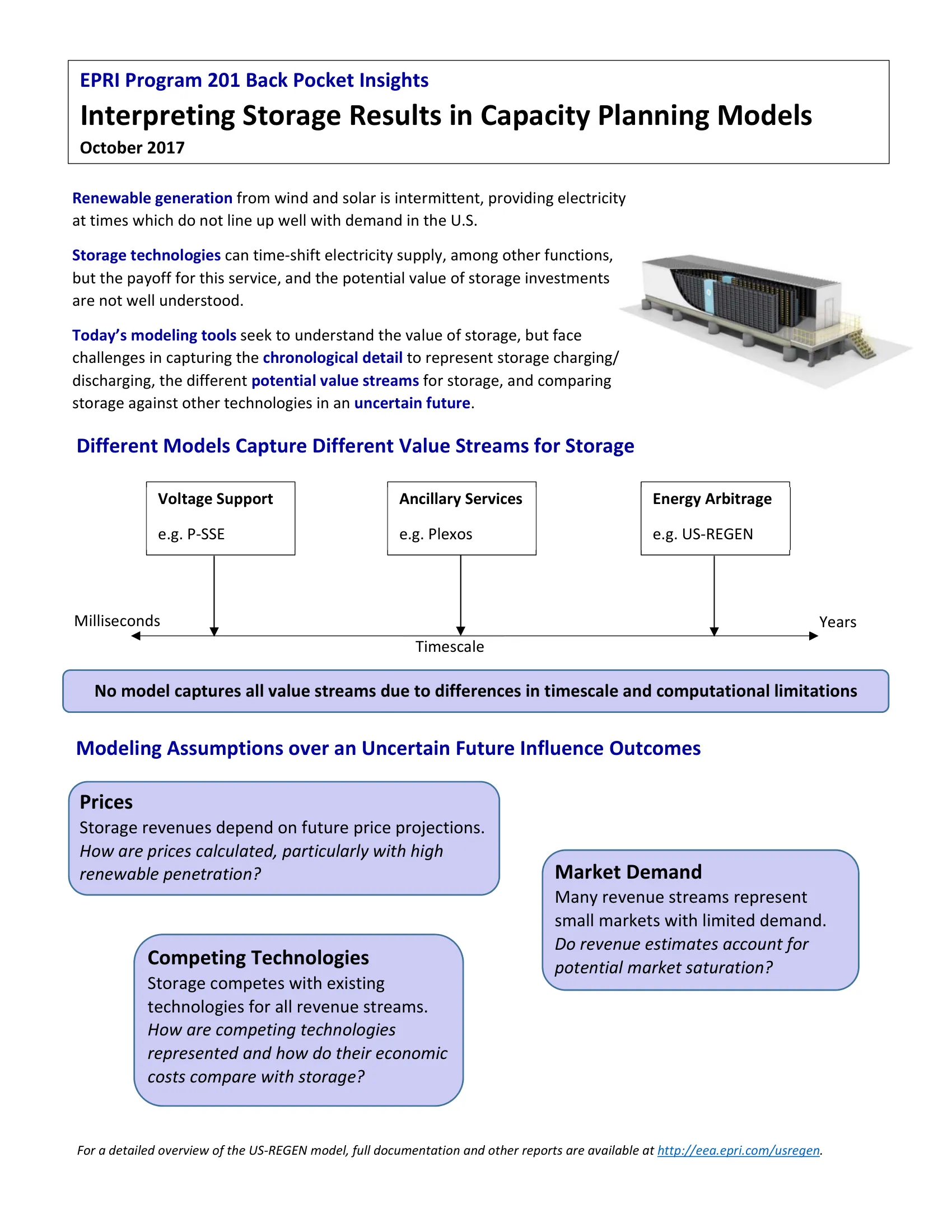
Insights on the Complementarity of Storage and Renewables
October 2017
Interpreting Storage Results in Capacity Planning Models
October 2017
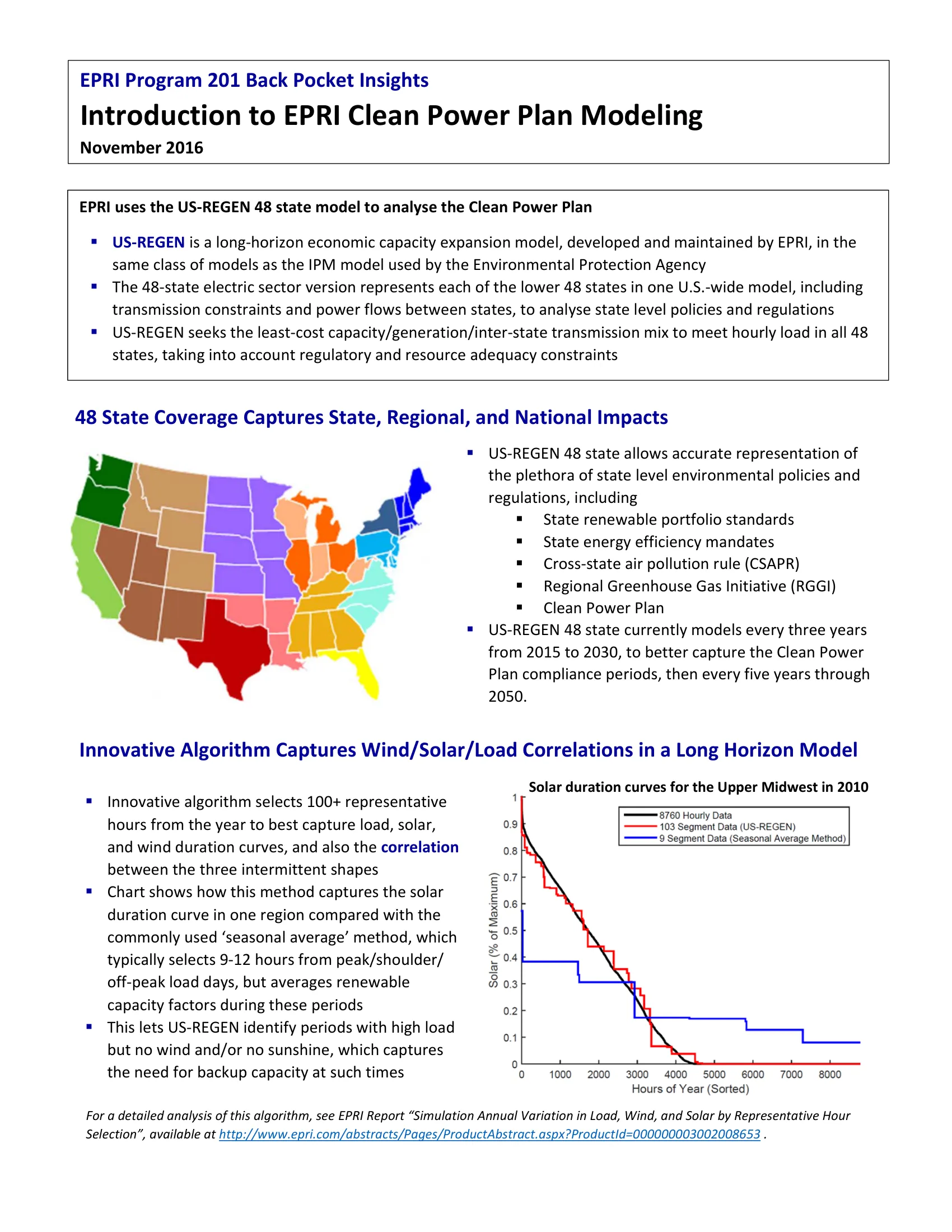
Introduction to EPRI Clean Power Plan Modeling
October 2017
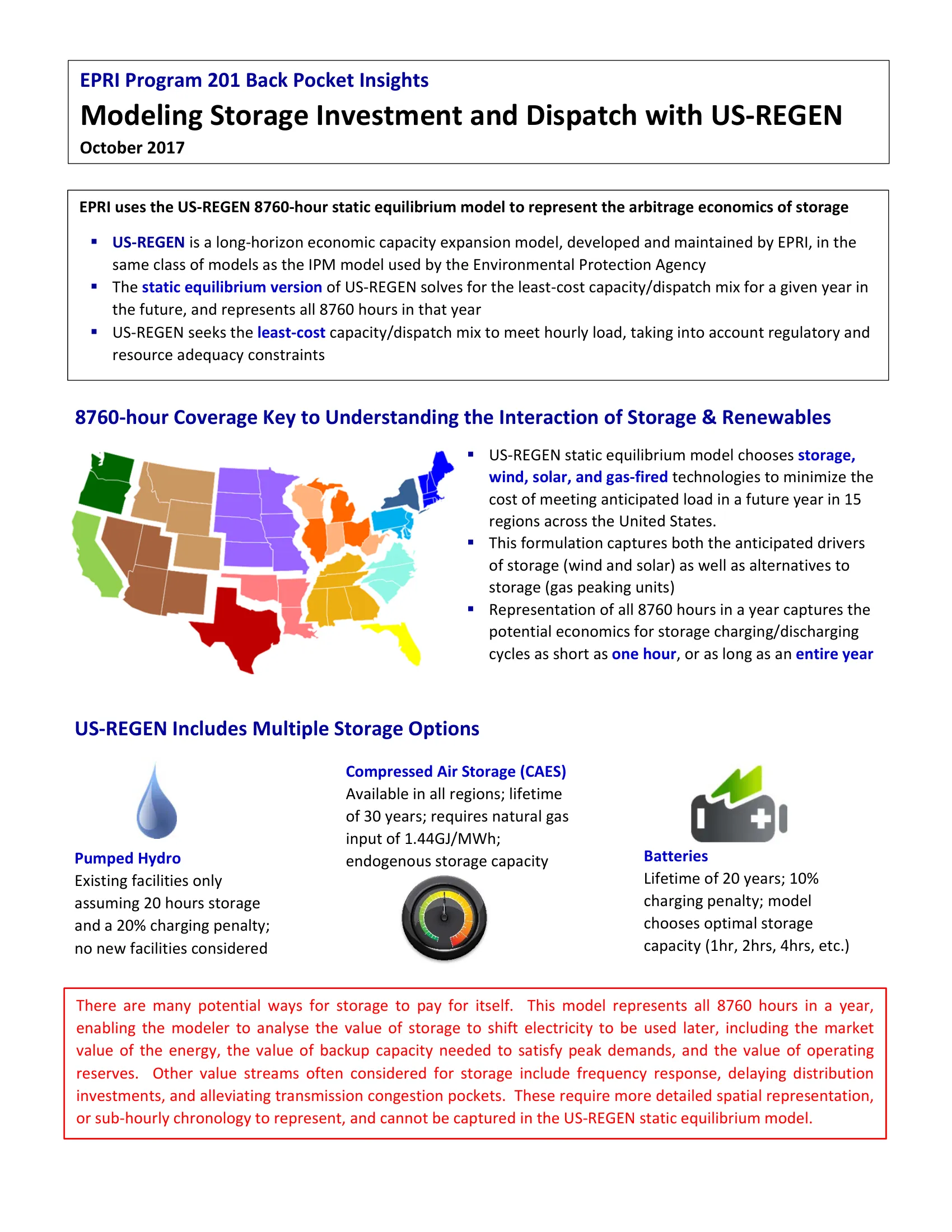
Modeling Storage Investment and Dispatch with US-REGEN
October 2017
ESCA Newsletters
ESCA Quarterly newsletters covers our research highlights and program updates. Sign up to receive our quarterly newsletter directly in your inbox here.
2026
2025
- Nov — New ESCA research on Energy Systems & Policy Analysis
- Nov — New ESCA research on Resource Planning
- Jul — SMARTargets draft release, public educational series, and more
- Jun — US-REGEN goes open-source, addressing future climate data gaps, and more
- Apr — Applying stochastic analysis to energy planning and more
- Jan — January 2025 Newsletter and Research Highlights
2024
2023
- Dec — December 2023 Newsletter and Research Highlights
- Nov — November 2023 Newsletter and Research Highlights
- Oct — October 2023 Newsletter and Research Highlights
- Jul — July 2023 Newsletter and Research Highlights
- Apr — April 2023 Newsletter and Research Highlights
- Mar — March 2023 Newsletter and Research Highlights
2022
2021
2020
Podcast Episodes
Conversations with ESCA researchers and partners on emerging energy topics.
How Could Data Center Growth Affect Future Electricity Costs?
Geoff Blanford, Asa Watten - July 21, 2026
Geoff Blanford and Asa Watten join the EPRI Current to discuss new research examining the relationship between data center growth and consumer electricity costs. Drawing on a decade of data, they examine why the relationship between rising demand and rising rates may be more complex than many assume, and why, in some cases, load growth can help improve affordability by spreading grid costs across more customers.
The conversation also looks ahead to the future of AI-driven electricity demand, the challenges of building grid infrastructure fast enough to keep pace, and how flexible demand initiatives like EPRI’s DCFlex could help balance reliability, affordability, and growth. Tune in for a data-driven discussion that challenges conventional wisdom and offers fresh insight into one of the industry’s most important debates.
What a Super El Niño Could Mean for the Power Sector
Erik Smith - June 17, 2026
A potential “super El Niño” is making headlines, and for the power sector, it comes with real implications. In this episode of The EPRI Current, host Samantha Gilman speaks with EPRI climate scientist Erik Smith about what’s driving the latest forecasts and how changing ocean conditions could shape weather patterns in the months ahead.
From increased precipitation in California to drought risk in the Pacific Northwest and a potentially quieter Atlantic hurricane season, the discussion explores how a strong El Niño can shape regional outcomes. It also highlights how EPRI’s climate analytics and research – including the Climate Resilience and Adaptation (READi) Initiative – are equipping utilities to plan across seasonal to multi-year horizons. As forecasts evolve, the episode emphasizes the importance of staying alert, adaptable, and prepared for how quickly conditions can change.
Weathering the Storm: Hydropower and Climate Resilience
Jacob Mardian - September 28, 2025
Join EPRI experts Jacob Mardian and Dr. Mark Christian to explore the future of hydropower in the face of extreme weather. Drawing from a recent nationwide hydropower study under EPRI’s Climate Resilience and Adaptation Initiative (Climate READi), guests discuss how extreme weather events, like droughts and floods, are impacting hydropower operations and infrastructure. The experts highlight the importance of proactive planning, data-driven risk assessments, and collaboration across sectors to ensure long-term reliability and safety. After analyzing more than 1,500 hydropower facilities nationwide, they offer insights into regional vulnerabilities, adaptation strategies, and the role of hydropower in a clean energy future.
What's an Energy Wallet? Exploring EPRI's Tool for Tracking Household Energy Spending
Geoff Blanford - September 10, 2025
As energy demand rises and electrification accelerates, understanding household energy affordability is more important than ever. In this episode of the EPRI Current, Geoff Blanford from EPRI and Michael Kohlhaas from Con Edison join host Samantha Gilman to discuss the Energy Wallet - EPRI’s new holistic metric for capturing total household energy usage and spending, including gas, electricity, and transportation. The experts share findings from EPRI’s recent report, which projects a 36% decline in the average U.S. household energy spending by 2050, and highlights how utilities like Con Edison are using similar models to guide long-term planning and support communities. Tune in to learn how data-driven insights are shaping the future of energy affordability and resilience.
Powering Through: How Power Companies Can Weather the 2025 Hurricane Season
Andrea Staid and Erik Smith - July 8, 2025
As of June 1, the North Atlantic Basin officially entered the 2025 hurricane season. NOAA’s 2025 forecasts project a 60% chance of an above-normal season, with 13-19 named storms, 6-10 hurricanes, and up to 5 major hurricanes. EPRI experts Andrea Staid and Erik Smith explore how power companies can build resilience and maintain reliability amid intensifying storms. They tackle key questions: How accurate are hurricane forecasts? How should power companies plan around the unknown? How do regional differences shape preparedness strategies? The conversation highlights EPRI’s Climate READi initiative, which provides science-based guidance to help utilities assess hazard risks, support operational decisions, and plan for climate adaptation.

FACTOR THIS Podcast: Preparing the grid for the climate of tomorrow
Laura Fischer and Andrea Staid - June 24, 2025
On this episode of the Factor This podcast, host Paul Gerke chats with EPRI’s Laura Fischer and Andrea Staid about the newly released Climate READi power framework, a robust collaboration that included insights from more than 40 electric companies, 100 academic, consulting, and finance institutions, as well as national labs, regulators, and government agencies.
Listen Now
USEA Power Sector Podcast Episode 106: EPRI Energy Systems and Climate Analysis Program Manager Nidhi Santen
Nidhi Santen - January 21, 2025
EPRI Energy Systems and Climate Analysis Program Manager Nidhi Santen answered questions by journalist Herman K. Trabish about how variable and customer-owned energy resources, rising demand, and new policy are driving innovations in utilities’ longstanding use of integrated resource planning, or IRP, to optimize affordable reliable electricity delivery.
Listen NowEV Efficiency Gains - What's Down the Road?
Geoff Blanford - April 24, 2024
EPRI and Natural Resources Defense Council (NRDC) recently released a study that found that EV efficiency improvements have the potential to significantly reduce future electric infrastructure buildout, energy usage, and consumer costs over the next three decades. According to the study, continued advances in EV efficiencies could reduce electricity consumption per mile in half and provide consumer energy cost savings of more than $200 billion annually if accomplished without raising vehicle costs.
Join EPRI Current host, Samantha Gilman, as she discusses these findings and more with report authors Luke Tonachel, senior strategist for transportation at NRDC, and EPRI’s Geoffrey Blanford, principal technical executive in the energy systems and climate analysis group.

Wait, how much will the Inflation Reduction Act's climate provisions cost?
John Bistline - March 12, 2024
John Bistline spoke with NPR Marketplace’s Kai Ryssdal about the ongoing debate on its effect on clean energy adoption and how the market environment has changed since the IRA was passed.
Listen NowHow to Be Carbon Free Hour by Hour
Arin Kaye - November 1, 2023
The shift from procuring 100 percent renewable energy on an annual basis to 24/7 Carbon Free Energy (CFE) on an hourly basis marks a potentially important evolution of corporate efforts to promote clean energy.
Join EPRI’s Arin Kaye, and Iron Mountain Data Centers’ Chris Pennington as they provide an overview of this emerging topic, and how companies like Iron Mountain are shifting to CFE 24/7. Plus, find out how EPRI is helping support these efforts through the emergence of a new CFE 24/7 Interest Group.
Supply Chain Opportunities for Clean Energy Technologies
Robin Bedilion - August 22, 2023
Strong supply chains are vital to all businesses. But a series of perfect storm events … COVID, geopolitical issues, environmental and human rights concerns, among others … have created ongoing supply chain challenges resulting in bottlenecks, project delays, and cost increases for clean energy technologies such as wind, solar, and battery storage. This episode explores supply chain challenges and opportunities affecting the clean energy technologies of today and tomorrow and the potential impacts on achieving global decarbonization goals.
Robin Bedilion is a Principal Project Manager in the Energy Systems and Climate Analysis group at EPRI. She conducts techno-economic analyses and cost and performance research evaluating current and emerging power sector technologies to support utility resource planning and EPRI’s energy-economy modeling. She earned a bachelor’s degree in mechanical engineering from Santa Clara University and a master’s degree in mechanical engineering with a focus on energy systems from Stanford University.
Becoming Climate READi
Andrea Staid - August 8, 2023
In this episode of the EPRI Current, our host chats with EPRI’s Morgan Scott and Andrea Staid on the most recent white paper published by EPRI’s Climate READi Initiative. Results show that planning for future climate conditions and proactively implementing resilience strategies may significantly reduce the costs incurred by energy companies for response, repair, and recovery. How much? Listen to find out.
Morgan Scott is the director for Climate READi, Sustainability and Ecosystem Stewardship at EPRI. Morgan leads the Institute’s effort to design and develop a comprehensive industry approach to physical climate risk assessment and mitigation. Andrea Staid is a senior technical leader in EPRI’s Energy Systems and Climate Analysis group. Andrea is a co-lead for Workstream 3 in the Climate READi initiative and also supports other work in the areas of climate resilience and climate impact modeling.
Extreme Heat: How the Changing Climate Raises the Risk
Dan Kirk-Davidoff, Erik Smith - March 9, 2023
Join two of EPRI’s climate experts, Dan Kirk-Davidoff and Erik Smith, as they discuss extreme heat, the relationship between climate and weather, and the ongoing El Nino. With many experiencing record heat this summer, our guests offer insight into the current overall U.S. heat profile and how we can use this data to prepare the energy system for future extreme weather.