Economics of Emerging Technologies produces cost and performance assessments for emerging technologies, including long-duration energy storage, advanced nuclear, geothermal, and carbon dioxide removal, and studies how these technologies are represented in long-term planning models. The work also examines how technology cost projections and input assumptions shape decarbonization outcomes.
Publications and Presentations
Found 7 of 7
- 2024 Article
On representation of energy storage in electricity planning models
James H. Merrick, John Bistline, Geoffrey J. Blanford Energy Economics, Volume 136.
- 2023 Article
Energy storage solutions to decarbonize electricity through enhanced capacity expansion modelling
Levin, T., John Bistline, Sioshansi, R. et al. Nature Energy
- 2022 Article
- 2021 Article
Impact of Carbon Dioxide Removal Technologies on Deep Decarbonization of the Electric Power Sector
John Bistline, Geoffrey J. Blanford Nature Communications
- 2020 Article
Energy storage in long-term system models
John Bistline et al. Progress in Energy.
- 2019 Article
Technology, Policy, and Market Drivers of (and Barriers to) Advanced Nuclear Reactor Deployment in the United States After 2030
John Bistline, Romey James, Sowder, A. Nuclear Technology
- 2018 Article
The role of input assumptions and model structures in projections of variable renewable energy
Mai, T. (NREL), John Bistline, Sun, Y. (NREL), Cole, W. (NREL), Marcy, C. (EIA), Namovicz, C. (EIA), David Young Energy Economics
EPRI Reports
Found 14 of 14
| Details | Title | Authors | Date | Type |
|---|---|---|---|---|
Powering Intelligence 2026: Updated Scenarios of U.S. Data Center Electricity Use and Power Strategies | TECHNICAL REPORT | |||
Data centers have become the fastest-growing source of U.S. electricity demand, and regional clusters of facilities are transforming local grid dynamics, fueled by increased consumer demand for streaming and other data-intensive services, cryptocurrency, and artificial intelligence (AI). Drawing upon state-level data on operational capacity, construction in progress, and announced plans, EPRI developed Low, Medium, and High scenarios for U.S. data center capacity growth through 2030. Data centers are projected to consume 9% to 17% of U.S. electricity by 2030, up from 4% to 5% today. The projected range of 2030 data center electricity demand is 60% higher than prior EPRI scenarios, which reflects the accelerated pace of data center development. Capacity continues to accumulate in primary data center markets, but the emergence of new capacity in other states suggests increased prioritization of power access and land availability, particularly for large AI training centers. Under reference policies, natural gas dominates incremental supply, while carbon-free energy commitments shift investment portfolios toward low-emitting generation and energy storage. Collaboration is essential to maintain and enhance grid reliability and to address affordability and community impacts as data centers connect to the grid. | ||||
Examining Scenarios of e-Gas Exports from the United States: Evaluating Energy System Impacts with US-REGEN | PRESENTATION | |||
This study explores the energy system impacts of large-scale synthetic methane (e-gas) exports from the United States to Asia, using the US-REGEN energy-economy model. The analysis evaluates how varying levels of export demand—centered on Japan and Southeast Asia—could interact with U.S. decarbonization pathways, infrastructure constraints, and technology deployment. Scenarios span a range of demand levels and policy environments, including a Reference case and a Net-Zero-by-2050 target. Results show that e-gas production is concentrated in regions with strong wind resources (e.g., SPP and MISO-North). Inter-regional pipeline congestion and renewable resource limits can shift production to other regions like Texas in the highest export-demand scenarios. High-export scenarios significantly increase electrolytic hydrogen production needs and drive expansion in wind, solar, and gas-fired generation, with nuclear also playing a key role in the highest-demand scenarios. In the absence of stringent national emissions targets, e-gas exports can lead to a modest increase in domestic CO2 emissions. Net-Zero targets can exert greater influence on e-gas prices than demand growth. | ||||
Reconciling the Value of Grid Interconnection and Speed to Power: Strategies for Powering Data Centers in the AI Era | WHITE PAPER | |||
The electric grid has long delivered reliable, cost-effective power to consumers, including data centers, by pooling diverse resources to lower costs and enhance reliability for all. This “good for all” model has fueled economic growth for more than a century. Today, nearly all data centers depend on the grid, with onsite backups providing additional resilience. But rapid growth in data center demand—driven in part by AI processors with power densities up to 10 times higher per square foot than traditional storage-focused facilities—has exposed mismatches between grid expansion and data center development timelines. As a result, speed to power has become a critical factor in site selection. This paper evaluates four broad strategies for powering new data centers globally. Currently, the dominant approach is Grid-Connected Inflexible where grid power is available on the required timeline. However, where there are significant grid constraints, three alternative strategies are emerging: Grid-Connected Flexible, Bridge-to-Grid, and Islanded. Available online: speed2power.epri.com | ||||
Mapping Heating and Cooling Loads to Assess the Potential of Thermal Energy Networks | TECHNICAL UPDATE | |||
Thermal energy networks offer a neighborhood-scale decarbonization strategy, using shared infrastructure to efficiently transfer thermal energy among interconnected buildings and shifting the focus from individual building-level solutions. While pilot projects have demonstrated localized benefits, the broader impacts of scaling thermal energy networks in the U.S. have not been explored. Assessing the full potential of these systems requires a systematic approach to identifying feasible deployment sites, assessing their technical and economic potential, and their integration into long-term energy system models. This report addresses the first step by (1) establishing key criteria for assessing the feasibility of thermal energy networks and (2) developing a geospatial methodology to map thermal energy sinks. The analysis presents a case study in Framingham, Massachusetts using scalable tools and publicly available geodata to characterize building stocks, calculate heating and cooling loads, and identify high-density load centers. Building-level heating and cooling load profiles are calculated using a gray-box model, aggregated into a thermal energy demand density map, and used to identify and characterize thermal sinks within the study area. The identified thermal sink aligns with sites selected for a potential thermal energy network pilot project, validating the methodology. Finally, the report provides guidelines to expand the analysis and advance the assessment of the system-wide value of large-scale deployment of thermal energy networks. | ||||
Representation of Geothermal Resources and Technologies in EPRI's US-REGEN Model: Guidelines for Enhancing Geothermal Integration in Capacity Expansion Models | TECHNICAL UPDATE | |||
Geothermal energy is gaining attention as a reliable source of clean, firm power for the U.S. power sector, spurred by advancements in enhanced geothermal systems (EGS) and drilling techniques. To address its underrepresentation in capacity expansion models, EPRI and the National Renewable Energy Laboratory, with funding from the Department of Energy’s Geothermal Technologies Office collaborate in this project to enhance the representation of geothermal technologies and resources in EPRI’s US-REGEN model and to derive general guidelines for improving the representation in other capacity expansion models. To this end, hydrothermal, near-field and deep EGS resources are integrated following NREL’s ReEDS model temperature-based resource supply curves and cost assumptions. Six scenarios are analyzed with the improved geothermal representation, two economy-wide net-zero pathways—differentiated by the availability of carbon capture and storage (CCS)—across three geothermal cost scenarios (conservative, moderate and advanced). In the advanced cost scenario, geothermal, particularly deep EGS, could reach 36 GW of capacity nationally by 2050 in the pathway with CCS and 59 GW in the pathway without CCS, contributing up to 8.5% of total electricity generation. However, deployment remains limited under conservative and moderate cost assumptions. These findings underscore the relevance of incorporating EGS into capacity expansion models and offer guidelines for better technology integration. These guidelines emphasize consistent resource definitions, temperature-based classifications, regional disaggregation, and addressing cost uncertainty, while tailoring the technology representation to the model’s structure and complexity to ensure accurate and informed utility planning and policy development. | ||||
Advanced Reactors Global Market Outlook and Economic Assessment: United States and Canada AR Economic Assessment Study | TECHNICAL REPORT | |||
Nuclear energy is arguably an important option in the United States and global clean energy portfolios. The 2023 Conference of the Parties to the United Nations Framework Convention on Climate Change (COP28) finished with an announcement by leaders of 22 countries of a goal of tripling nuclear energy capacity by 2050 to meet climate goals and energy needs. However, nuclear power still faces a complex economic and policy environment that may challenge the growth of the industry. The development of new advanced nuclear reactor (AR) technologies could help the nuclear industry overcome some of these challenges and encourage a more robust expansion of nuclear capacity. Nonetheless, this growth will also depend on the market and policy conditions of the energy sector. This analysis investigates the conditions under which nuclear power could play a role in future markets in the United States and Canada. This study uses EPRI’s North America Regional Economy, Greenhouse Gas, and Energy (NA-REGEN) energy-economic model to explore tradeoffs across assumptions about technologies, markets, and policies. Model results suggest that ARs could be economically viable across a range of scenarios, but there may need to be substantial changes in current market and policy conditions in order to spur stronger deployment of AR capacity in the United States and Canada. The results show substantial variation in the regional economic viability for AR power across the United States and Canada. | ||||
Valuing Improvements in Electric Vehicle Efficiency | BROCHURE | |||
Today’s accelerating shift from internal combustion engine vehicles to electric alternatives provides an essential path to decarbonization but requires retooling of the auto industry, rapid expansion and updating of the electric grid, and creation of new, secure mineral supply chains. In this paper, the Natural Resources Defense Council (NRDC) and EPRI explore the fundamental role that future vehicle efficiency improvements—additional and complementary to electrification—can play in lessening infrastructure and energy needs and reducing consumer costs. Electrification by itself brings major energy savings and other benefits, but the additional and often-overlooked improvements considered here reduce the amount of electricity needed to power vehicles, which is projected to be a large future load. This study characterizes key automotive technology advances and examines their potential impacts from the perspective of consumers, electricity and charging infrastructure providers, and automakers. Efficiency and lightweighting steps could effectively cut energy consumption per mile in half over the next 30 years. If these steps are achieved without raising vehicle costs, the study projects consumer energy cost savings of more than $200 billion annually for on-road transportation traveled by 2050, including reduced investments in the physical grid and charger buildout needed to support the shift towards electric mobility. Further work is suggested to examine in more detail the cost of the proposed vehicle efficiency strategies, to estimate the supply chain benefits of getting more miles from less battery material, and to conduct a broader assessment of additional ways that more efficient vehicles can contribute to consumer, automaker, and grid value. | ||||
U.S. Low-Carbon Ammonia: Costs and Resource Requirements | PRESENTATION | |||
Low-carbon ammonia produced with low-carbon electricity (green) or carbon capture (blue) has the potential to serve as a critical component of a future decarbonized energy system, whether it is used in the chemicals industry, for example, as feedstock for fertilizer; used as a hydrogen carrier; or used directly as a fuel. While low-carbon ammonia synthesis has been considered cost-prohibitive in the past, recent US Inflation Reduction Act (IRA) incentives for clean energy and hydrogen production have the potential to reduce production costs. This project develops a feasibility study to evaluate the levelized costs (with and without IRA incentives) and resource requirements of producing blue and green ammonia in the US in the 2030 timeframe. This study finds that low-carbon ammonia production costs with IRA credits may be comparable to historic grey ammonia prices in select regions in the US. IRA credits have the potential to reduce levelized costs, lowering green ammonia costs by up to two-thirds and blue ammonia costs by approximately 20%. Results suggest that green ammonia produced in regions with good-quality wind resources (for example, SPP or Texas) may have levelized costs (LCOA) under $300/tonne, while blue ammonia may be more competitive than green ammonia in several US regions at low gas prices. The study further considered the transport of ammonia from the US to Japan, which may increase costs by approximately $100/tonne of green ammonia. This study also analyzed the electric resource requirements for green ammonia production. Using data from modeled scenarios for green ammonia, this study found that 2–8 GW of electric resources per million tpy green ammonia (primarily for hydrogen production) may be required, depending on the resources utilized. Note that these values depend strongly on the quality of the electric resources, the levels of demand, and the available electric resource supply in a given region and, therefore, are presented here as first-order estimates only. More detailed analysis with site-level information will be required when considering specific projects. Further, this study estimates that 1.6 million tpy CO2 sequestration potential may be required per million tpy blue ammonia. | ||||
Feasibility Assessment of U.S. E-gas Exports to Japan | PRESENTATION | |||
Provisions in the U.S. Inflation Reduction Act (IRA) strongly incentivize clean energy production, including subsidies for low-carbon hydrogen production and carbon capture utilization and sequestration. These provisions could alter the economics of clean fuel production for domestic use as well as export. Methane derived from CO2 and low-carbon hydrogen, typically referred to as e-gas or e-methane, is one such clean fuel — a low-carbon alternative to fossil-based natural gas. This project develops a feasibility study to evaluate the resource potential and levelized costs of producing U.S. e-gas, synthesized from biogenic CO2 captured from existing ethanol plants and low-carbon hydrogen sourced directly from renewable electricity, for export to Japan. The study uses insights from prior modeling with EPRI’s U.S. Regional Economy, Greenhouse Gas, and Energy (US-REGEN) model, supporting LCRI. This study estimates an upper bound on the amount of e-gas that theoretically could be produced using available biogenic CO2 from ethanol plants, as well as the amount of hydrogen (and electrolysis) required to support this level of e-gas production. A levelized cost analysis was developed for a range of scenarios of e-gas production that primarily vary in the location of hydrogen production, e-gas synthesis and fuel/products transport. Results based on current ethanol production levels suggest a total U.S. e-gas potential of 15.6 million metric tons per year (770 tbtu per year, based on higher heating value) with levelized costs that could vary between $1.1 and $1.5 per kg ($23 - $30 per MMBtu) e-gas. Hydrogen production costs (driven by electrolyzer costs) and synthesis costs strongly impact the estimated levelized costs. The amount of hydrogen required to support this level of e-gas production, 9.8 million metric tons per year (1,100 tbtu per year, based on lower heating value), is equivalent to current levels of U.S. annual hydrogen production and may require 80 GW or more of new wind resources. This study also provided additional context on several factors that could affect the feasibility of e-gas production, including a) sensitivity analysis around e-gas synthesis costs b) existing natural gas pipeline utilization c) pathways of future biofuel production d) uncertainty around IRA incentives and e) siting and permitting challenges for new infrastructure. | ||||
Program on Technology Innovation: Modeling Flexible Demand Resources in a Capacity Expansion Model | TECHNICAL BRIEF | |||
Increasing electrification in the buildings, industrial, and transport sectors will lead to changes to both the magnitude and shape of future electricity demands. While these changes pose potential challenges for electricity system operation, electrification also provides opportunities for greater demand flexibility. Moreover, as utilities expand intermittent renewables to meet decarbonization goals, system flexibility and the technologies that can provide this flexibility are expected to become increasingly valuable. Most capacity expansion models are limited to supply-side technologies for providing flexibility, such as flexible generation, transmission, and energy storage. However, there is growing evidence that flexible demand resources may be able to provide substantial system flexibility at lower cost. To explore the value of flexible demand resources, this research developed a novel methodology for including flexible demand resources in a capacity expansion model so that investments in flexible demand compete directly with flexible supply. Managed light-duty vehicle (LDV) charging is used as a case study since personal light-duty vehicles are parked for most of the day and thus represent a potentially large flexible demand resource. | ||||
1-10 of 14
Back Pocket Insights
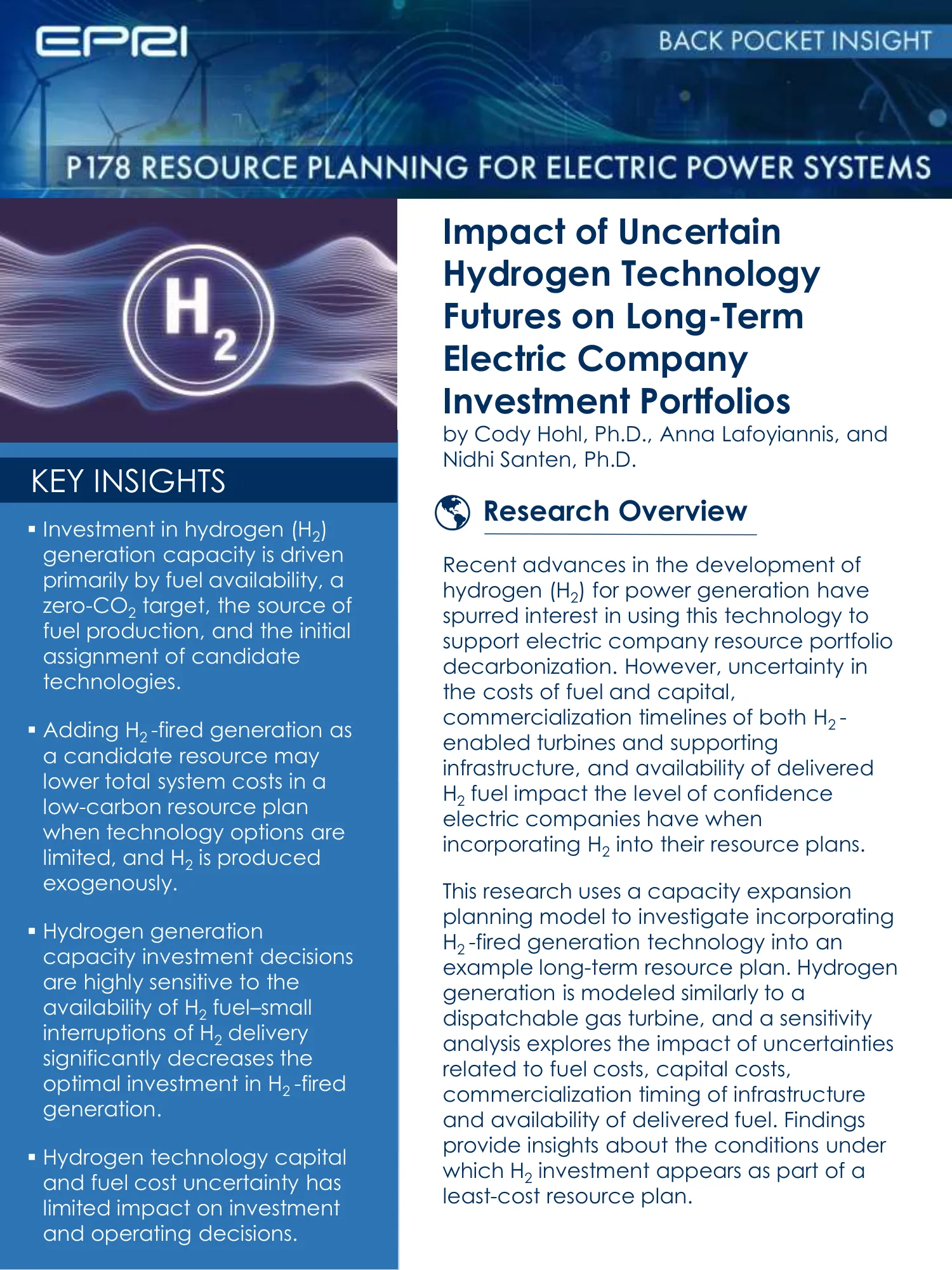
Impact of Uncertain Hydrogen Technology Futures on Long-Term Electric Company Investment Portfolios
August 2024
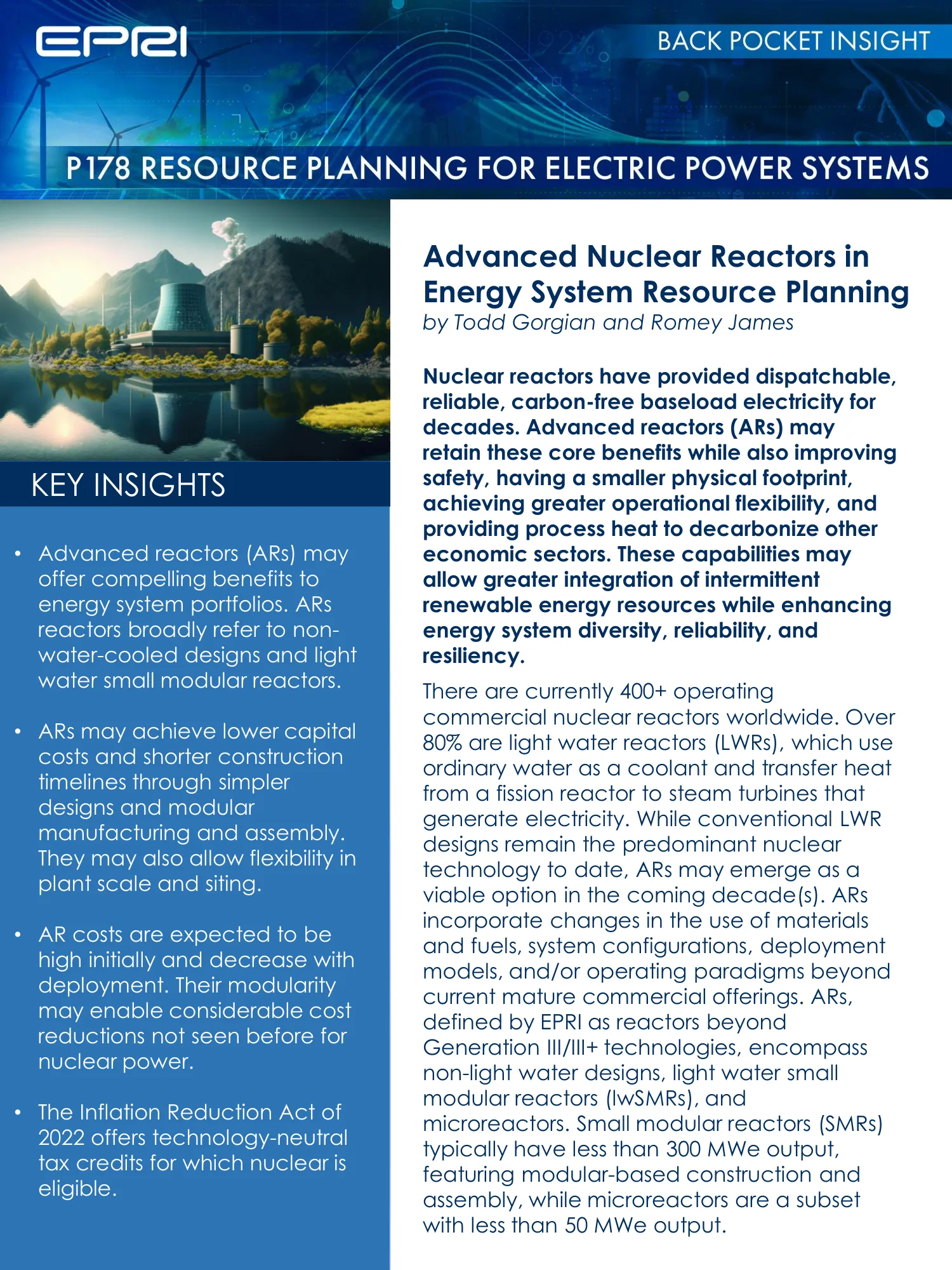
Advanced Nuclear Reactors in Energy System Resource Planning
March 2024
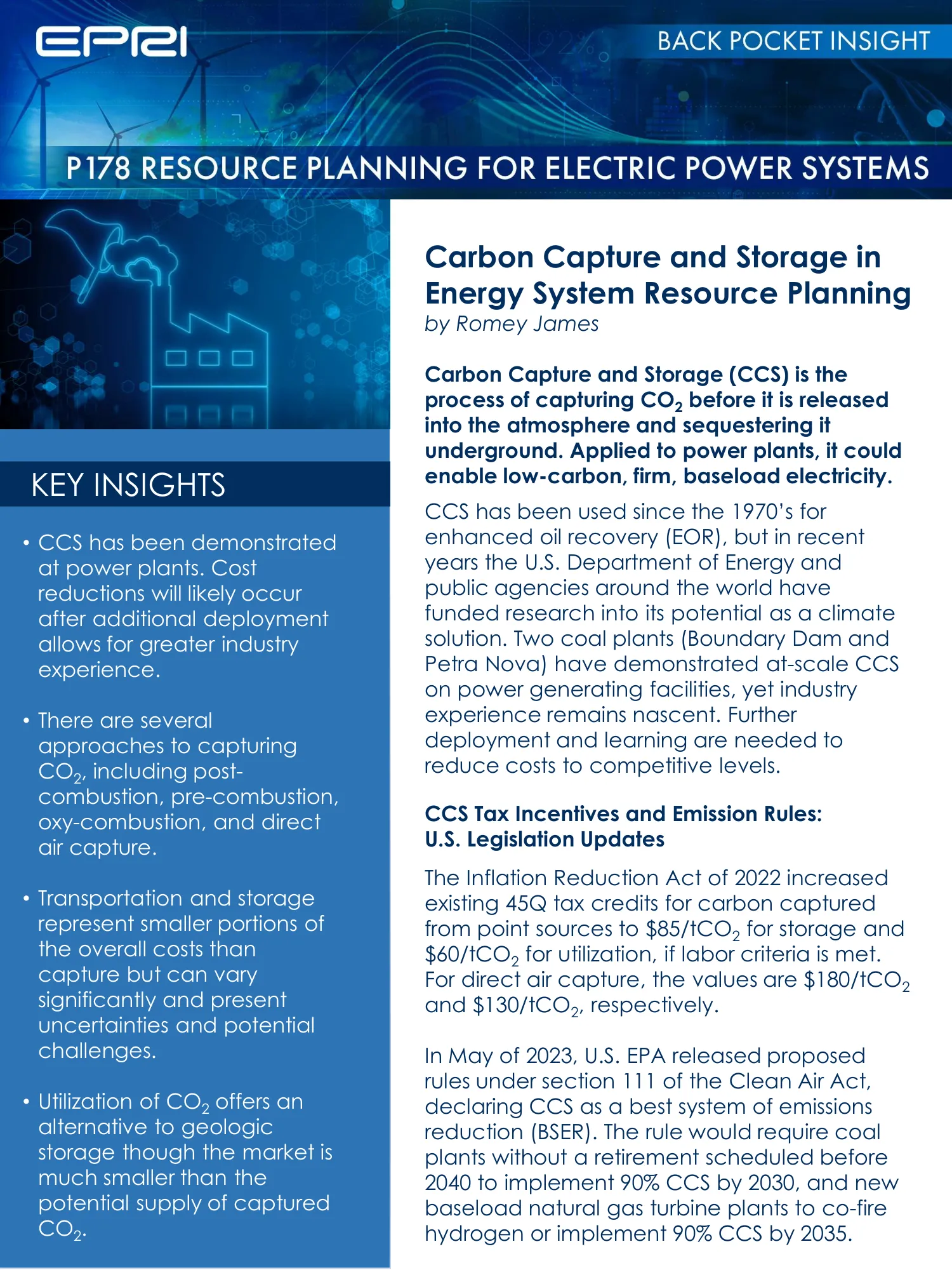
Carbon Capture and Storage in Energy System Resource Planning
March 2024
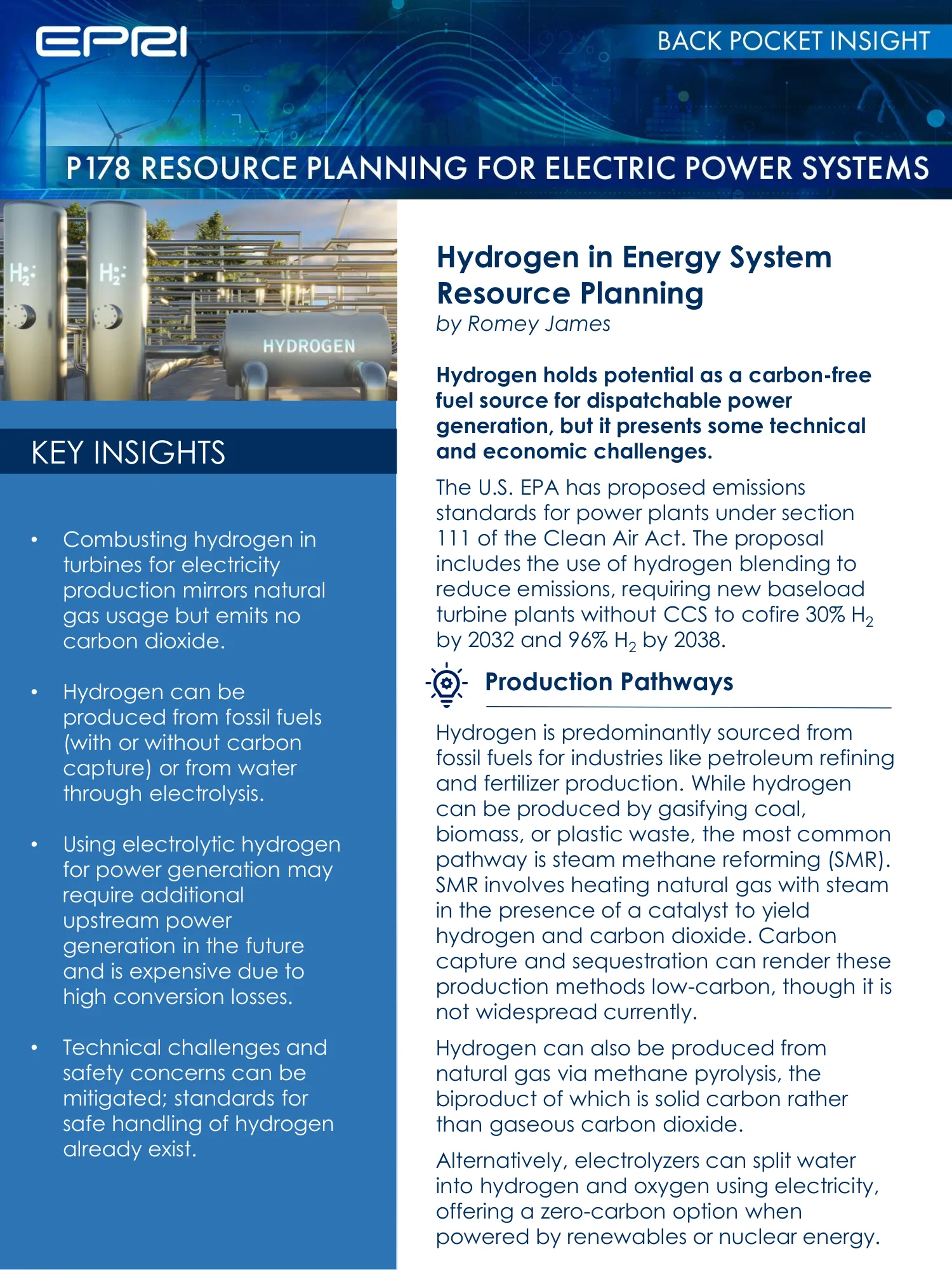
Hydrogen in Energy System Resource Planning
March 2024
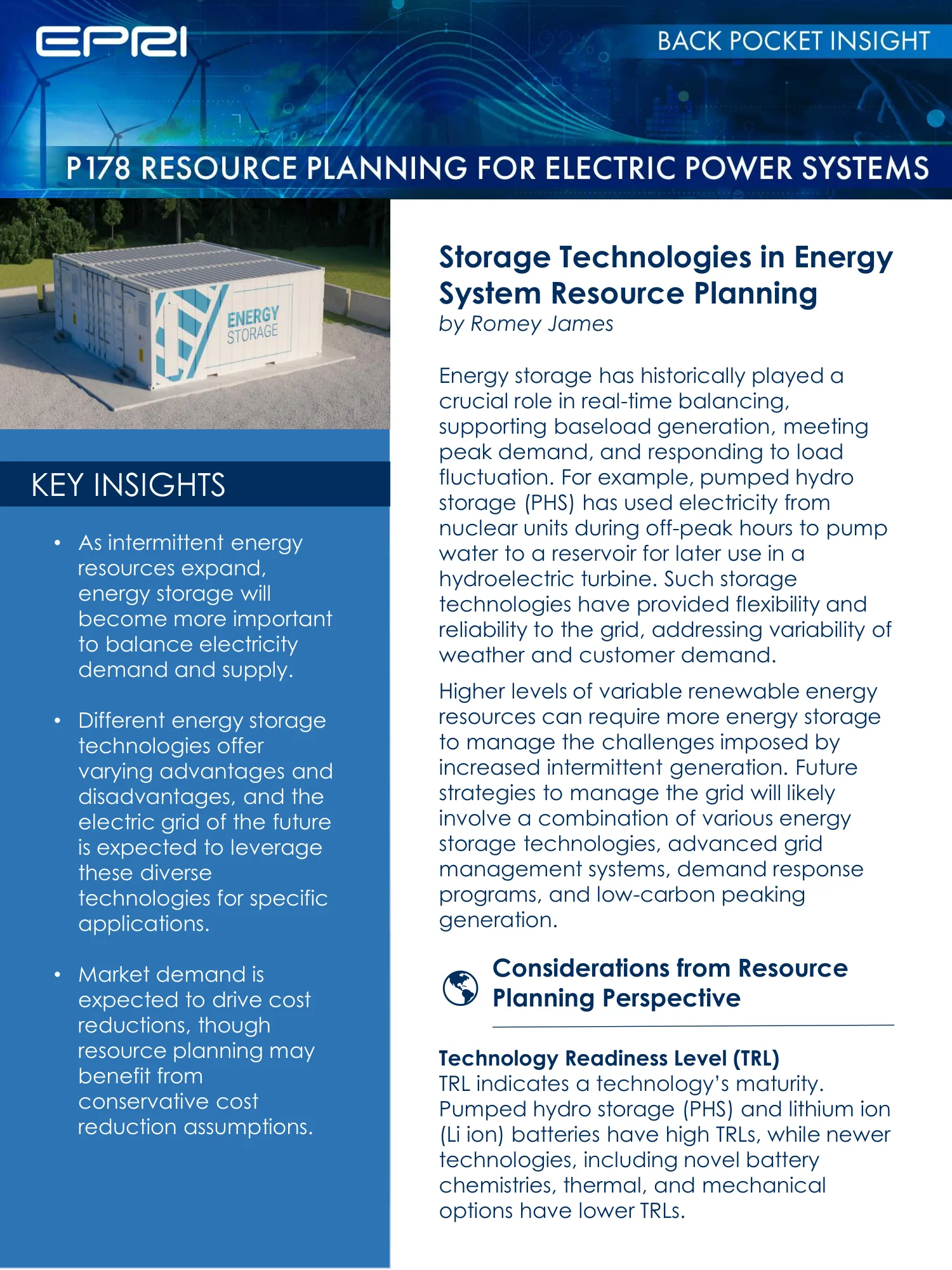
Storage Technologies in Energy System Resource Planning
March 2024
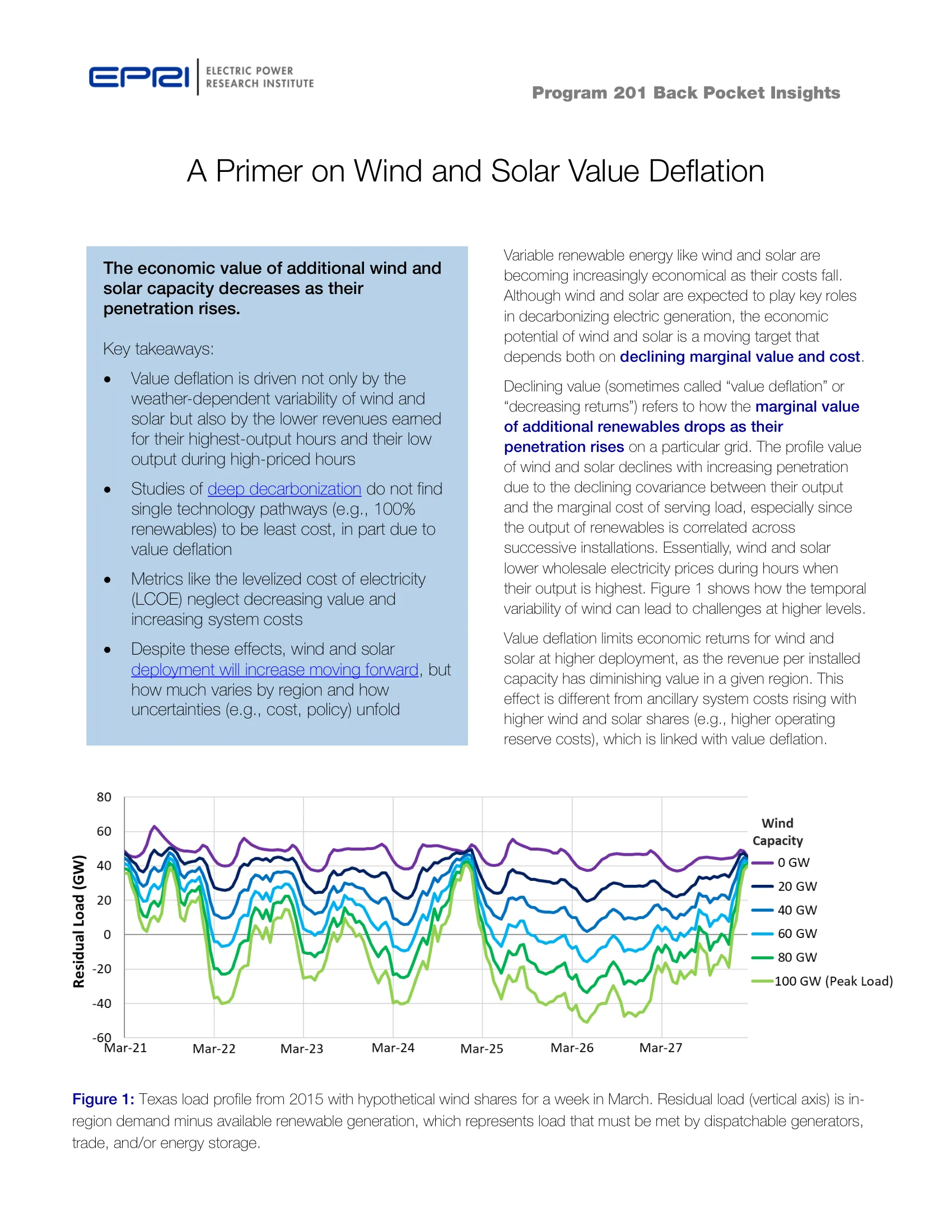
A Primer on Wind and Solar Value Deflation
August 2019
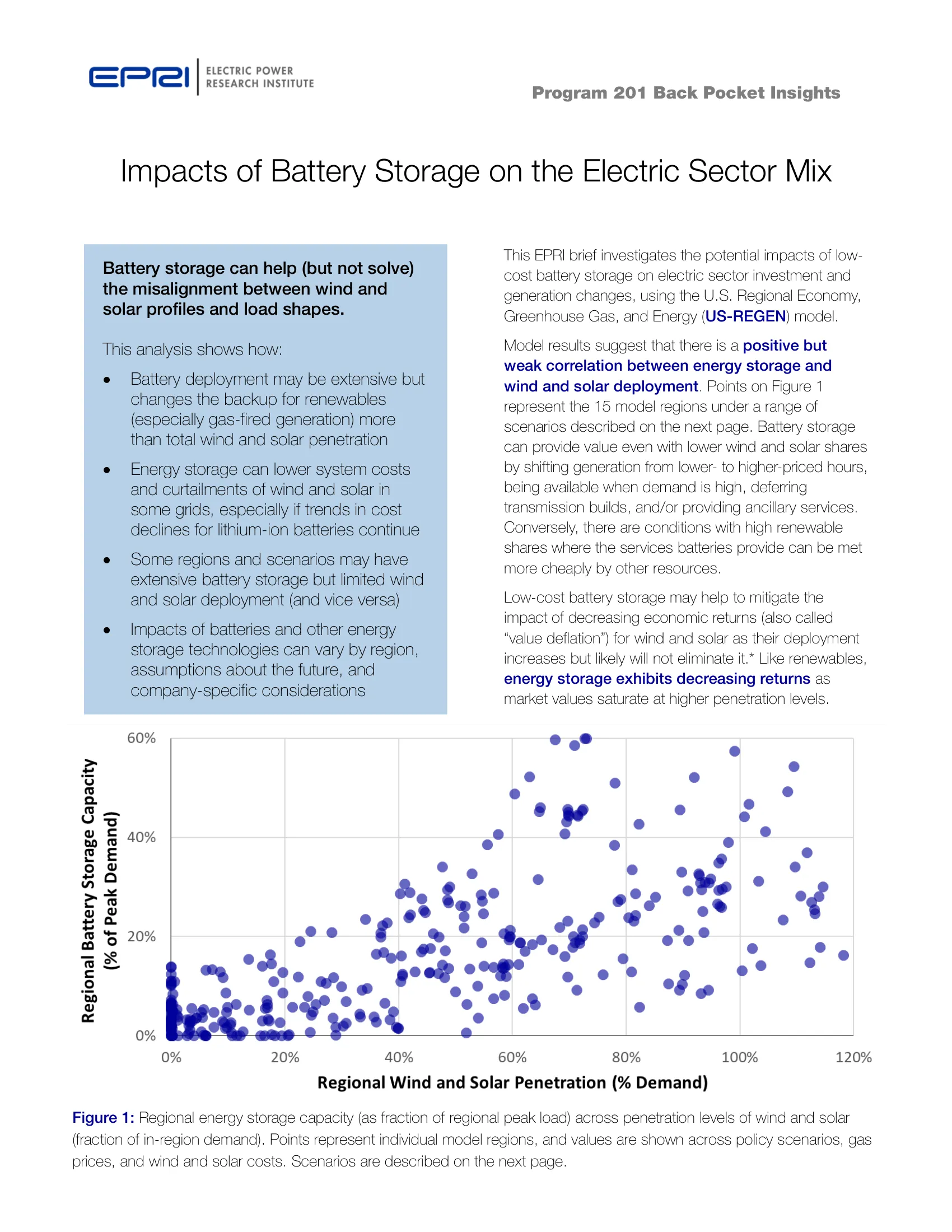
Impacts of Battery Storage on the Electric Sector Mix
March 2019
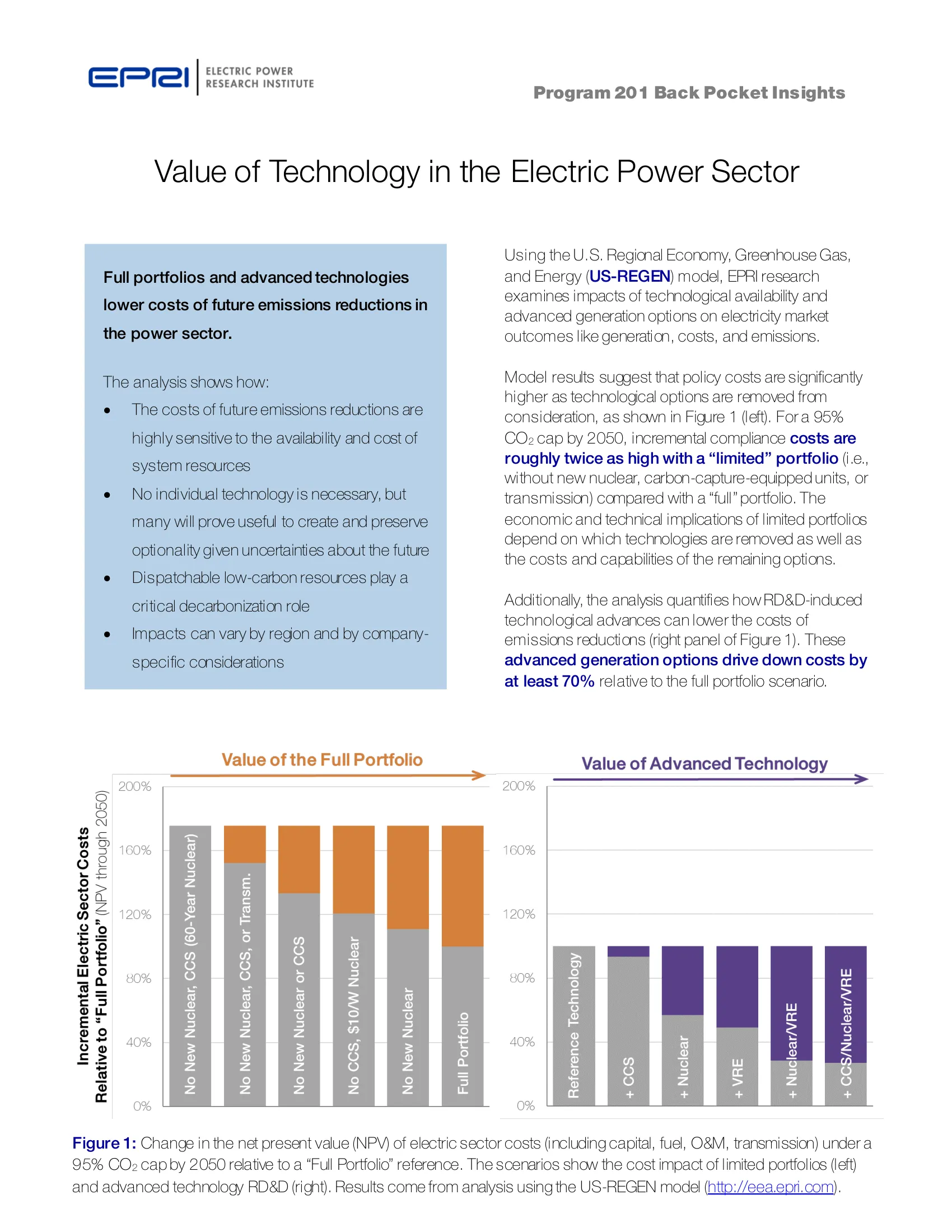
Value of Technology in the Electric Power Sector
August 2018
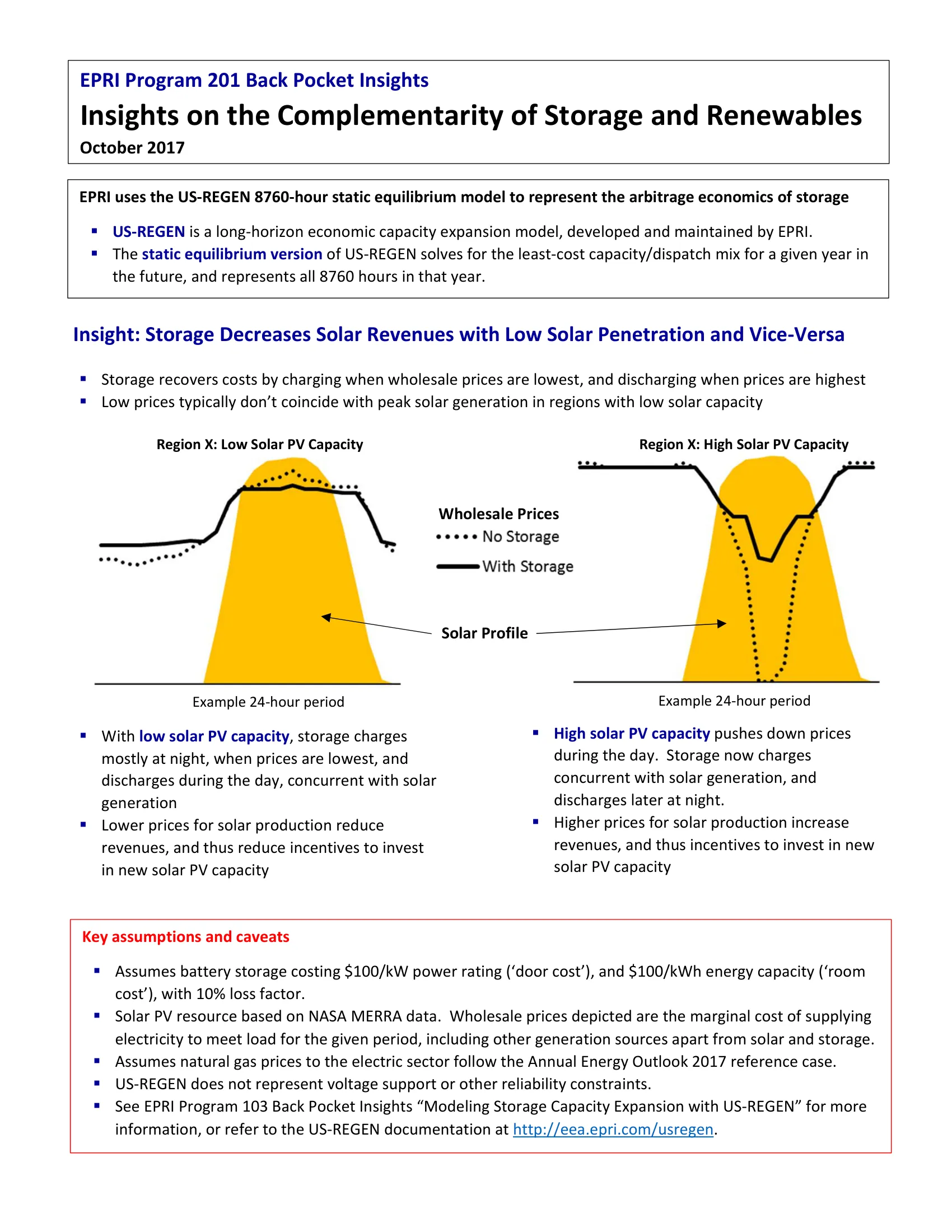
Insights on the Complementarity of Storage and Renewables
October 2017
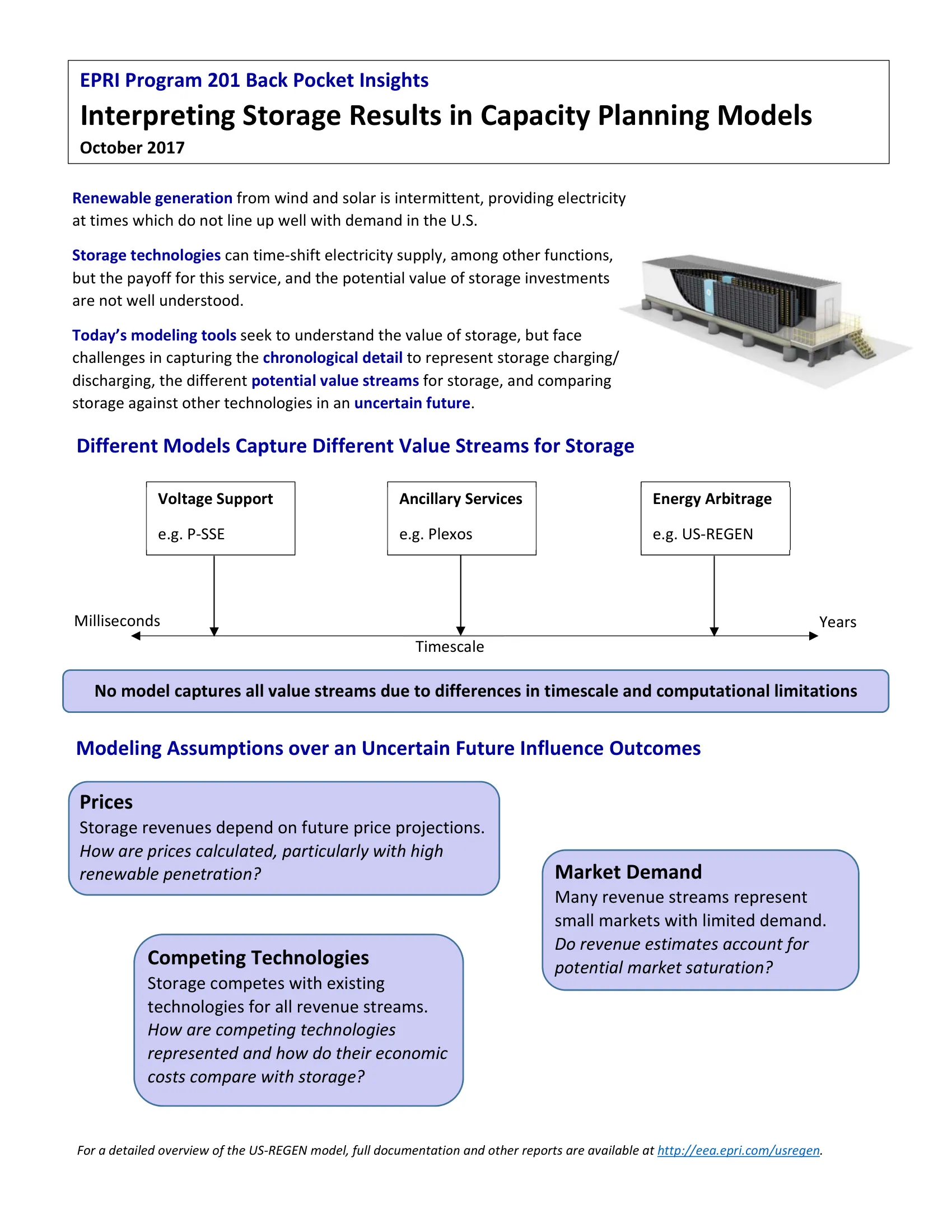
Interpreting Storage Results in Capacity Planning Models
October 2017
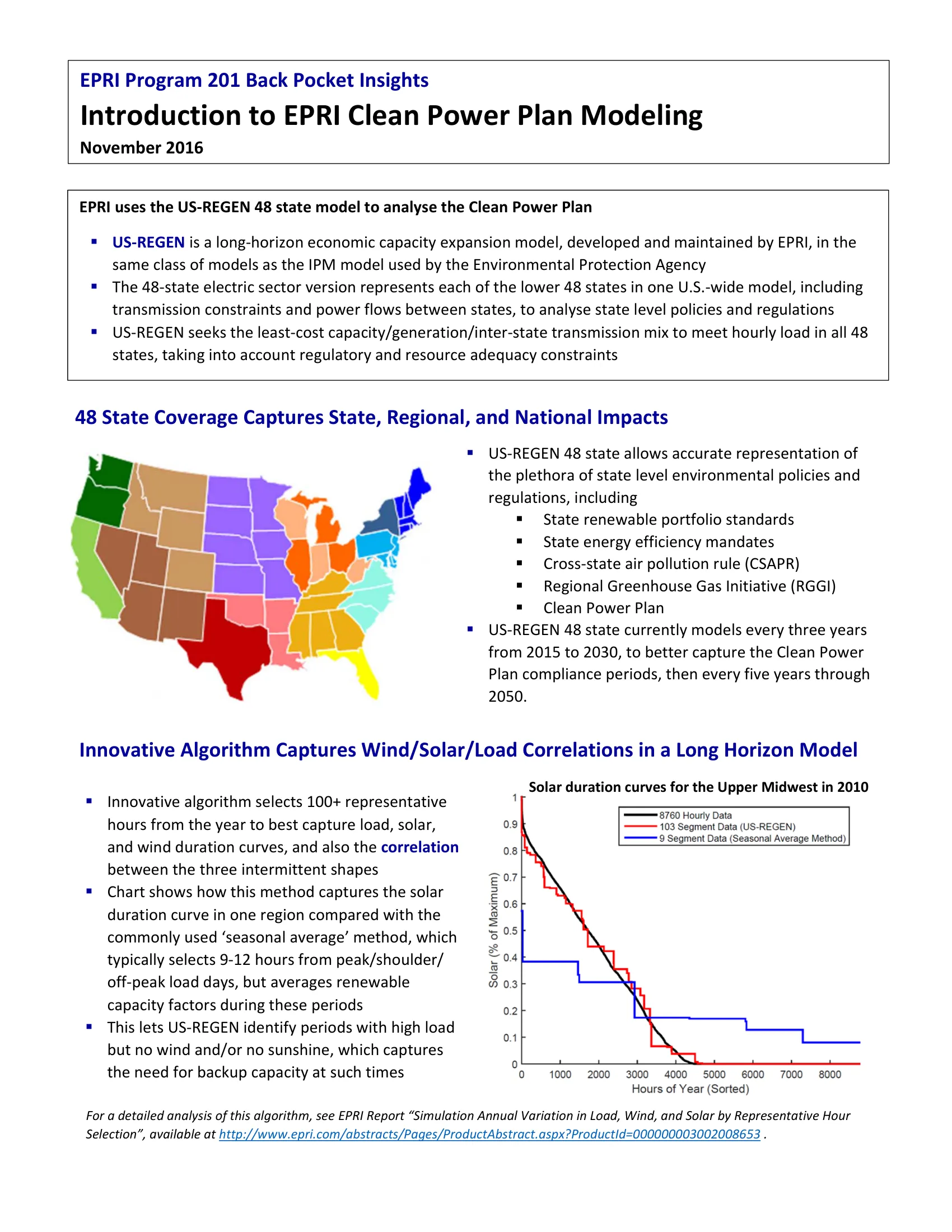
Introduction to EPRI Clean Power Plan Modeling
October 2017
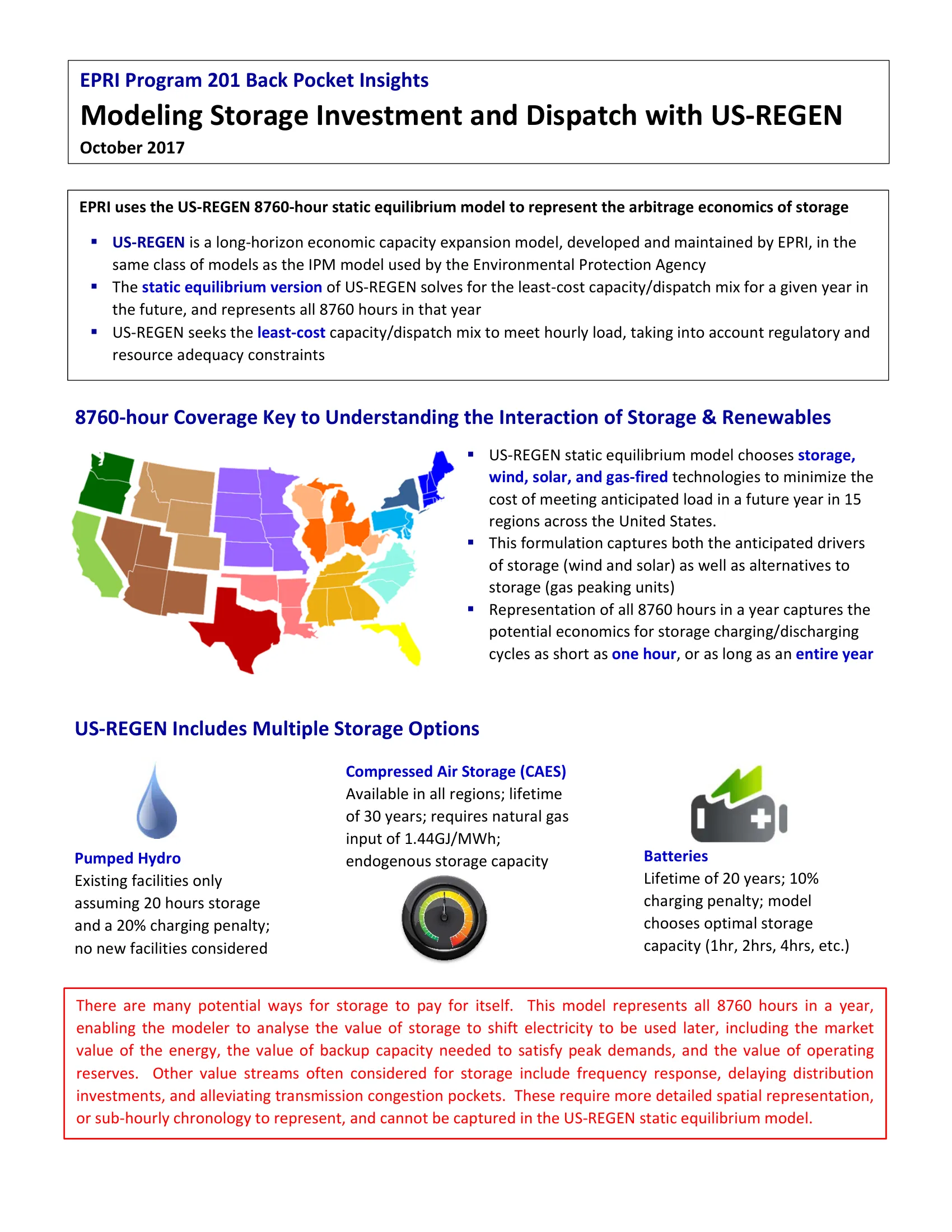
Modeling Storage Investment and Dispatch with US-REGEN
October 2017