ESCA Investigates Integrating Data Centers into Regional Power Systems and more
We are pleased to share this edition of the Energy Systems and Climate Analysis (ESCA) newsletter highlighting our team's recent research. Findings here address:
A Proposed Framework to Assess Headroom for Integrating Data Centers into Regional Power Systems
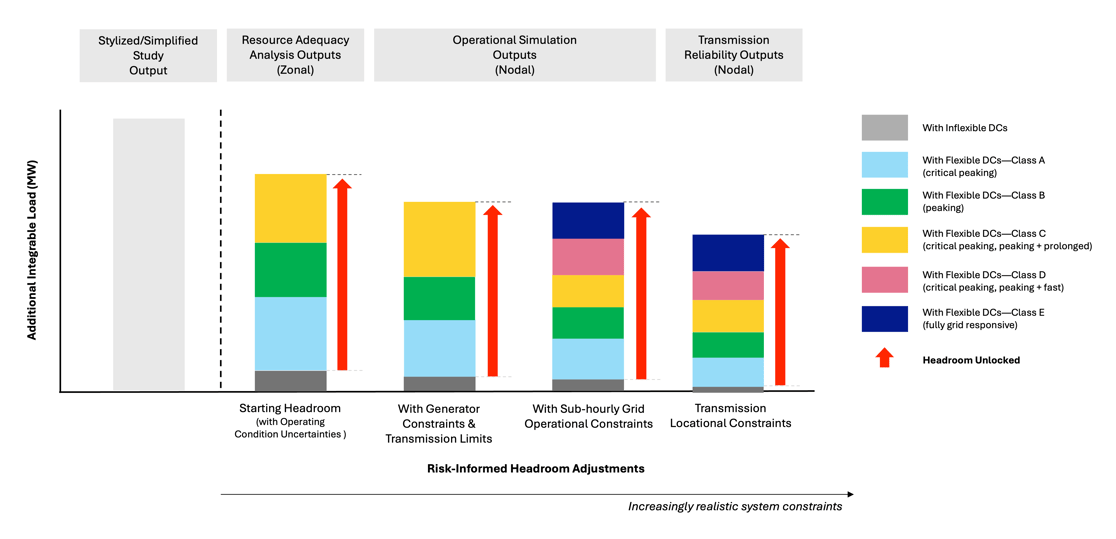
Figure 6. Illustration of the capability of Flex MOSAICTM DC flexibility classes A–E to unlock headroom in a power system.
ESCA staff led the work for a recent DCFlex discussion paper that proposes a comprehensive framework for estimating existing system headroom to help planners understand how much additional load their current systems can truly accommodate while maintaining reliability. The framework guides planners through a series of analytical steps that progressively refine power system headroom estimates by addressing key embedded economic and reliability risks and illustrating how DC flexibility may mitigate those risks. Results from the framework also serve as a stepping stone to better understand economic, reliability, and policy-related implications of headroom usage and potential future investment needs. Access the full report, watch an overview video, and sign up for a summer focus group discussion to collaborate with us on the framework.
Despite the popular narrative that data center growth is the driver of recent retail electricity price increases, a new econometric analysis from ESCA researchers finds this fear is not supported by the evidence. From 2015 to 2024, data center growth modestly lowered average residential retail rates in the United States relative to a counterfactual without data center growth.
Review of Incentive-Based Distributed Generation Programs in Integrated Resource Planning
Distributed generation (DG) is increasingly influenced by a diverse set of policy and incentive mechanisms implemented by states and electric companies. Completed with support from DTE, this report reviews existing incentive-based DG programs across the United States, with a particular emphasis on Midwest electric companies in the U.S. The report evaluates policy affects on distributed resource growth, representations of DG programs in Integrated Resource Planning (IRP) processes, and modeling approaches to incorporate DG in planning models.
Load Forecasting Practices for Long-Term Electric Resource Planning
This report reviews recent load forecasting practices that are used within utility resource planning to develop deeper understanding of where, what, and why load forecasts are produced. Preparation of this report included analysis of documents (e.g, integrated resource plans), processes, actors, methods, and tools in industry; assessment of EPRI, industry, and vendor tools and practices; and identification of existing gaps, resource planning needs, and directions for future research.
Exploring the Potential Impacts of Using Overlapping Emission Factors in Scope 2 Greenhouse Gas Emissions Accounting
Recent proposed revisions to the Greenhouse Gas Protocol (GHGP) Scope 2 Guidance may significantly increase the geographic and temporal granularity required for location-based method (LBM) of scope 2 greenhouse gas (GHG) emissions accounting. While these changes are intended to improve accuracy, transparency, and comparability of corporate inventories, they may also introduce unintended internal consistency challenges when applied across regions with overlapping electricity grid boundaries. This white paper examines how the proposed emission factor (EF) hierarchy, particularly the prioritization of subnational and hourly EFs, can result in the overlapping attribution of grid emissions within a single corporate scope 2 inventory. The analysis demonstrates how mechanically applying the most granular accessible EFs at the facility level can lead to double counting of the same underlying generation resources and concludes by outlining practical approaches reporting entities can use to mitigate these double counting risks.
Climate data expert and ESCA Technical Leader, Erik Smith, was recently quoted in Latitude Media,S&P Global, and Utility Dive about the strength of this year’s El Niño relative to recent years and potential implications for utilities.
See Erik's recent appearance on the EPRI Current for a discussion about this year's El Niño.
New Story Maps from Climate READi™
Nuclear plants are designed and operated with significant margins; however, observed and projected changes in climate introduce new stress pathways that warrant forward-looking evaluation. The CVA process provides a structured, risk-informed method to confirm margin adequacy and prioritize cost-effective resilience actions
This case study applied elements of the Climate READi™ framework to evaluate climate‑related risks across the bulk and distribution grid for WPL in the U.S. Midwest. At the bulk system level, the study demonstrated that including resilience requirements into the planning process can inform both the timing and composition of possible investment portfolios.