Does more load mean higher bills? New findings from ESCA
We are pleased to share this edition of the Energy Systems and Climate Analysis (ESCA) newsletter highlighting our team's recent research. Projects presented here address:
cutting-edge climate change and decarbonization research.
When Can Data Centers, Efficient Electrification, and New Loads Lower Electricity Prices?
Utilities across the country are getting unprecedented requests for new load, especially from AI data centers. EPRI's new white paper, Win-Win Watts, addresses the question: Can new electricity demand from data centers, electrification, and other sources actually lower average retail electricity prices? More specifically, researchers investigate when the long-run incremental cost of serving new load is lower than the system's average cost, which could mean lower prices. The paper frames three levers that largely determine whether you get “win-win” outcomes in practice: proactive planning, rate design & cost allocation, and demand flexibility.
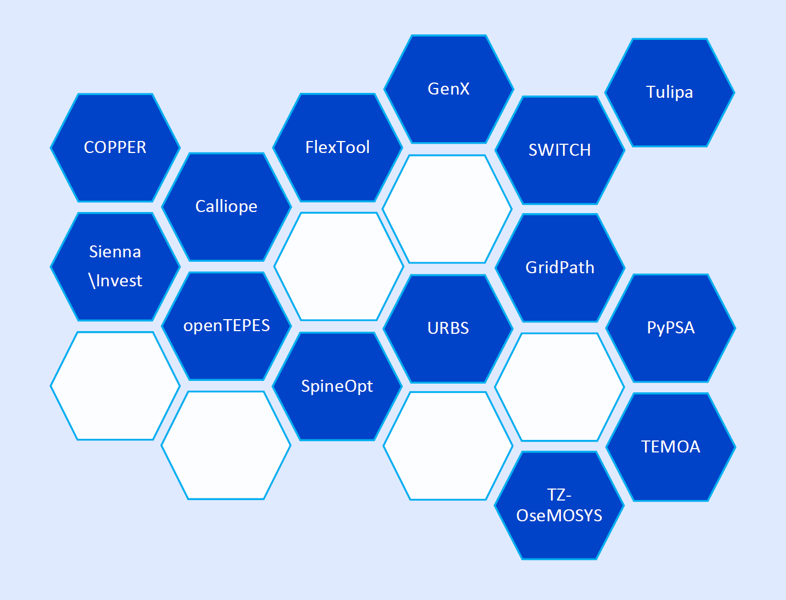
Comparing Open-Source Integrated Planning Models in 2025
Integrated planning for low-carbon energy systems may require models that can coordinate long-term investments and short-term operations across electricity, hydrogen, heat, fuels and storage. This report provides a structured comparison of 14 open-source frameworks to help researchers and practitioners understand the features of various open-source integrated planning models. The report evaluates each tool along five dimensions: 1) scope, 2) modeling language and formulation, 3) data management, 4) treatment of uncertainty, and 5) usability and ecosystem. The comparison shows the different modeling choices available to the practitioner that can shape the analysis in a resource planning study.
Measuring Impact and Taking Credit for Electric Company Actions that Reduce GHG Emissions
The current fractured regulatory landscape of voluntary and regulatory carbon markets and the ongoing, rapid evolution of existing greenhouse gas (GHG) emissions accounting and disclosure rules have produced an environment where it is not clear how electric companies can report, track and “take credit” for actions they may take that reduce their GHG emissions. This EPRI report explores three interrelated research questions: (i) What types of actions can electric companies and combined electric and natural gas utilities take to reduce their scope 1, 2 and 3 greenhouse gas emissions? (ii) How can electric companies and combined utilities measure the impact of actions and activities they may take to reduce their greenhouse gas emissions? (iii) How can electric companies and combined utilities report and “take credit” for GHG emissions reductions they may have achieved?
Strategies for Powering Data Centers in the AI Era
Rapid growth in data center demand—driven in part by AI processors with power densities up to 10 times higher per square foot than traditional storage‑focused facilities—has exposed mismatches between grid expansion and data center development timelines. As a result, speed to power has become a critical factor in site selection. This paper evaluates four broad strategies for powering new data centers globally. Currently, the dominant approach is Grid-Connected Inflexible where grid power is available on the required timeline. However, where there are significant grid constraints, three alternative strategies are emerging: Grid-Connected Flexible, Bridge-to-Grid, and Islanded. Read EPRI's new white paper, Reconciling the Value of Grid Interconnection and Speed to Power, to learn how leveraging the integrated grid will be key to balancing speed, cost, environmental performance, and long-term operational excellence.
Examining Scenarios of e-gas Exports from the United States: Evaluating Energy System Impacts with US-REGEN
A new EPRI study explores the energy system impacts of large-scale synthetic methane (e-gas) exports from the United States to Asia, using the US-REGEN energy-economy model. The analysis evaluates how varying levels of export demand, centered on Japan and Southeast Asia, could interact with U.S. decarbonization pathways, infrastructure constraints, and technology deployment. Scenarios span a range of demand levels and policy environments, including a Reference case and a Net-Zero-by-2050 target.