To learn more about Program 201: Energy, Environmental, and Climate Policy Analysis, visit the program site or reach out to Program Manager, John Bistline.
cutting-edge climate change and decarbonization research.
Research Highlights
Emissions reductions of rooftop solar are overstated by approaches that inadequately capture substitution effects
While solar energy is expected to play major roles in decarbonized energy systems, the extent to which rooftop solar photovoltaic (RPV) reduces emissions remains contested. Common approaches to estimate CO2 impacts of decarbonization interventions, like RPV, can omit key channels that materially alter environmental benefits. Using US-REGEN, ESCA researchers ran scenarios with and without RPV deployment to assess emissions impacts and found evidence to suggest RPV’s mitigation potential is overstated by popular methods. Read full details in the Nature Climate Change article, get the main takeaways in the two-page brief, or see how industry is reacting to these findings in an article from PV Magazine.
Impacts of Technology Delays, Restrictions, and Constraints on Power Sector Decarbonization Pathways
Robust growth in electric sector capacity in recent years has likely been slowed by technical, policy, and economic barriers. Incorporating these barriers into models is often challenging, resulting in a divergence between model results and realized infrastructure deployment rates. This analysis develops three reference cases anchored on distinct policy environments and adds constraints on new generation, new transmission, and private and public land availability to explore the range of potential impacts of obstacles to new energy infrastructure. This scenario analysis aims to address the challenge of incorporating these barriers into models and produces results that reflect possible realizations of uncertain barriers.
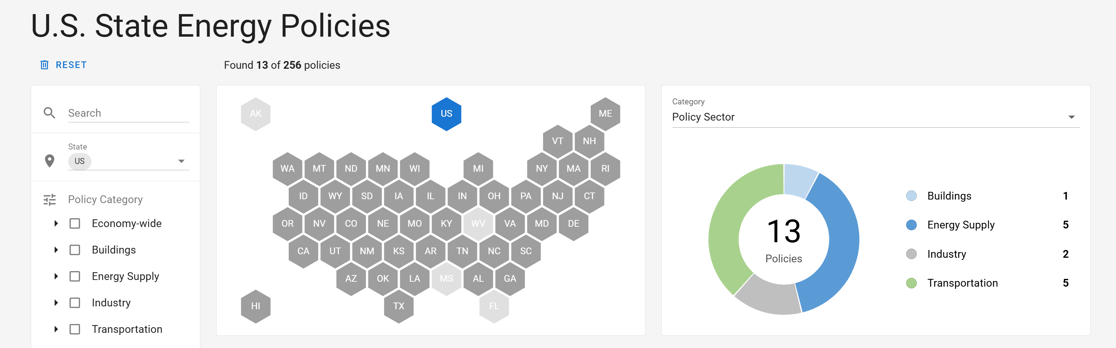
EPRI produced the State Energy Policy Dashboard, which provides a centralized, curated view of over 250 policies, targets, and incentives across U.S. states. While federal policy receives a lot of attention and develops the targets, states often design and implement plans to achieve these goals. These state policies can have significant impacts on energy company planning and investment decisions, especially for those operating across state lines. Access the policy dashboard for a consolidated resource aimed to aid navigating the complex landscape of climate and energy policies in the United States.
The majority of scenarios in IPCC databases are generated by integrated assessment models (IAMs) and come from model intercomparison projects, which affects the insights that can be gleaned. In a recent article in Nature Climate Change, authors, including ESCA’s Steve Rose, propose a transparent and inclusive platform for more inclusive and impactful protocol development, scenario submissions, results evaluation, and insights. Read the article for discussion of challenges and the opportunity for the IAM community to improve its policy- and decision-making insights, such as informing global temperature goals, potential global climate change futures, and corporate climate targets and strategies.
Inflation Reduction Act: Origins, Policy Implications, and Research Gaps
The Inflation Reduction Act (IRA) is the largest federal climate legislation in the United States so far. The breadth and complexity of IRA’s energy and climate provisions raise new questions about its economic and environmental effects. Coauthored by ESCA’s John Bistline, this article summarizes IRA’s potential policy implications based on existing analysis and highlights research gaps. Read for an overview of the act and its political economy context; summary of projected effects of IRA on emissions, energy system changes, and other economic outcomes; and discussion of broader international responses and IRA’s interactions with alternate policy instruments.
Energy Modeling Forum 37: Deep Decarbonization & High Electrification Scenarios for North America
ESCA researchers continued their long-running contribution to Stanford’s Energy Modelling Forum for EMF 37: Deep Decarbonization & High Electrification Scenarios for North America. This year, ESCA researchers co-authored five articles with work analyzing potential net-zero pathways; covering electricity investments; transportation; bioenergy; electricity supply & demand; and policy implications. Read results from these and other EMF 37 studies in a special issue of Energy and Climate Change.
Affordability concerns remain at the forefront of electric industry decision making. EPRI’s Energy Wallet study released earlier this year produced new analysis of total direct energy expenditures by households, providing a new metric to measure energy affordability and evaluate electrification opportunities. This work has received considerable attention, with features across industry and general media. Use the links below to read about the impact of the Energy Wallet.