
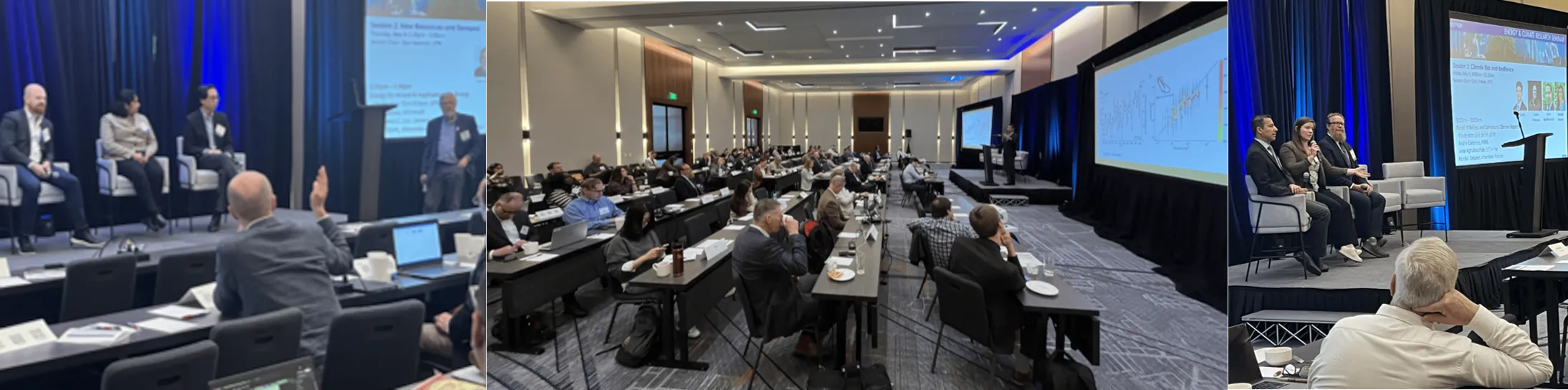
EPRI’s longstanding annual Energy and Climate Research Seminar was first convened by Richard Richels in 1996. It provides an opportunity for decision makers and stakeholders interested in the latest in energy and environmental research to discuss key issues and policy drivers as well as their implications for the utility industry. This event is supported by EPRI’s Program 201 on Energy, Environmental, and Climate Policy Analysis and its members.
The seminar covers key energy and environmental topics related to climate science understanding, policy perspectives, decarbonization technologies, and research priorities. The target audience each year includes stakeholders from industry, government, academia, and non-governmental organizations interested in energy and climate issues.
EPRI will host the 29th anniversary of the seminar with an in-person event held at the Washington Marriott Capitol Hill on May 6-7, 2026. For more information, please contact Chris DeLyser Roney, Senior Team Lead, Energy Systems and Climate Analysis.
Event Materials
Slides from the seminar sessions are available below.
2026
- Climate Considerations in the Era of AI
- Managing risk from increased whiplash—Hydroclimate and beyond
- Climate Information in the AI Era
- Reinsurance and Catastrophe Modeling
- Building the Grid for the Future: Climate Resilience, Affordability, and Growth
- U.S. Retail Electricity Price Trends
- How Power System Trends Impact Affordability
- Policy Sequencing Towards Long-term, Deep Decarbonization
- Capturing affordability and consumer impacts in bulk power system modeling
- EPRI Energy and Climate Seminar
- Powering Data Centers: Perspectives on Power Demand, Flexibility, and Operational Issues
- NERC Large Load Actions
- Large Load Growth: Regional Responses and Emerging Grid Challenges
- Building Industry Consensus on Robust Data Center Grid Integration Assessment
2025
2024
Session 1: Climate Change Risk and Resilience
Session 2: Energy Transition
Session 3: Future of Energy Spending and Demand
- Electrify Everything for Everyone
- Countdown to 2045: Realizing California's Pathway to Net Zero
- Affordability in the Energy Transition
- Data Center Energy Analysis: Current Status and Future Challenges
- Data Center Load: Grid Impacts & Integration Opportunities
- Future of Building Energy Demand
- Demand-side Policy, Security, and Efficiency
2023
Session 1: Decarbonization Policy Design and Implementation
Session 2: Toward Net Zero
Session 3: Climate Change Risk and Resilience
2022
- Agenda
- Seminar Overview
- Speaker Bios
- Recording: Session One - IPCC AR6 Highlights
- Recording: Session Two - Decarbonization
- Recording: Session Three - Climate Change and Extreme Events
- Recording: Session Four - Climate Resilience in Practice
IPCC AR6 Highlights and Key Messages
Decarbonization Pathways and Considerations
Climate Change and Extreme Events
Climate Resilience in Practice
2021
- Seminar Summary
- Agenda
- Seminar Overview
- Recording One: Decarbonization technologies and strategies
- Recording Two: Decarbonization policy and practice
- Recording Three: Climate science and impacts
- Recording Four: Climate resiliency in practice
- Opening Remarks: Reimagining the Future Energy System
- Powering Decarbonization: Strategies for Net-Zero CO2 Emissions
- Net-Zero America: Potential Pathways, Infrastructure, and Impacts
- Endgame Innovation: Demonstrating Emissions Reduction Solutions that are Ready to Deploy
- Clean Energy Policy and R&D Priorities of the Biden Administration (No slide deck available)
- Climate Legislation at the Federal Level (No slide deck available)
- Decarbonizing Transportation: Call to Action
- Electrifying with Justice
- From Climate Science to Net-Zero Targets
- Climate Impacts and Climate Solutions, v.2021
- Climate Impact and Economic Analysis: Products on Temperature Binning and Social Vulnerability
- Company Climate Risk Decision-Making: Issues and Needs
- 1991-2020 U.S. Climate Normals
- Climate Hazard Risk Management
2020
- Agenda
- Speaker Bios
- Main Energy and Climate Seminar Slides
- New scenarios, new models: The latest in climate change projections
- Climate change communication
- America's pledge and subnational action
- Climate and energy actions and initiatives: Northeast and Mid-Atlantic Region
- View from the States: Virginia's Actions for a Low Carbon Future
- California Climate Program Update
- R&D Outlook for Decarbonization Opportunities
- How to decarbonize road transport in the US?
- Hydrogen's potential role as a low carbon fuel
- Models to inform technological development: Examples from energy storage, electric vehicles, and solar energy
- Grid operations and planning challenges with decarbonized future
2019
- Agenda
- Speaker Bios
- Decarbonization and Beyond
- Deep Decarbonization Initiative
- History of WRE and Paris Agreement
- Is it time yet?
- Article 6: Paris' Flexibility Mechanism
- Engaging with Recent Scientific Assessments: Insights and Lessons Learned
- Value of Technology
- Capturing Leadership
- Negative Emissions Technologies Research Agenda
- How Solar Energy Became Cheap
- Transport: from Disruption to Decarbonization
- Transport Decarbonization
- Promoting Plug-in Electric Vehicles
- Prospects of All-Electric Aircraft
- Impacts of a Federal Carbon Tax
- From Paris to Honolulu
- Policy Outlook and International Process
- Company Planning and Greenhouse Gas Strategy
- DTE GHG Strategy and Planning
- SRP GHG Strategy and Planning
- Climate Impacts and Resilience in the Power System
2018
- Agenda
- Speaker Bios
- Grounding Good Intentions: A Technical Foundation for Companies
- Panel: Understanding Company Climate Scenarios and Emissions Goals
- The Fourth National Climate Assessment - Climate Science Special Report
- Understanding Extreme Events from a Climate Perspective
- Making Sense of Equilibrium Climate Sensitivity and Other Climate Responses
- EPRI's National Electrification Assessment and Its Outlook for Transportation
- Panel: Electrification and the Future of Transport
- Panel: Electrification and the Future of Transport
- Panel: Electrification and the Future of Transport
- Panel: Policy and Market Trends for Energy Storage and Renewables
- Panel: Policy and Market Trends for Energy Storage and Renewables
- Panel: Policy and Market Trends for Energy Storage and Renewables
- Keynote: Puerto Rico and the U.S. Department of Energy's Approach to Resiliency
2017
- Agenda
- 01-Power Markets and State Policy
- 03 Extreme Events-Heat and Drought
- 04a Research Frontier Panel-Extending the Understanding and Usefulness of US National Economic Impact Analyses
- 04b Climate Damage Risks and Decision-Making
- 05 Outlook for International Climage Change Policy
- 06b SRP
- 06c ERCOT
- 07a Integrated Energy Network-Pathway for Action
- 07b Third Way
- 07c Electrification and Decarbonization
- 07d Energy Storage Trends and Challenges
- Energy and Climate Seminar Bios Final
2014
- California Electricity Policies - Today and Tomorrow
- Climate Change 2014: Mitigation of Climate Change
- Energy Policy and CO2 Mitigation Michigan
- Implications of the IPCC 5th Assessment Report
- Implications of the IPCC Assessments
- Modeling Intermittent Resources
- Overview of IPCC WG II Report
- Policy Applications for the Social Cost of Carbon
- Regional Greenhouse Gas Initiative Experience Cost and Effectiveness
- Renewable Integration and Plant Flexible Operations
- Social Cost of Carbon: Some Not So Rhetorical Questions for Consideration
- The Fifth Assessment: A Discussion of the IPCC Working Group 1 AR5 Report
- The Regional Greenhouse Gas Initiative Experience
- U.S. Regional Approaches to Energy Policy and CO2 Mitigation
- Speaker Biographies
2013
- Abundant Natural Gas Analysis
- America's Energy Resurgence Overview
- Annual Energy Outlook 2013
- Cost and Performance of Generation Technologies
- Global Policy and Tech Drivers
- High Penetration of Renewable Energy
- Implications of Abundant Gas
- Key Drivers for the US Energy Future
- NERA US LNG Exports
- Power System of Future Global Policy and Tech Drivers
- Technology Learning Curves and Future Technology Costs
- US NG Shale Boom and Buildup of Demand
2012
- Agenda
- PRISM 2.0 The Value of Innovation in Environmental Controls
- Fuels Used in Electricity Generation
- Small Modular Reactor Program Overview
- CO2 Capture and Storage Update
- Climate Policy via the Clean Air Act - Analysis Paradox
- Electric Transportation
- Bioenergy, Capture, and Land Use
- Energy and Climate Change Research Seminar
- Methane and the Natural Gas Sector - Emissions, Mitigation Opportunities, Programs and Policies
- Advanced Nuclear Technology (ANT) Program
- U.S. Energy Policy - Three Things to Watch Going Forward
- Transitioning to a Low GHG Global Economy - the role of the electric sector
2011
- Agenda
- International and US Climate Policy Outlook
- EPA Regulatory Approaches to CO2
- Drivers of Future US CO2 Emissions
- Natural Gas Supply
- Electricity Demand Growth and Energy Efficiency
- Future of Electric Transportation
- Biomass Supply for Power and Environmental Implications
- Renewable Energy: The Promise and Limits
- Are Market Mechanisms Obsolete?
- Introduction to Issues
- China's Growth: Structural Change and Key Drivers of Future Emissions
- China's Future Emissions: Perspectives from the Asian Modeling Exercise
- A Utility Industry Perspective
- Carbon Policy Uncertainty in a Multi-pollutant World
2010
- Agenda
- Development and Climate Change
- Stabilization and the Energy Sector
- The Challenge of Scaling Up Domestic and International Offset Supplies
- Natural Gas: Supply and Demand Outlook
- Renewables Energy Outlook and Future R&D Needs
- Framing U.S. Policy under Uncertainty in a Post-Copenhagen World
- Prospects for Nuclear Power
- Biogenic Carbon Sequestration and Climate Policy: Issues in Using Forests to Offset Greenhouse Gas Emissions
- Energy Policy, Climate Policy and the Electric Sector
- Geoengineering the Climate: Institutional and Governance Issues
- Energy Efficiency: Promise and Realities
- Overcoming Barriers to Deployment of CCS
2009
- Agenda
- EPA Preliminary Analysis of the Waxman-Markley Discussion Draft
- Beware of Silver Bullets
- Bioenergy with CO2 Capture and Geologic Storage
- Availability and Costs of Supply-Side Electricity Options
- Energy Efficiency Potential
- The EU ETS: From Two Perspectives
- Science Update: Understanding the IPCC Findings
- Will We Be Forced to a Bread and Water Diet by Climate Change?
- In Defense of Geoengineering
- The Key Role of Greenhouse Gas Emissions Offsets in Evolving GHG Cap and Trade Programs
- Forest (& Agriculture) Carbon Policy: Design and Coordination Insights from Recent Modeling Efforts
- Integration of Non-CO2 Gas Mitigation in Climate Policy
2008
- Agenda
- Approaches to Modeling Mitigation Costs
- Issues in Geoengineering
- Modeling Developing Country Emissions
- Long-Term Global Oil Scenarios: Looking Beyond 2030
- A New MIT Assessment of Climate Change Risk
- Alternative Scenarios for Developing Countries
- Some Perspectives on the Likely Future of Energy Technologies
- Evolution of (the US) Climate Policy (Debate)
- CO2 Capture and Storage
- Climate Impacts
- Understanding Model Estimates of the Economic Costs of Cliate Policy
- Climate Policy Compliance from an Electric Utility Perspective